Thirty-six years after the historic Saba Saba protests that accelerated Kenya’s return to multiparty democracy, veterans of the second liberation say the struggle for accountable governance remains unfinished, drawing parallels between the events of July 7, 1990 and yesterday’s nationwide security crackdown.
Former pro-democracy campaigners said the heavy police deployment, road blockades and deserted streets witnessed across major towns during this year’s Saba Saba commemoration mirrored the tactics employed by the government of former President Daniel arap Moi to suppress demands for political reforms.
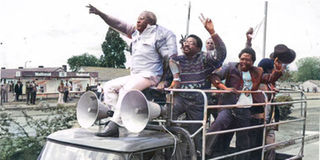
The July 7, 1990 demonstrations marked a turning point in Kenya’s democratic journey after the Moi administration attempted to stop a public rally called by opposition leaders Kenneth Matiba and Charles Rubia at Nairobi’s Kamukunji Grounds.
Days before the rally, security agents arrested and detained Mr Matiba, Mr Rubia and opposition figure Raila Odinga.
Activists in Nairobi CBD bundled into Subaru by unknown men
Human rights activists and lawyers who defied the ban were also arrested as security forces moved to crush the protests.
The crackdown intensified pressure on the government and culminated in the repeal of Section 2A of the Constitution in 1991, restoring multiparty democracy after years of one-party rule.
Among those who spearheaded the agitation were Mr Odinga, James Orengo, Paul Muite, Gitobu Imanyara, Kiraitu Murungi, Njeru Kathangu, Mukhisa Kituyi, Martin Shikuku and Masinde Muliro. Religious leaders, including Archbishop Ndingi Mwana a’Nzeki, the Rev Timothy Njoya, Bishop David Gitari, Bishop Henry Okullu and Bishop Alexander Muge, also played prominent roles.
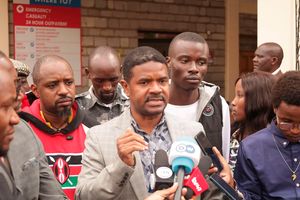
Speaking during yesterday’s commemoration in Nairobi, Siaya Governor James Orengo said Kenya had failed to adequately honour those who sacrificed for the country’s democratic freedoms.
“The story of our nation is not good. If I were the president elected under this Constitution, I would have declared this day a national day in memory of people like Kenneth Matiba, Charles Rubia and Raila Odinga, and held a rally to commemorate it,” Mr Orengo said.
Police officers arrest a protestor on Harambee Avenue, Nairobi, on July 7, 2026 during demonstrations to commemorate Saba Saba Day.
Photo credit: Lucy Wanjiru | Nation Media Group
Mr Orengo, one of the leading figures in the second liberation movement, said it was worrying that Kenya continued to face allegations of human rights violations, including abductions and enforced disappearances.
Former Runyenjes MP Njeru Kathangu said the return of multiparty politics did not immediately deliver the reforms many activists had fought for because key opposition leaders remained in detention ahead of the 1992 General Election.
“We expected that with the introduction of multiparty democracy, Kenyans would get new leaders. But it is like Moi introduced it on his own terms. Most of us were in prison. By the time we were released, parties had already been registered by Moi proxies,” Mr Kathangu said.
Mr Kathangu, who was sentenced to 14 years in prison before being released in 1992, said Kenya still faced governance challenges despite the constitutional reforms achieved over the years.
“Nothing much changed apart from the repeal of Section 2A. What Gen Z are doing today is what we did in 1990. They should continue fighting for good governance,” he said.
Senior Counsel Paul Muite, however, said the Saba Saba struggle fundamentally transformed Kenya by empowering citizens to hold leaders accountable.
He cited the 2010 Constitution, a more independent Judiciary and an increasingly outspoken public as lasting gains of the pro-democracy movement.
“We have the progressive 2010 Constitution and, despite attempts to violate it, there are judges standing firm to uphold it. The Kenyan people, especially Gen Z, have resisted intimidation,” Mr Muite said.
“Those in power will be held accountable for every violation of human rights. It is simply impossible to reverse the clock on Saba Saba gains. The darkest hour is always just before dawn,” he said.
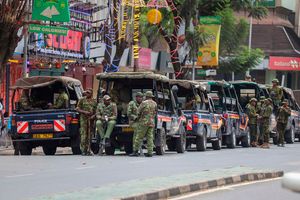
Anti-riot police patrol Eldoret City streets on July 7, 2026.
Photo credit: Jared Nyataya | Nation Media
Reverend Timothy Njoya, one of the most outspoken clerics during the Moi era, recalled that calls by church leaders for political pluralism in the late 1980s laid the foundation for the Saba Saba movement despite fierce resistance from the State.
While veterans celebrated the gains made since 1990, some leaders urged Kenyans to commemorate the anniversary without street demonstrations.
ODM party leader Oburu Oginga said Saba Saba should remind Kenyans of the democratic milestones already achieved rather than becoming an occasion for protests.
“The original Saba Saba in 1990 had clear, monumental goals: dismantling the one-party state, repealing Section 2A and restoring multiparty democracy,” Dr Oginga said.
“Having lived through that struggle, I am proud that these milestones were achieved in the early 1990s and later anchored in our 2010 Constitution.”
He said Kenya should now focus on safeguarding those democratic gains. “Instead of turning to the streets in conflict, let us honour the brave heroes who fought for our freedom. Let us protect our hard-earned democracy,” he said.
Kitui Senator Enoch Wambua said the anniversary underscored the continuing struggle for democratic governance, arguing that many of the issues that sparked the 1990 protests remained unresolved.
Anti-Riot police officers outside the Kenya National Archives ahead of the Saba Saba protests.
Photo credit: Francis Nderitu| Nation Media Group
He noted that President William Ruto was a leading member of the Youth for Kanu ‘92 (YK’92), a movement that opposed the push for political reforms during the Moi era.
“Thirty-six years later, we have come full circle, and the old guard and Gen Z are back in the streets fighting against a return to the dark days,” Mr Wambua said.
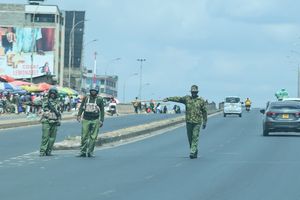
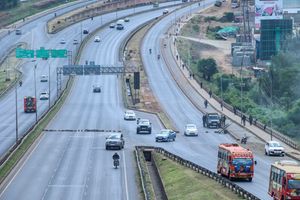
Yesterday’s Saba Saba anniversary was marked by heightened security across several towns, with major roads barricaded, businesses closed and public transport disrupted as authorities sought to prevent planned demonstrations.
The commemoration comes amid sustained public concern over governance, corruption, alleged abductions and extrajudicial killings, issues that have increasingly mobilised younger Kenyans born long after the struggle for multiparty democracy.
Veterans of the second liberation said the freedoms secured through Saba Saba remain significant but warned that safeguarding constitutional rights requires continued vigilance from both citizens and institutions.