The knives are ready and the elders have spoken. Across western Kenya and parts of eastern Uganda, thousands of boys are preparing for one of the most significant rites of passage in the Bukusu and Bamasaba communities.
On August 1, the traditional circumcision season officially begins setting in motion weeks of ceremonies in which boys transition from childhood to adulthood.
But as the season approaches, Bukusu elders and traditional circumcisers are raising concerns about threats to the cultural practices surrounding the centuries-old rite, including the destruction of sacred wetlands, forced circumcision and the growing use of traditional initiation songs in political campaigns.
The concerns emerged as elders and veteran circumcisers gathered in Trans Nzoia County to perform Khubita Chingembe, the sacred blessing of circumcision knives that signals the beginning of the initiation season.
Held at Kongoli in Cherangany, the ceremony brought together traditional circumcisers and Bukusu elders to sanctify the knives before they are used in the month-long initiation season across Bungoma and Trans Nzoia counties and parts of eastern Uganda.
At the home of veteran circumciser Patrick Barasa, the elders performed a series of rituals including the slaughter of a white or brown cockerelseeking the blessings and protection of their ancestors before the ceremonies begin.
For the circumcisers, the ceremony is more than preparation for the physical act of circumcision. It is a spiritual and cultural ritual that connects the present generation with those who came before them.
“Our culture is almost biblical because we follow the traditions of our forefathers, including Abraham. This is a sacred moment for us, and we perform these rituals to invoke the blessings of our ancestors as we undertake this important responsibility,” said Divas Mutambo, a traditional circumciser from Kolongolo in Kwanza.
Yet beneath the celebration is growing anxiety over whether some of the cultural practices that give the ceremony its meaning will survive.
One of the biggest concerns is the destruction of wetlands traditionally used during the initiation process.
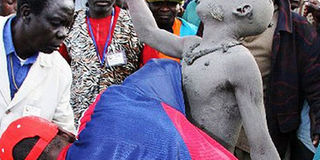
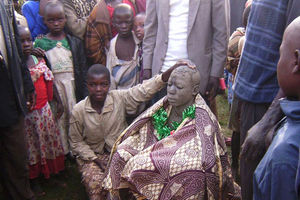
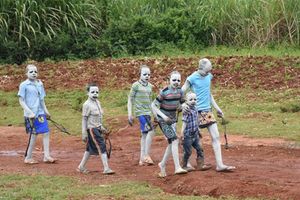
According to the circumcisers, the wetlands provide special clay soil that is traditionally applied to initiates before circumcision. The sites have over generationsbeen regarded not merely as sources of the clay but as important cultural spaces connected to the initiation ceremony.
“Most of our wetlands have been destroyed or invaded by agricultural activities. We are appealing to the county government to help protect these sacred areas,” Mr Mutambo said.
The elders want county and national governments to recognise the wetlands as cultural heritage sites and protect them from further destruction.
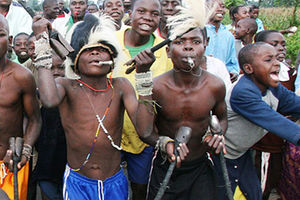
A boy ready for traditional circumcision at his rural home in Bukembe, Bungoma.
Photo credit: File I Nation Media Group
They say losing the wetlands would mean more than losing an environmental resource as it would also threaten an important link in a cultural tradition handed down through generations.
The elders are also concerned about what they describe as a gradual decline in the number of boys undergoing the traditional rite warning that changing lifestyles and the erosion of cultural practices could eventually weaken the tradition.
Peter Masinde, chairman of the Bukusu Council of Elders in Trans Nzoia County, called for renewed efforts to preserve the community’s cultural heritage.
“We must protect our culture and ensure it is passed on to future generations because it forms an important part of our identity,” he said.
But as the elders defend the tradition they are also drawing a clear line on how it should be practised.
They warned traditional circumcisers against forcing people from communities that do not observe the Bukusu rite to undergo circumcision.
Mr Masinde said the practice has no place in Bukusu tradition and urged circumcisers to respect the wishes and cultural practices of other communities.
“We do not want to see anyone being forced to undergo circumcision if they are not from our community because that goes against every principle of reason and our cultural values,” he said.
The elders said forced circumcision not only violates individual choice but also goes against the values associated with the tradition itself.
Bukusu elder John Sululu and traditional circumciser Leonard Wekesa criticised politicians for using sacred Bukusu circumcision songs during political rallies saying the practice diminishes the dignity of the ceremony.
They argued that songs and expressions associated with initiation have a cultural meaning that should not be appropriated for political contests, ridicule or attacks against opponents.
“We condemn and disown any leader who has no respect for our culture while seeking political fame. This is not just an insult to one individual, but an insult to the entire Bukusu community and its traditions,” Sululu said.
The elders want the songs to remain within their traditional setting, where they can continue to serve their cultural purpose rather than becoming political tools.