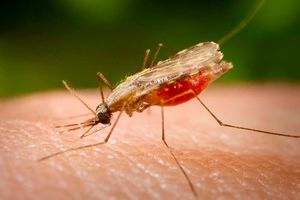
Scientists have discovered a new species of mosquito along the coast of Kenya and Tanzania which they say is highly resistant to insecticides.
It is provisionally named ‘Pwani molecular form, according to researchers from the University of Glasgow, the Wellcome Sanger Institute and Ifakara Health Institute in Dar-es-Salaam.
Their findings were published in ‘Molecular Ecology’, a leading global peer-reviewed journal, last week.
The scientists observe that the new species seems to have developed resistance in a completely different way and was previously unidentified along the coast of Kenya and Tanzania.
It belongs to the Anopheles gambiae complex, which is a group that includes some of the world's most deadly malaria vectors. The new insect presents a fresh headache considering the fact that chemical insecticides are at the heart of controlling disease vectors such as mosquitoes.
Staff prepare mosquito breeding basins at Ifakara Health Institute in Dar-es-Salaam on December 13, 2021.
Photo credit: File | Nation Media Group
They further add that the new species is restricted to the coastal part of the two neighbouring countries and has massive potential to fuel malaria infections thereby worsening the burden of disease in the East African region.
According to findings, the Pwani molecular form has a unique insecticide resistance profile and unlike other malaria vectors in the region, appears to lack common genetic markers of resistance.
According to Ms Sophia Mwinyi, who is the lead researcher, they deployed the latest technology in genetic sequencing for malaria.
Genetic sequencing in malaria, specifically whole-genome sequencing (WGS), refers to the process of determining the complete DNA sequence of a malaria parasite or a mosquito carrying the parasite.
This technology helps researchers understand the parasite's genetic makeup, including mutations and variations, which is crucial for studying disease mechanisms, drug resistance, and developing new treatments and vaccines.
This means that WGS provides a comprehensive view of the malaria parasite's genome, allowing scientists to identify genes responsible for various aspects of the parasite's life cycle, such as its ability to infect humans and develop resistance to antimalarial drugs.
Public Health and Professional Standards Principal Secretary Mary Muthoni.
Photo credit: Bonface Bogita | Nation Media Group
WGS can track how malaria parasites evolve and adapt to new environments thanks to things like climate change, including changes in their genetics due to exposure to antimalarial drugs.
As a result, Ms Mwinyi explains that their new findings reveal the presence of a genetically divergent mosquito that could have profound implications for malaria vector surveillance and insecticide-based control strategies in the region.
"The discovery of the Pwani molecular form reveals gaps in our understanding of mosquito diversity in malaria-endemic areas.
Its distinct insecticide profile and restricted geographical presence suggest that this mosquito species possibly plays a potential role in sustaining malaria transmission during the dry season when other vectors are less active in these respective areas,” Ms Mwinyi observes.
She notes this could also explain the continued persistent cases of malaria in these locations despite the widespread use of bed nets.
"By using genetics, we can help stay ahead of the game in the fight against malaria. Understanding the DNA of mosquito populations helps scientists and public health officials design better interventions to stop disease transmission," says Fredros Okumu from the University of Glasgow and Ifakara Health Institute.
The Ministry of Health’s Public Health and Professional Standards Principal Secretary Mary Muthoni highlighted that the latest official data shows Kenya in 2023-2024 reported about 5.5 million malaria cases, which translates to an incidence of 104 per 1, 000 population nationally.
A researcher at the Ifakara Health Institute, Dar-es-Salaam, demonstrates how mosquitoes are fed at the Vectorsphere insectary on December 13, 2021.
“Our data now shows that the top 10 counties with the highest malaria burden accounted for 4,900,664 cases, representing 90.3% of all cases. These counties are Siaya, Busia, Kakamega, Migori, Kisumu, Homa Bay, Bungoma, Turkana, Vihiga and Kwale. Notably, Busia, Siaya, Kakamega, and Migori alone contributed 53.2% of all malaria cases in the country, underscoring the need for intensified interventions in these regions,” PS Muthoni told Nation a day after World Malaria Day celebration last week.
The PS added the very high-burden areas comprise six counties namely Busia, Kakamega, Kisumu, Migori, Siaya, and Vihiga, with an average adjusted incidence of 748 malaria cases per 1,000 people while high-burden counties, including Bungoma, Homa Bay, Kwale, Turkana, and West Pokot have 474 cases per 1000.
PS Muthoni said last year, community health promoters (CHPs) treated 1,097,883 malaria cases at the community level.
She explained the 2023/24 mass net campaign aimed to distribute 15.3 million nets across 24 counties with
The campaign achieved 14,627,269
“This is above 80% WHO-recommended Long-lasting insecticidal nets (LLIN) coverage in areas at risk of malaria and the minimum threshold to achieve a significant public health impact by reducing Malaria transmission,” the PS noted.