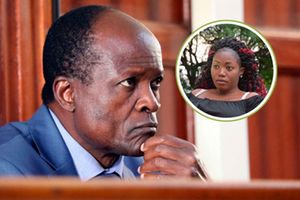
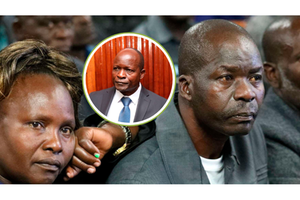
The parents of slain Rongo University student Sharon Otieno have urged the High Court to show mercy to former Migori governor Okoth Obado and consider imposing a non-custodial sentence.
Sharon Otieno's parents: Don't crucify Obado
Appearing before Justice Cecilia Githua during sentencing proceedings, Douglas Zacharia Otieno and Melida Auma asked the court to weigh both the mitigating and aggravating factors in the case before determining an appropriate sentence.
In a report filed in court, the couple said justice should be tempered with mercy, particularly where those most affected by the crime are asking for leniency.
“The interested parties express their deep gratitude to this Honourable Court for delivering justice through the conviction. However, at this critical sentencing juncture, the family prays that the court exercises its unfettered judicial discretion to balance the demands of retributive justice with the wishes of the victim’s family,” they said.
While describing the loss of their first-born daughter as heartbreaking and horrific, the parents said they had chosen the path of forgiveness and had extended an olive branch to Obado.
Former Migori Governor Okoth Obado interacts with his supporters at the Milimani High Court ahead of his mitigation and sentencing hearing. He was convicted with two others in connection with the 2018 murder of Rongo University student Sharon Otieno and her unborn child.
Photo credit: Billy Ogada | Nation
“My Lady, we humbly submit that post-offence restorative steps and the economic survival of dependants are pivotal indicators that merit a departure from maximum sentencing templates,” the report states.
Obado, his former personal assistant Michael Oyamo and Caspal Obiero were convicted in July of murdering Sharon. The court found that they acted in concert with other people who were not before the court to execute the killing.
Sharon, 26, was a second-year diploma student in public health at Rongo University and was 28 weeks pregnant when she was killed between September 3 and 4, 2018, in Owade, Homa Bay County. She had been abducted alongside a journalist who escaped.
The parents told the court that Sharon had been a vital pillar of support to the family and that her death left them emotionally shattered and financially strained.
However, they said Obado later stepped in to support the family financially.
“In the wake of this tragedy, the first offender (Obado) did something extraordinary; he stepped forward to financially support the family and their household. He did not do so under a court order; he did this voluntarily, driven by genuine compassion and a desire to see the family’s living conditions ameliorated,” the report says.
The family argued that restorative justice seeks to repair relationships between offenders, victims and society, rather than focusing solely on punishment.
“The secondary victims hereby ask this court to break the cycle of trauma. They plead for a sentence focused on rehabilitation rather than mere retribution, allowing the first offender a pathway to redeem himself,” they said.
The parents also asked the court to invoke Section 23 of the Victim Protection Act and issue a restitution and compensation order alongside a non-custodial sentence, while balancing their decision to forgive Obado against public interest, deterrence and sentencing guidelines.
They thanked the court for securing a conviction but urged the judge to take their wishes into account during sentencing.
Describing the matter as an unprecedented sentencing hearing, they said the court faced the difficult task of balancing the interests of justice with the desires of the victim’s family.
The couple recounted the pain they had endured since Sharon’s death, saying the years that followed had been marked by tears, sleepless nights and nightmares.
“Losing the first person to ever bestow the title of ‘father’ and ‘mother’ respectively to you is painful. It is heart wrenching. It is horrific. But, my Lady, Sharon’s family now seeks peace,” they said.
They told the court they wanted closure and an opportunity to move on from what they described as a dark chapter in their lives.
While acknowledging the gravity of the offence, the parents said no one understood the weight of their loss better than they did.