When judges and lawyers gathered in a courtroom at the Supreme Court in Nairobi on Monday, the proceedings, however solemn, resembled a normal court sitting.
Robed advocates rose to make submissions, a bench of judges presided over the session and tributes flowed from different quarters of the legal profession.
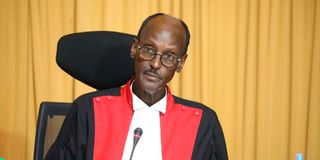
Instead, the Judiciary had convened to formally close the professional file of Mohammed Khadhar Ibrahim, a respected judge of the Supreme Court of Kenya whose decades of service helped shape the country’s constitutional jurisprudence.
The ceremony, known as Closing of File Proceedings, is a unique ceremony, within Kenya’s legal fraternity used to honour departed judges and advocates who dedicated their lives to the administration of justice.
“It’s just for Judges and some senior lawyers,” said Law Society of Kenya President- elect Charles Kanjama.
Led by Chief Justice Martha Koome, the Judiciary paid tribute to Justice Ibrahim’s distinguished legal career and his enduring contribution to the rule of law.
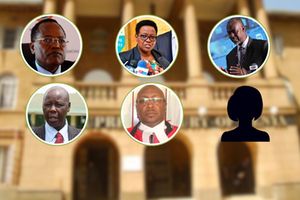
The Supreme Court in Nairobi.
Photo credit: File | Nation Media Group
“The tradition of conducting Closing of File Proceedings for departed members of the Bench and Bar serves as a symbolic reminder of the noble responsibility borne by legal practitioners,” Chief Justice Koome said during the ceremony.
She described Justice Ibrahim as a champion of human rights and constitutionalism whose work helped shape Kenya’s justice system.
“The ceremony marked the final honorary conclusion of Justice Ibrahim’s distinguished service on the bench. He will be remembered for his immense contribution to the development of justice in Kenya, his principled courage, quiet strength, and unwavering commitment to human dignity," Speaker of the National Assembly Moses Wetang’ula, also a lawyer, said of Justice Ibrahim.
The ceremony held in honour of Justice Ibrahim reflects a long-standing tradition within Kenya’s legal profession.
Although the practice is not expressly provided for in law, it has evolved into a highly respected ritual used to honour members of the bench and bar who die while serving the cause of justice.
Lawyer Thomas Maosa explains that the ceremony symbolises the end of a legal journey that began when an advocate or judge joined the profession.
“When a lawyer is admitted to the bar, it marks the opening of his or her professional file,” he said.
“The profession comes with a duty to defend justice and the rule of law. If they die in the course of that service, then that file must be closed in a dignified manner, thus the ceremony to honour their service.”
Representatives from institutions such as the Office of the Director of Public Prosecutions, the State Law Office and Law Society of Kenya appear in a court setting to “make submissions” before a bench of judges.
After hearing the tributes and submissions, the judges symbolically declare the professional file closed.
“It is the greatest honour the legal fraternity can give one of its members after death while serving,” said Mr Maosa.
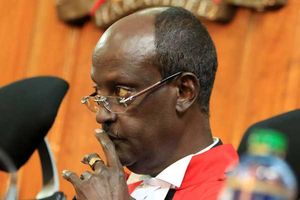
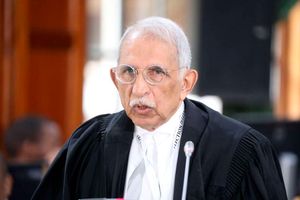
The late Justice Mohammed K Ibrahim.
Photo credit: File | Nation Media Group
Kimani was abducted and murdered in 2016 alongside his client Josephat Mwenda and taxi driver Joseph Muiruri after leaving court in Mavoko.
The case shocked the nation and sparked international outrage because police officers were accused of involvement in the killings.
After years of court proceedings, several suspects were eventually convicted and sentenced for the murders.
According to legal experts, the closing of Kimani’s file carried deep symbolic meaning.
Lawyer Maosa noted that Kimani died while carrying out his professional duty of defending the rights of a client.
“It was important for the legal fraternity to honour him because he died while discharging his mandate and oath to defend justice,” he said.
For many lawyers and activists, the ceremony also represented closure after a long and painful search for justice.
The Judiciary has also recently conducted similar proceedings in honour of two judges who died in 2024 David Majanja and Daniel Ogembo.
The special tribute session was held at the Milimani Law Courts and presided over by Chief Justice Koome.
Chief Justice Koome said the tradition of holding special tribute sittings reminds members of the legal profession of their responsibility to uphold justice.
“It is a moment for collective reflection to honour those who have served with distinction and to recommit ourselves to the values that defined their lives,” she said.
Supreme Court judges (from left) Isaac Lenaola, Dr Smokin Wanjala, Philomena Mwilu, Chief Justice Martha Koome, the late Mohamed Ibrahim, Njoki Ndung'u and William Ouko.
Photo credit: File | Nation Media Group
“This special sitting, while marked with grief, is equally a celebration of their remarkable contributions to the law and to society,” the Chief Justice said.
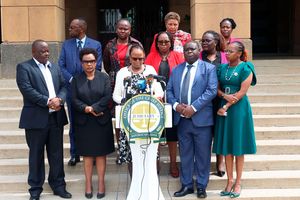
Speaking after the ceremony honouring Justice Ibrahim, Law Society of Kenya President Faith Odhiambo said the gathering brought together both the bench and the bar to celebrate a distinguished jurist.
“The solemn occasion brought both the bar and bench together in honour of one of the most astute members of the legal profession,” she said.
“We are reminded of the ideals of humility, independence, competence and courage which he stood for and lived by,” she said.
Legal scholars say closing of file proceedings also serve another important purpose: preserving the institutional memory of the legal profession.
The tributes and submissions made during the ceremony are often recorded and adopted as part of the permanent record of the court.
Over the years he served in several divisions, gaining wide experience across civil, commercial, constitutional and criminal law.
He initially served in the Civil Division in Nairobi before moving to the Commercial Division at Milimani Law Courts, where he handled complex cases involving banking, company law, securities and intellectual property.
In 2004 he joined the Judicial Review and Constitutional Division, where he participated in cases that helped shape constitutional jurisprudence during a critical period in Kenya’s democratic evolution.
Justice Ibrahim later served in Eldoret and Mombasa as a High Court judge, presiding over both civil disputes and serious criminal trials.
Justice Ibrahim’s vast experience at the High Court paved the way for his appointment to the Supreme Court of Kenya in 2011 as part of the inaugural bench created under the Constitution of Kenya 2010.
At the apex court, he participated in numerous landmark decisions including presidential election petitions and major constitutional interpretation cases that have shaped Kenya’s governance framework.
Chief Justice Koome noted that Justice Ibrahim believed strongly in the importance of dissenting opinions in judicial decision-making.
His dissenting judgments reflected an independent judicial philosophy rooted in constitutionalism, human dignity and protection of individual freedoms.