A US lawmaker has questioned a controversial plan to quarantine in Kenya Americans exposed to Ebola, saying the US already has domestic facilities specifically designed to safely care for the patients.
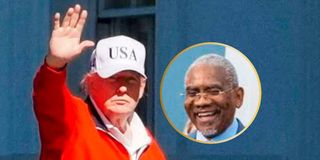
United States House of Representatives ranking Democrat Gregory Meeks told the President Trump administration to bring Americans home for treatment instead of burdening a country that bore the brunt of deep aid cuts, including closure of USAID.
“Our government has a responsibility to help Americans abroad. The US already has domestic facilities specifically designed to safely care for Ebola patients. The Trump admin should bring Americans home and help them, not outsource that responsibility to a foreign government,” Meeks posted on the Democrats House Foreign Affairs Committee X page.
Meeks noted the Trump administration “has already slashed health funding for Kenya, but now expects Kenya to host American Ebola patients—rather than bring them home to care for them here.”
President William Ruto, Congressional Black Caucus House Minority Leader Hakeem Jeffries (right) and Congressman Gregory Meeks at United States Capitol in Washington DC in May 23, 2024.
Photo credit: PCS
Meeks is one of the senior most Democrat legislators in the House of Representatives. He represents the 5th Congressional district of Queens in New York. He is a ranking member of the United States House Committee on Foreign Affairs
Meeks was responding to media reports in the US that American personnel had already arrived at the Laikipia Air Base and that plans for the US Ebola isolation facility continued in spite of a court order freezing further development of the facility.
The lawmaker placed the blame for the current global Ebola crisis squarely on the Trump administration.
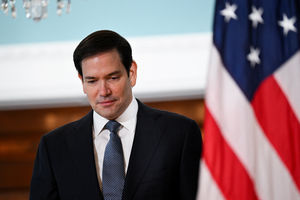
“Trump and Rubio destroyed USAID, defunded US global health programs, and withdrew the US from the WHO—while MAGA loyalists continue to mismanage the CDC. The inevitable outcomes are a global community more susceptible to disease outbreaks and a surge in preventable deaths.”
Kenyan-Americans in the diaspora had varied views on the proposed Ebola facility in Laikipia and the utility of quarantining Americans in Kenya. Bowling Green University professor Kefa Otiso does not think Kenya is necessarily exposing itself to Ebola with the proposed facility in Laikipia.
“This is one of many Ebola quarantine facilities that the country has set up. Sooner or later, Ebola will get to Kenya because the country is near this disease's epicenter in eastern DR Congo. There are many socio-economic links between Kenya and eastern DR Congo that are likely to introduce the disease with or without the creation of this particular quarantine center.”
He expects any US quarantine facility in Kenya to be adequately equipped to handle the healthcare needs of any infected Americans. “It is not unusual to restrict the individual rights of US citizens in times of emergency to protect or maintain public safety.”
Washington DC-based civil society activist with the 6.25 Movement Valere Githae states that she is not comfortable with an Ebola treatment facility for Americans in Kenya.
“As a Kenyan-American, this concerns me deeply. Yes, while Ebola isn’t airborne, outbreaks can escalate with terrifying speed. All it takes is one misstep from a single provider on the ground. Kenya’s existing infrastructure and governance challenges make containing even a minor breach extremely difficult. The margin for error with a virus this deadly is essentially zero, and I don’t think we’re being honest about that risk.”
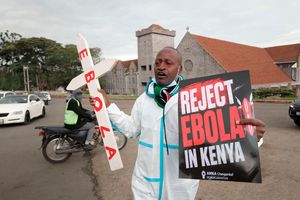
Demonstrators gather near a barricade they created during a protest against a US-backed Ebola quarantine plan to establish a 50-bed facility at a Kenyan air force base, to host Americans exposed to Ebola in Nanyuki town, Laikipia County on June 1, 2026.
Photo credit: Reuters
Valerie says infected Americans should be treated in the US arguing the it has the infrastructure, the resources, and the containment capacity to handle the disease properly. She further adds that keeping patients in a country like Kenya, that isn’t equipped for that level of biocontainment, isn’t just unfair - it’s a liability for everyone involved including Kenyans.
Northern Arizona University professor Eric Otenyo is skeptical the Kenyan government can safely manage the scale and perilous nature of an Ebola pandemic. He is opposed to the development of the Ebola quarantine facility in Laikipia and is unconvinced about US accountability to Kenyan courts. “Kenya's ruling elite is grossly incapable of managing public health challenges. The US has also never been accountable to African courts.”
On the matter of transparency of the bilateral health agreements between the US and Kenya, California based Kenyan-American Peace and Conflict resolution consultant Mukurima Muriuki states: “When governments are dealing with something as serious as Ebola, secrecy or vague communication only fuels panic, misinformation, and distrust. People deserve to know as much as can be availed. ”
Professor Otiso suggests the Kenyan government has not been transparent on the details of the deal. He however adds that the extent of this transparency depends on the nature of the agreement that is being used to create the US quarantine facility in Kenya. He commends the Kenyan courts for judicial review of the Ebola facility in Laikipia and issuing temporary orders halting the setting up of the facility.
He however feels that the challenge will be whether or not the court order will be honored by President Ruto’s administration.
“I think the court intervention reflects the seriousness of the issue and the level of public concern surrounding it. Courts exist partly to ensure that governments follow proper legal and constitutional processes, especially on matters affecting public safety and national interest,” says Mukurima Muriuki.
“The health agreement signed between the US and Kenya happened largely out of public view. Most people in Kenya and the US had no idea it even existed. When you’re talking about a facility that could expose millions to a hemorrhagic fever, that level of secrecy isn’t just irresponsible - it’s a breach of public trust,” adds Valerie.
“There is pushback regardless of diplomatic pressure. This is what sovereignty looks like in practice. No international relationship should come at the cost of your people’s safety.”