The Independent Electoral and Boundaries Commission (IEBC) will undertake a phased approach in the review of boundaries and wards as opposed to a comprehensive process because of constraints and strict timelines.
In response filed in court on Monday, IEBC chairperson Erastus Ethekon said although it does not contest its constitutional and statutory obligation under the constitution and statute for periodic delimitation of boundaries, the timeline for comprehensive delimitation of the electoral boundaries has since lapsed.
Mr Ethekon said the constitution and the IEBC Act prescribe mandatory, sequential and time-bound process whose completion, validation and operationalisation cannot lawfully be achieved in time for the 2027 General Election.
“In any event, the mere lapse of timelines, without evidence of bad faith or material prejudice, does not constitute a constitutional crisis. The constitution does not contemplate a paralysis of electoral process due to gaps not attributable to the commission’s willful neglect,” he said.
He asked the court to dismiss a petition filed by Philip Kipkemoi Langat seeking to block the commission from conducting any by-elections or the 2027 general election until it has reviewed the boundaries and wards as required by the constitution.
Mr Langat pointed out that Article 89(2) of the Constitution mandates the electoral body to review the names and boundaries of constituencies at intervals of not less than eight years, and not more than twelve years.
The constitution further states that any review shall be completed at least 12 months before a general election of Members of Parliament.
But in response, Mr Ethekon said while the timeline for delimitation has lapsed, existing constituencies and wards remain constitutional and valid under article 89(1) of the constitution, pending review.
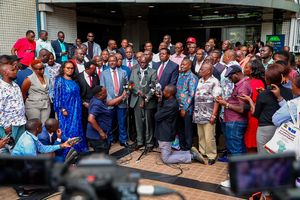
Independent Electoral and Boundaries Commission (IEBC) Chairperson Erastus Edung Ethekon (right) Vice-Chairperson Fahima Araphat Abdallah (centre) and commissioner Hassan Noor Hassan before the Constitution Implementation Oversight Committee at Parliament Buildings in Nairobi on September 25, 2025.
Photo credit: Dennis Onsongo | Nation Media Group
He said the commission has made a decision to undertake delimitation on a phased approach for activities which are not affected by any litigation towards electoral boundaries reviews without compromising the quality and level of preparedness for the upcoming general elections.
The IEBC chair said compelling the commission to undertake delimitation at this stage, in light of status quo, would expose the commission to serious legal risk, both as to the validity of the delimitation exercise and to potential contempt of court proceedings.
“Further, the constitution and statute prescribe a strict, sequential and time-bound process for delimitation exercise, encompassing public participation, parliamentary scrutiny, final publication and judicial review proceedings which cannot be lawfully and practically be completed, validated and implemented in time to apply to the August General Election,” he said.
The official said section 24B of the IEBC Act and the Fifth Schedule prescribe steps that are sequential, time-bound and legally indispensable and the commission has no authority to abridge, collapse or bypass any of the prescribed stages.
He added that the petition omits the fact for prolonged periods the commission was not properly constituted due to vacancies in the offices of the chairperson and commissioners, thereby rendering it legally incapable of undertaking a function that constitutionally demands collective decision-making.
He also said the commission does not contest its constitutional and statutory obligation under the constitution and statute periodic delimitation of boundaries.
“However, even assuming that the commission issued the notice of delimitation of electoral units in January 2026, the constitution and the IEBC Act prescribe mandatory, sequential and time-bound process whose completion, validation and operationalization cannot lawfully be achieved in time for application to the 2027 General Election,” he said.
Mr Langat through Felix Keaton said in the petition that IEBC has embarked on putting the cart before the horse, by preparing for general election before first conducting the delimitation of electoral units.
Mr Keaton argued that Kenyans will suffer irreparable and irreversible injury on the basis of changing population quota, geographical features and urban centres, community of interest, historical, economic and cultural ties and means of communication.
He wants the court to determine whether there is a constitutional crisis over the failure by IEBC to conduct the review of names and boundaries as required by the constitution.