A vicious fight for the control of police salaries has deepened with the police chief vowing not to surrender control of the Sh60 billion annual budget in defiance of an order by MPs.
At the heart of the battle between Inspector-General Douglas Kanja and the National Police Service Commission is whether managing the police payroll is a human resource or an operations function.
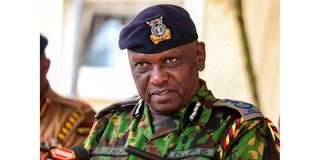
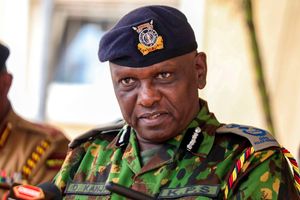
To Mr Kanja, it is an operations function, and he has now vowed to defy a parliamentary order to surrender the payroll to the NPSC, insisting that doing otherwise would be a violation of the Constitution.
One of the independent commissions established by the Constitution in 2010, the commission specifically oversees the human resource functions of the National Police Service (NPS), but over the years, it has been unable to wrestle control of the payroll from police chiefs.
A former commissioner who served in the inaugural NPSC yesterday told the Nation that past attempts by the police employer to access the police payroll have failed.
“You cannot have control of people whom you have employed, disciplined and even promoted without access to these vital records,” said the former commissioner, who sought anonymity to speak freely on the matter.
And the control of the payroll is part of the power play because it has implications for other human resource actions, like promotions.
Just before his exit from office, Mr Kanja’s predecessor, Japhet Koome, clashed with the Eliud Kinuthia-led commission over contested promotions. Mr Koome had announced the promotions without consulting the NPSC, which rejected them.
As the battle between the commission and Mr Koome raged on, officers who had been promoted enjoyed the benefits, including a salary raise after the IG asked the payroll staff to effect the new changes.
Former Inspector General of Police Japhet Koome.
Photo credit: File I Nation Media Group
Mr Kanja, by his latest stance, has followed in the footsteps of his predecessors in prolonging a long-running war pitting the police against the employer, the NPSC.
The National Assembly’s Public Accounts Committee (PAC) last Tuesday directed Mr Kanja to cede all human resource functions, including the police payroll, to the commission following a heated session.
That order followed the parliamentary watchdog’s scrutiny of a report by the Auditor-General, Nancy Gathungu, on queries flagged in the financial year ending June 2023.
Auditor-General Nancy Gathungu.
Photo credit: File | Nation Media Group
The report noted it was impossible to know the effectiveness of the NPSC’s strategic plan for 2019-2022 and, in effect, whether the payroll status as per disclosures by senior police officers is accurate.
When the timeline of the strategic plan lapsed in 2022, the NPSC had still not got access to the police payroll.
Mr Kanja, while honouring PAC summons last Tuesday, had seemed to soften his stance when he agreed to let the commission audit the police payroll.
Payroll audits are usually conducted to find out whether all salaries are being paid in accordance with the set guidelines, if there are any structural weaknesses and whether there are any ghost workers.
But before the PAC session ended, Mr Kanja stood his ground by insisting that the payroll is not a human resource function, but rather an operational one and which falls squarely in his docket.
In an interview with the Nation on Friday, Mr Kanja maintained that surrendering control of the payroll to the commission – the body responsible for hiring and firing of police officers – would be a violation of Article 245 of the Constitution.
It states that the Inspector-General “shall exercise independent command over the National Police Service, and perform any other functions prescribed by national legislation”.
The police boss is now accusing the PAC of issuing an order he deems to be in conflict with his role as the highest-ranking police officer.
“The constitution is clear that no one should give directions to the IG on matters of operations. The payroll being an operational tool, such directives cannot be honoured,” Mr Kanja told Nation.
Efforts to reach NPSC through CEO Peter Leley did not bear fruit, as there was no response to calls and WhatsApp messages.
NPSC spokesperson Gerald Gichura, too, did not respond to multiple calls by the Nation.
But Mr Kanja, who promised MPs a rosy relationship with the NPSC during his August 15, 2024, vetting, has signalled he will fight anyone who tries to wrestle control of the payroll from the tight grip of the NPS.
“The Constitution dictates that no one can give orders to the Inspector-General on matters of operations. The police payroll is one of the operational tools. I am not about to violate the Constitution,” Mr Kanja said.
Mr Kanja had told MPs the police service is committed to cooperation with the NPSC in accordance with the law.
He maintained that the NPS has always honoured requests from the NPSC to conduct human resource audits.
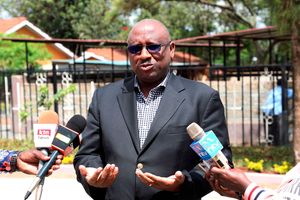
Mr Charles Kanjama, a constitutional lawyer, said the IG was the right person to hold the police payroll.
“Look at the Judicial Service Commission, the Parliamentary Service Commission and even the Public Service Commission. None of these holds the payroll of the institution that they oversight,” Mr Kanjama said.
Control of the payroll, promotion and transfer of police officers has for years been at the heart of a cold war between the NPS and NPSC.
When the commission led by Eliud Kinuthia exited office in March 2022, it warned successors to be wary of a “coup” by senior police.
The Kinuthia-led team, however, said it had laid a strong human resource system that will see the smooth operations for the 145,000 police officers in the service.
A report by a task force on police reforms handed over to President Ruto noted police commanders had continued to usurp the powers of the commission.
"Regrettably, however, the NPSC leadership has acquiesced to the continued usurpation of its functions by the NPS leadership, thereby exacerbating the vices that it was established to redress," said the report by the task force headed by retired Chief Justice David Maraga.
Following his election in 2022, President Ruto signed an executive order granting the police service financial autonomy- and assumed operational independence. Consequently, the police IG is designated the accounting officer of the NPS, taking over the powers exercised for years by the Office of the President.