The National Police Service Commission (NPSC) cannot recruit police officers, the Employment and Labour Relations Court ruled Thursday, settling a legal dispute between the commission and Inspector General of Police Douglas Kanja.
The landmark decision clears the path for the planned recruitment of 10,000 police constables under the IG's authority.
In a judgment sparking nationwide debate, the court declared unlawful a September 2025 recruitment advertisement by NPSC, stating it violated constitutional provisions.
"Any purported recruitment process initiated by former NPSC chair Peter Lelei or the commission stands unconstitutional, ultra vires, null and void ab initio (from inception)," the ruling stated, specifically invalidating Legal Notice Number 159 of September 19, 2025.
The case originated from a petition by former Kilome MP Harun Mwau, who challenged NPSC's attempt to oversee police recruitment.
Representing NPSC, advocates argued that while the IG commands police operations, the commission retains exclusive human resource authority under Article 246(3). They maintained this includes recruiting, appointing, promoting, and transferring officers.
However, Mr Mwau, backed by IG Kanja and Attorney General Dorcas Oduor, cited Article 245(2)(b), which safeguards the IG's independence regarding police employment matters. They contended NPSC's mandate covers only civilian staff recruitment, not police officers.
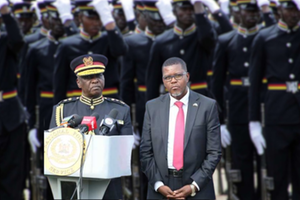
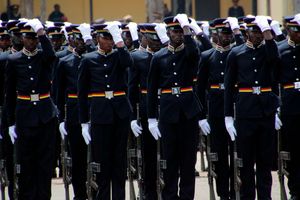
Police recruits during a passing out parade on January 10, 2023. The National Police Service (NPS) has renewed the multibillion-shilling medical cover for officers.
Photo credit: File | Nation
The court’s verdict established that hiring of national security officers should be conducted by a national security organ, which include the Kenya Defence Forces, the National Intelligence Service; and the National Police Service, as defined in Article 239 of the Constitution.
"NPSC is not a security organ," the judgment emphasized, placing police recruitment firmly within NPS's operational command under the IG.
Recruitment advertisement
The court further clarified that constitutional doctrine bars NPSC from involvement in officer deployment, assignments, promotions, suspensions, or dismissals.
This ruling comes amid critical police staffing shortages nationwide. Notably, IG Kanja serves simultaneously as an NPSC commissioner, highlighting the institutional complexities addressed in the case.
While affirming constitutional separation between IG and NPSC roles, the court identified conflicting clauses in the NPSC Act and National Police Service Act.
The court ordered comprehensive legislative review to align both laws with constitutional provisions and prevent future jurisdictional conflicts.
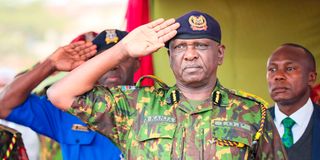
Inspector-General of Police Douglas Kanja.
Photo credit: File | Nation Media Group
“In order to cure the problem in NPSC and NPS Acts, I direct that the two Acts be reviewed comprehensively, with a view of aligning them to the Constitution to avoid interference with powers of the IG and to avoid a conflict clearly visible within the Constitutional provisions,” said the court.
"NPSC's unilateral recruitment advertisement violated police independence principles and Article 10(2)(a)’s legality requirements," Mr Otieno explained.
He stressed the IG's direct involvement ensures operational integrity and chain of command adherence.
“This judgment is a timely reminder that constitutional offices are not power autonomous entities, and that every function must trace its legitimacy to the text of the Constitution itself,” says Mr Otieno.
"This decision reaffirms that constitutional offices derive authority strictly from constitutional text, not autonomous power," Mr Otieno concluded.
The ruling resolves immediate recruitment uncertainties but mandates parliamentary action to harmonize police service laws.
As the government prepares for mass recruitment, focus shifts to how NPSC and NPS will navigate their strained institutional relationship moving forward.
The court's directive for legislative review suggests this ruling marks not an endpoint, but a new phase in Kenya's ongoing police reforms.