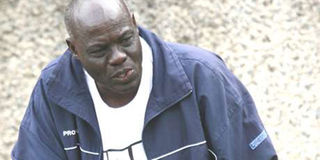
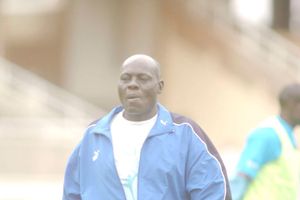
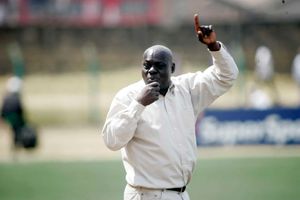
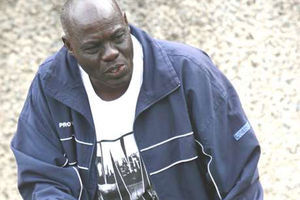
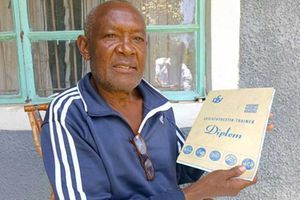
Caption for the landscape image: I don’t want sympathy: How Thigo battled cancer with the help of Raila Tuesday, May 12, 2026 Scroll down to read the article Allan Thigo as Gor Mahia coach in 2008. He led Gor Mahia to victory unbeaten in the 1976 league. Photo credit: File | Nation Media Group By Cecil Odongo Reporter Nation Media Group Article Related Football legend Allan Thigo never wanted to publicly ask for help despite his suffering. “Thura – village mate, I don’t want sympathy; I don’t want to be a beggar so that politicians can use my situation for mileage.” PREMIUM Thigo’s wish to be cremated inside 72 hours stirs debate Luo Council of Elders chairman says cremation is foreign to the community, but family will have the final say. PREMIUM ‘90-minute man’ Thigo redefined midfield role for Stars and Gor He was part of Harambee Stars squad that took Kenya to Afcon for the first time in 1972. PREMIUM Allan Thigo, Harambee Stars and Gor Mahia icon, passes away Thigo was a rare "player-cum-coach" who dominated the pitch for 12 seasons. PREMIUM Athletics coach Anzrah on living in the shadow of Joe Kadenge In 1977, he took up athletics by chance, and went on to become one of Kenya's most respected sprinters. . Recommended for you PREMIUM Let’s pull together and stage a world-class championships in 2029 PREMIUM Tusker look to rewrite history against Tanzanian opponents PREMIUM Seb Coe: We made the right decision for the sport, now deliver on the promise PREMIUM Isaac Wanjohi: Barefoot boy who shared his light with the world Login to join the discussion Please enable JavaScript to view the comments powered by Disqus. In the headlines Elections News Counties Business Opinion Sports Life & Style Health Podcasts Photos Newsletters Puzzles PREMIUM Court exposes officials in failed bid to seize Nakuru War Memorial Hospital Officials are accused of acting on instructions from powerful individuals. Ruto on New KCC: Let farmers run it The government has injected Sh8 billion into New KCC over the past three years. PREMIUM Hospital sued after twins born at 27 weeks, one dies, one loses his vision Father sued the hospital alleging that doctors failed to conduct mandatory screenings.
PREMIUM Thigo’s wish to be cremated inside 72 hours stirs debate Luo Council of Elders chairman says cremation is foreign to the community, but family will have the final say.
PREMIUM ‘90-minute man’ Thigo redefined midfield role for Stars and Gor He was part of Harambee Stars squad that took Kenya to Afcon for the first time in 1972.
PREMIUM Allan Thigo, Harambee Stars and Gor Mahia icon, passes away Thigo was a rare "player-cum-coach" who dominated the pitch for 12 seasons.
PREMIUM Athletics coach Anzrah on living in the shadow of Joe Kadenge In 1977, he took up athletics by chance, and went on to become one of Kenya's most respected sprinters.
PREMIUM Court exposes officials in failed bid to seize Nakuru War Memorial Hospital Officials are accused of acting on instructions from powerful individuals.
Ruto on New KCC: Let farmers run it The government has injected Sh8 billion into New KCC over the past three years.
PREMIUM Hospital sued after twins born at 27 weeks, one dies, one loses his vision Father sued the hospital alleging that doctors failed to conduct mandatory screenings.