Kenya Ports Authority Managing Director Captain William K. Ruto.

The approach of a cargo ship carrying 12,000 metric tonnes of cooking gas headed for Kilifi has triggered shockwaves among marine experts and industry players with safety, environmental and operational warnings about the terminal’s lack of readiness for such an operation.
The ship, Mt Barumk Gas/Sub is set to arrive anytime from today to discharge the gas at the controversial Kilifi terminal operated by Tanzania’s Lake Gas Limited despite earlier concerns raised by the Kenya Ports Authority’s senior marine pilots, who cited “intense currents” between May and September that have direct impact on “navigation and mooring safety”.
Last month, KPA conducted a simulation at the terminal and concluded that discharging gas offshore was almost impossible during the May-September period due to strong winds that may result in high waves and possible “vessel drift, cargo spillage and fire or explosion due to hazardous LPG handling”.
KPA confirmed knowledge of the ship’s arrival, dismissing claims that a similar attempt to discharge cooking gas had failed last year with KPA Managing Director Captain William Ruto calling it “a trial.”
“Lake Gas Limited has notified us of MT Barumk's planned arrival between 25th and 30th this month (May). We are currently finalising on safety and mitigation measures; of importance is that this will be a trial operation,” Captain Ruto told the Weekly Review in response to questions about the weekend arrival of the vessel.
The report written last month by KPA’s senior marine pilots recommended that the discharge of LPG at the terminal is best done between November to March with the ship only allowed to approach at six in the morning when the winds are at their weakest.
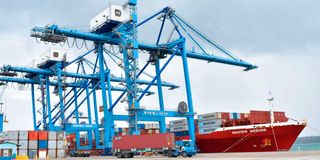
Panama-flagged container ship Lisa offloads cargo at the newly constructed container Terminal 2 at the port of Mombasa in June last year.
“Why did they have to do a trial now with a cargo as dangerous as LPG while the recommendations were very clear in the timings and what needs to be done to safeguard the environment, prevent hazard and preserve our marine safety records? We barely have any tug boats to hold on in Kilifi for days as the ship struggles to discharge LPG in a strong current zone,” the expert, who requested anonymity since he is not the official spokesperson, said.
A tug boat is a smaller vessel specifically designed to support a larger vessel in offshore operations like the one to be done for the LPG tanker. The experts believe it will take at least two tug boats for the operation that may take days to complete, scaling down KPA’s capacity to provide tug boats for other operations on its main port in Mombasa.
The experts believe under the violent water situation, it may take several hours to set up and days to discharge the 12,000 tonnes of gas if the operation succeeds. A longer wait may result in higher demurrage, higher wholesale and retail prices of cooking gas already said to be a burden to consumers expecting it to be cheaper.
KPA did not respond to questions on how many tugboats were available or how long it would take the operations, only emphasising its readiness to “avail tugboats on need basis and risk assessment.”
With oceanic currents said to be rising up metres high and the area being close to marine reserves and national parks (Mombasa, Watamu and Malindi), the location of the terminal had been contested with marine industry whistleblowers over the push to have the operation.
KPA also found that the location is far from the Mombasa main port, hence may be vulnerable to unauthorised access or piracy. Its remote location would also make rapid emergency response capability difficult hence escalating impact in case something went wrong.
The National Environmental Tribunal in Nairobi found Lake Gas Limited and Vipingo Development Limited in contempt of a January order issued in 2025 halting the construction of a 22,000 MT LPG storage facility.
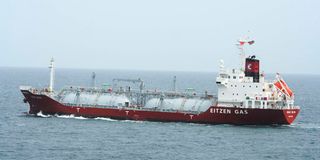
MV Sigas Silvia sails out through the Likoni channel after discharging more than 15,OOO tonnes of gas at the Shimanzi gas terminal.
The two were fined Sh2 million.
KPA concluded after the April 2025 simulation that the investor needed to construct a wall on one side of the facility, a multi-million-dollar investment that the investor is said to have resisted hence the attempt to make the shortcut.
“The break water system will be essential to prevent negative wave activity and ocean currents during approaches and cargo operations involving a sheltered sea interface for Lake gas Vipingo LPG terminal,” reads the report.
Without the break water, KPA found that marine pollutants will be pushed by the northerly currents to Mombasa, Watamu and Malindi reserves and national parks.
Captain Ruto agreed that the break water plan was a long-term solution but did not state how soon it would be included.
“The long-term plan is for the project proponent to construct a breakwater system that will provide shelter and enhance the safety and efficacy of the facility for operation,” the KPA boss said.
Lake Gas did not immediately respond to questions from the Weekly Review.