Lest we forget, there are valleys that hold more than silence. In the heart of Elgeyo Marakwet, the land still waits — still remembers.
Once, there were to rise two monuments of promise: Arror and Kimwarer, names that shimmered with progress, words spoken with hope.
They were to hold back rivers, light villages, and irrigate the dreams of a nation. Today, only thickets grow, while acacia trees stand as sentinels over an emptiness paid for in billions of shillings.
The story of Arror and Kimwarer is not just a tale of failed projects; it is a parable of betrayal, of how nations mortgage their faith for illusions.
On December 14, 2023, a court acquitted former Treasury Cabinet Secretary Henry Rotich and eight others of fraud-related charges tied to the multi-billion-shilling project that was to bring life to Kerio Valley.
The court said the prosecution failed to lead the case, calling only eight of 49 witnesses. Forty-one were not cross-examined in what appeared to be a carefully choreographed prosecution-led acquittal.
Members of the public cross a bridge at River Talal in Keiyo-South Constituency, Elgeyo-Marakwet County, on September 19, 2019. This is the location where the Kimwarer Dam was supposed to be constructed. The project, whose construction was cancelled by former President Uhuru Kenyatta will now be revived following a renegotiated deal between the Kenyan and Italian governments.
Photo credit: File | Nation Media Group
Yet, we see no evil and hear no evil. We have not forgotten that the trial limped from one frustration to another, its momentum stifled by deliberate inertia.
So conspicuous was this charade that both Magistrate Eunice Nyutu and High Court Judge Nixon Sifuna broke judicial reserve to chastise the very officers meant to uphold the law.
Prosecutors Geoffrey Obiri and Oliver Mureithi, sworn to defend the public trust, instead betrayed it with staggering audacity. Tasked with delivering justice, they chose instead to engineer its collapse, turning the courtroom into a stage for mockery.
Their handling of the case did not merely falter — it redefined betrayal. What unfolded was nothing less than a prosecution-assisted acquittal, a grotesque spectacle where those meant to uphold the law toiled harder than the defence to set the accused free.
This was not incompetence; it was sabotage in plain sight. In their hands, justice was not sought, but strangled — not a sacred duty, but a deliberate deception.
They did not defend the republic; they sold it out, piece by piece, with every omission, every silence, every witness left unheard. An expenditure breakdown from the investigations, later released by Henry Rotich, reveals the anatomy of a scandal wrapped in officialdom.
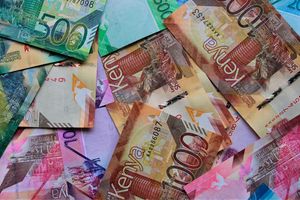
It shows that an advance payment of Sh7.8 billion was wired out long before a single shovel struck the soil — a sum divided between Sh4.3 billion for the Arror Dam and Sh3.5 billion for Kimwarer. Yet on the ground, nothing stirred.
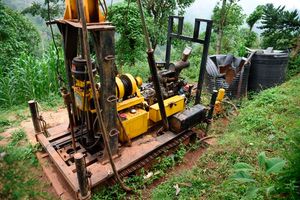
Abandoned equipment at Kipsaiya in Elgeyo Marakwet where Aror dam was to be built. The Kimwarer and Arror dams projects are examples of kick-back-motivated projects that have saddled the taxpayer with expensive debts.
Photo credit: File | Nation Media Group
No fences were erected, no concrete poured, no camp raised. The money moved, but the earth did not. This payment — dressed in the language of progress — was, in truth, a prelude to plunder.
In any credible infrastructure project, such disbursements are tied to visible milestones: approved designs, completed feasibility studies, environmental impact assessments, and the clearing of land. Here, there was none of that.
The funds leapt ahead of logic, outpacing due diligence and burying oversight beneath paperwork. What was meant to be a foundation became a loophole — a door flung wide for misappropriation under the guise of procedure.
The remainder of the billions was sent to SACE, an Italian export credit agency, purportedly as insurance — a shield against non-performance.
In theory, it was a safeguard, meant to secure the country should the contractor fail. But in practice, it proved an illusion. How does one ensure a dream never drawn, a dam never designed, a promise never begun? If the policy was enforceable, then where is the compensation?
If it was not, then the payment to SACE was nothing more than a ceremonial offering to bureaucracy, a premium paid to legitimise the illegitimate. The structure of these payments — neat, deliberate, and sequential — was not a mistake. It bore the marks of orchestration, not oversight. It reflected a system that knew how to mimic accountability while hollowing it out from within.
The Treasury’s signature on those transfers was not merely administrative; it was an act of faith in fiction. The billions departed Kenya’s coffers with speed, yet no one paused to ask the most basic question: what, exactly, were we paying for?
This is how corruption masquerades as governance — not through overt theft, but through the meticulous choreography of procedure. Each figure in that breakdown tells its own story: not of dams, but of deception; not of investment, but of indulgence.
The paperwork was immaculate, the bank records pristine, yet the land remains untouched, unsurveyed, unscarred. When the hour came for justice, the State turned away. The very institutions tasked with accountability recoiled into silence.
The Office of the Director of Public Prosecutions, burdened with evidence and armed with a mandate, chose paralysis over pursuit. Witnesses were ignored, leads abandoned, and files misplaced with convenient precision.
What should have been a trial became a slow burial, a deliberate suffocation of truth. Today, the case lingers like a bad memory, its culprits untroubled, its consequences unspoken.
No one stands accused. No one is held to account. The billions vanish into the ether, the contracts gather dust, and the public is left with echoes of promises and the ache of betrayal.
In this silence, one hears not forgetfulness, but fear — a system too entangled in its own guilt to untie the knots of corruption. And so, impunity becomes policy, and accountability, a myth.
The State, custodian of justice, has become its chief saboteur — an accomplice in its own humiliation. The refusal to prosecute is not mere negligence; it is an act of complicity, a final signature on the long ledger of deceit.
This pattern of deliberate failure is no stranger to Kenya’s corridors of justice. Under former DPP Noordin Haji, cases paraded before the public with loud promises only to collapse quietly in courtrooms.
His successor, Renson Ingonga, seems to have inherited the same script — where the Office of the Director of Public Prosecutions, instead of being the sword of justice, serves as the shield of the powerful. The Kenya Human Rights Commission now demands that the DPP reclaim authority, reopen the case, and charge the true culprits.
Whether Rotich and his co-accused are guilty or not, they say, justice demands clarity, not convenience. The cost of impunity is not measured only in billions, but in broken faith. And yet, as so often before, outrage fades. The story slips from headlines, the dust settles, and the nation moves on.