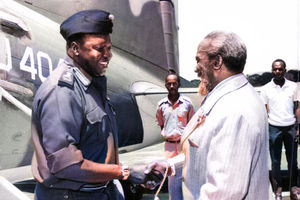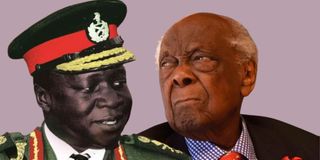
Former Ugandan President Idi Amin (left) and Kenya's ex-Attorney- General Charles Njonjo.

At 7.30pm on July 1, 1976 Kenya’s Attorney-General Charles Njonjo received a call from head of Mossad – the Israeli agency tasked with collecting foreign intelligence, covert missions and doing whatever it takes to protect Jerusalem’s interests.
The Mossad chief wanted Mr Njonjo to convene a high-level meeting with Kenya’s security agencies within an hour and host it at the Attorney-General’s official residence.
Israel’s agenda for the meeting was to help fuel six aircraft that some of its best commandos could use to fly into Uganda and neutralise hijackers that were holding 260 hostages in Entebbe Airport, Uganda, with the support of President Idi Amin.
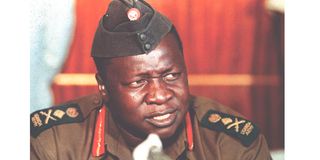
Former Ugandan president Idi Amin Dada. Book depicts him as a serial domestic violence offender.
The Israelis also wanted to plant one of their own personnel, likely a Mossad agent, in the air traffic control tower at the Jomo Kenyatta International Airport and also have some boots on the aerodrome ground.
Immediately after getting off the phone with the Mossad head Njonjo quickly called police commissioner Bernard Hinga, GSU commandant Ben Gethi and former Agriculture minister Bruce McKenzie.
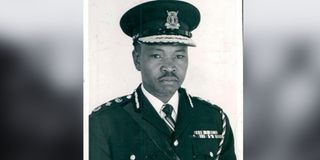
Former police commissioner Ben Gethi.
“Then three Mossad agents showed up and stated that something is happening and we might have to bring up to six planes. Nobody should know about this,” says David Silverstein, a renowned Nairobi-based cardiologist who was a personal doctor to several top brass in East Africa, including Njonjo and former presidents Jomo Kenyatta and Daniel arap Moi.
Five days earlier, two Palestinians with the Popular Front for the Liberation of Palestine (PFLP), and two Germans allied to the Frankfurt-based Revolutionary Cells had hijacked an Air France aircraft shortly after it took off from Tel Aviv, intended to land in Paris.
The hijackers commandeered the Airbus A300 and its 260 occupants to Libya for refuelling. A pregnant woman was released after she claimed to be suffering a miscarriage. The other 259 hostages were aboard as the hijackers rerouted the flight to Entebbe, Uganda.
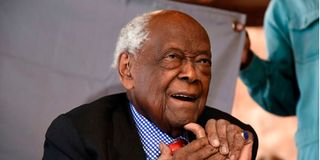
Former Attorney General Charles Njonjo.
Israeli intelligence officers were able to learn from her the number of hijackers and their nationalities, as well as their demands. The purpose of the move was to negotiate for the release of over 50 Palestinians imprisoned in Israel and other countries over the push to take over Israel.
Idi Amin was central to the plan, and he had agreed to provide a safe haven for the hijackers and their hostages. The butcher of Uganda, as Amin had come to be known, deployed more than 100 military personnel to protect the hijacked aircraft.
Dr Silverstein’s wit saw many leaders trust him with sensitive information, and occasionally granted the cardiologist access to high-level gatherings where top secrets were openly discussed.
On July 2, 1976, Njonjo hosted another meeting in his residence before the Israeli planes landed in Nairobi, this time with prominent Israeli soldier-statesman, Ehud Barak, and other senior Israeli security chiefs. “They told Njonjo that a hospital ship plane would land to take care of victims and wanted an upgraded room at Nairobi Hospital,” Dr Silverstein said.
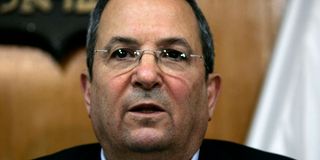
Israel's Defence Minister Ehud Barak addresses the media during a news conference at the parliament in Jerusalem May 28, 2008. Baz Ratner
Njonjo assured the Israelis of Kenya’s support, but on one condition – Israel would in return, help Kenya by destroying Uganda’s fighter jets.
“Then Njonjo smiles and says, in the process if you happen to kill Amin himself, we won’t mind either. They [Israeli security chiefs] said that [assassinating Amin] would be the ultimate goal and they would try their best” Dr Silverstein added.
In Njonjo’s arithmetic, Amin’s abrasiveness and unpredictability meant the Ugandan despot would certainly seek retribution. Njonjo could not know how, exactly, the revenge would be done, but was certain Kenya would pay a heavy price.
After asking the Israelis for the unconventional favour, Njonjo phoned President Kenyatta, who was still in deep sleep, and briefed him on why he felt Amin could not come out of that situation alive.
President Kenyatta was livid and reprimanded Njonjo for interrupting his slumber. The president warned that if the plan backfired, it would remain that he never heard from Njonjo on the assassination plot. He hung up the phone and went back to bed.
After helping plan the raid, Njonjo left for Solio ranch. As Njonjo was relaxing on the day the Israelis struck, his wife Margaret was listening to the radio when news of the raid came on. She rushed to break the news to Njonjo, who feigned surprise.
On July 3, being day seven of the hostage situation, more than 200 Israeli special forces led by their commander, Col Yoni Netanyahu, left Nairobi for Entebbe. The commander, who would lose his life in the Entebbe raid, was a brother of the current Prime Minister Benjamin Netanyahu.
To avoid radar detection, the four planes flew extraordinarily low. At one point, they were just over 35 ft off the ground. The flight, usually a 45-minute affair, took eight hours. At the Kenya-Uganda border, the planes separated, leaving the lead attack plane to fly straight to Entebbe as the other three made a detour. They were to land in Entebbe 15 minutes after the lead plane.
At 11pm, the lead attack plane arrived at Entebbe International Airport. The designated runway was unlit so the planes landed in the dark as the daring rescue mission began.
When assault which was codenamed Operation Thunderbolt, was over, all hijackers and 20 Ugandan soldiers lay dead. The Israelis took off with the 102 freed hostages and crew to Nairobi.
The hijackers had earlier released 148 non-Israeli nationals. Three hostages died during the rescue. One hostage who had been rushed to Mulago Hospital in Kampala before the raid, was murdered on Amin’s orders, in retaliation to Operation Thunderbolt.
In an interview with the Nation, our team asked Dr Silverstein – an American national whose cultural and family ties to Israel led to connections with Mossad agents – whether he himself was a Mossad agent on account of his access to intimate details of the Njonjo meeting and other aspects of the Entebbe raid.
Nonchalant, Dr Silverstein smiles. “I’ve always been the doctor to the [Israel] Ambassador… No, no, I’m not Mossad,” Dr Silverstein said in the interview at his office.
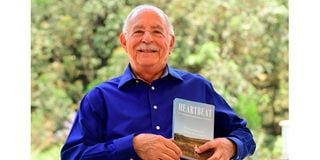
Dr David Silverstain with his memoir ‘Heartbeat: An American Cardiologist in Kenya.’
In the first five days of the hostage situation, Kenya had offered support to Israel by allowing intelligence gathering from Nairobi and providing logistical support.
McKenzie led the intelligence gathering and would pay the ultimate price two years later when Amin-commissioned assassins detonated a bomb hidden in the bureaucrat’s private aircraft as he travelled to Nairobi from Kampala.
Amin had invited McKenzie to Kampala for political discussions. But as he met Amin on May 28, 1978, Ugandan agents planted the bomb, which was detonated as his private plane was around the Ngong area, descending to Wilson Airport in Nairobi.
“They knew McKenzie was involved, but again, he was doing a lot of business with them. Mossad and close friends warned him against visiting Entebbe. As they were leaving, he was told to wait for the President’s gift which was a lion’s head, and they had put a pressure bomb behind the eye and knew how long it would take to explode” adds Dr Silverstein.
Jaffar Remo, Amin’s son says while living in exile at his Jeddah base in Saudi Arabia, one day a son of one of the hijackers confronted Amin over his father’s death. The young boy accused Amin of working with Israelis, leading to his father’s death.
Israel would posthumously award him a medal of valour and plant a tree in his honour in the Forest of Martyrs, a memorial ground and national forest, located in the Judean Hills, just outside Jerusalem.
A former member of Idi Amin’s dreaded intelligence unit called State Research Bureau now in his 70s who requested anonymity, as he is still a serving officer in Uganda’s security system, says that when the terrorists landed the plane in Libya, President Gaddafi told them Libya and Israel are close, asking them to refuel and take off to another destination peacefully.
He says the hijackers asked for three people to show up immediately; the Palestinian ambassador, his deputy and French ambassador, threatening to blow the plane if they did not go.
Amin issued a directive to have the three access the airport and engage the hijackers. That day Amin visited the scene and addressed the hostages, before ordering essential supplies such as food and mattresses. Amin also directed Uganda Marines to take charge and guard the old airport where hostages were held.
Israel, which is said to have a policy of no negotiations with terrorists, was already planning a rescue mission. Intelligence provided by Mossad tipped indicated that Amin would be travelling to Mauritius for an Organisation of African Unity meeting, and that it would be an opportunity to strike in Uganda.
One of the original plans was to fake Amin’s return by having a motorcade with vehicles similar to the despot’s convoy, complete with a Mercedes Benz with a presidential standard and the national flag, and two Land Rovers.
The Amin insider said that when Amin left to hand over OAU rotational chairmanship to the next African leader, he thought that Israel would fly the Palestinian prisoners sought by the PFLP to Uganda, hence ordered that no aircraft be shot at.
The negotiation for the Palestinian prisoners had been done with one Col Balevi, whom Amin had trained with as a paratrooper. Our source says he got wind of a plan by Israel to kidnap Amin and move him to Tel Aviv, where they would use the Ugandan President to negotiate the release of the Air France plane and the hostages.
With that intelligence brief, Amin changed plans and instead flew to Khartoum, then to Soroti Flying School in Eastern Uganda. From Soroti, Amin boarded a helicopter to Kampala.