Caption for the landscape image: Gikomba: An autopsy of Kenya’s national wardrobe Sunday, April 05, 2026 Scroll down to read the article A man attempts to extinguish flames after fire broke out at Gikomba market in Nairobi on May 18, 2025. Photo credit: Lucy Wanjiru | Nation Media Group By Justus Wanga Nation Media Group Article Related Walk long enough with a stone in your shoe and you stop feeling it. The pain becomes rhythm. You learn to limp without appearing injured. This is how Kenya walks on Gikomba. PREMIUM Bales, power and patronage: The hidden politics of Gikomba Popular used items market has since the 1950s been reshaped by fire, floods, demolitions and violence but has refused to bow down to these elements. PREMIUM Gikomba: End of an era? The Tuesday demolition of sections of the market has left thousands of traders stranded. PREMIUM End of Gikomba? State demolishes market for modern look Chairman of the shoe market confirmed that traders were aware of the planned relocation. PREMIUM Lift ban on used clothes imports, traders tell State Government should boost production of garment by giving makers incentives. PREMIUM Ruto vows to end decades of Gikomba land disputes 'I can assure you that Gikomba is public land... we must have documents to prove that Gikomba is public property.' — President Ruto . Recommended for you PREMIUM Shakahola: The Bible verses at the heart of a massacre PREMIUM Shakahola: The red flags that preceded mass deaths PREMIUM Report lays bare rot in Coast region water firms facing shutdown PREMIUM The city money trap: Rich in revenue, poor in power PREMIUM How Kenya’s running legends are building fortunes beyond the track Login to join the discussion Please enable JavaScript to view the comments powered by Disqus. In the headlines Elections News Counties Business Opinion Sports Life & Style Health Podcasts Photos Newsletters Puzzles PREMIUM How Kenya’s running legends are building fortunes beyond the track Champions who have channeled their sporting fortunes into shopping centres, hotels, schools. PREMIUM Woman wins Sh500,000 after husband moves lover into matrimonial home Judge orders the lover to vacate the Kisumu home within 14 days. PREMIUM Mosiria exposes bitter fallout with Sakaja Nairobi County Chief Officer declares intention to challenge Governor Sakaja in 2027.
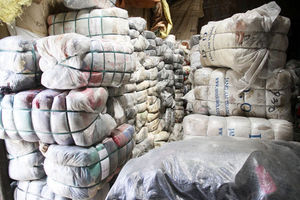
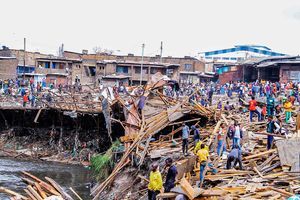
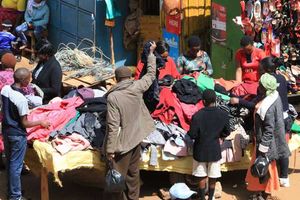
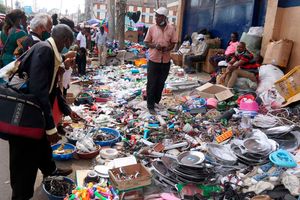
PREMIUM Bales, power and patronage: The hidden politics of Gikomba Popular used items market has since the 1950s been reshaped by fire, floods, demolitions and violence but has refused to bow down to these elements.
PREMIUM Gikomba: End of an era? The Tuesday demolition of sections of the market has left thousands of traders stranded.
PREMIUM End of Gikomba? State demolishes market for modern look Chairman of the shoe market confirmed that traders were aware of the planned relocation.
PREMIUM Lift ban on used clothes imports, traders tell State Government should boost production of garment by giving makers incentives.
PREMIUM Ruto vows to end decades of Gikomba land disputes 'I can assure you that Gikomba is public land... we must have documents to prove that Gikomba is public property.' — President Ruto
PREMIUM How Kenya’s running legends are building fortunes beyond the track Champions who have channeled their sporting fortunes into shopping centres, hotels, schools.
PREMIUM Woman wins Sh500,000 after husband moves lover into matrimonial home Judge orders the lover to vacate the Kisumu home within 14 days.
PREMIUM Mosiria exposes bitter fallout with Sakaja Nairobi County Chief Officer declares intention to challenge Governor Sakaja in 2027.