The appointment of top University of Nairobi officials last Thursday, after nearly a two-year hiatus, marks a significant step in efforts towards restoring stability and giving direction to the institution struggling with myriads of challenges.
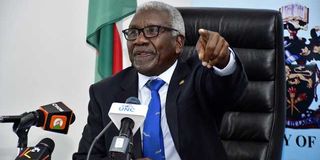
Prof Ayub Gitau
Photo credit: Pool
The University Council, chaired by Prof Chacha Nyaigotti-Chacha, named Prof Ayub Gitau the vice-chancellor, filling in the position that had been vacant since Prof Stephen Kiama was pushed out of office in 2024. Prof Josiah Aduda was appointed deputy vice-chancellor, Finance and Planning. Prof Margret Hutchinson, who has been acting VC for more than a year, resumes her substantive role as DVC Research, Innovation and Enterprise.
This development turns the spotlight on councils of several other public universities operating without vice-chancellors, deputy vice-chancellors, registrars, college principals and heads of finance departments.
Education Cabinet Secretary Julius Ogamba.
Photo credit: Lucy Wanjiru | Nation Media Group
With the leadership stalemate at the University of Nairobi now resolved, attention shifts to Kenyatta University, Moi University and Maseno University, which continue to operate without substantive vice-chancellors, deputy vice-chancellors and other senior officials.
The situation is even more dire at Moi University, where nearly all top officials, including the vice-chancellor, deputy vice-chancellors, registrars and head of finance, are serving in acting capacities. Not only is the university drowning in debts, but it also continues to record a steady drop in student enrolment from 26,657 in 2021/2022 to 18,185 in 2024, according to 2025 Economic Survey, signalling declining trust in the institution.
At Kenyatta University, the appointment of a new VC has been put on ice after one of the contenders, Prof Waceke Wanjohi, challenged the recruitment, which she argues was calibrated to lock her out. The position of the VC fell vacant after the retirement of Prof Paul Wainana in January, who served for two full terms amid painful and high drama orchestrated by the country’s top leadership.
Kenyatta University, which recorded the country’s highest student enrolment of 54,813 in the 2024/25 academic year, is currently headed by Prof John Okumu in an acting capacity.
Meanwhile, at Maseno University, Prof Eric Nyambedha has been serving as acting vice-chancellor since February following the retirement of Prof Julius Nyabundi, who completed his full 10-year term.
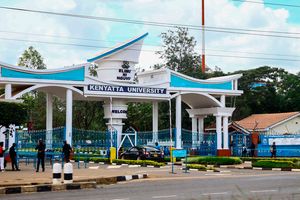
Entrance to Maseno University's main campus. Oyugi was simultaneously employed by the IEBC and Maseno University on permanent and pensionable terms.
Photo credit: File | Nation Media Group
Broadly, stakeholders within the university sector have expressed concern that the delays in appointing the administrators were exacerbating academic, administrative and structural challenges at the institutions.
Challenges abound when institutions are run by acting officials – they cannot plan long-term, make decisions or exercise administrative independence. More often than not, they defer to their appointers, consistently seeking to please and curry favour with them at the expense of managing the institutions professionally.
The secretary of the Universities’ Academic Staff Union ( Uasu) Moi chapter, Prof Robert Oduori, expressed deep concern about the status of affairs at the institution, stating that the college was headed in the wrong direction as it did not have duly appointed leaders.
“Although the university council appointed an interim team to run the university more than a year ago to sort out the pervasive mess, we have not seen any change. In fact, the situation is getting dire because the team can’t make decisions and give long-lasting solutions to the prevailing problems,” said Prof Oduori.
The main entrance to Moi University in Kesses, Uasin Gishu County.
Photo credit: Jared Nyataya | Nation Media Group
In January 2025, Moi University Council under Prof Noah Midamba suspended vice-chancellor Isaac Kosgey and eight other top officials amid a financial and administrative crisis that nearly brought down the institution. Consequently, the council appointed Prof Kiplagat Kotut as acting vice chancellor and Prof Khaemba Ongeti as DVC Academic Affairs. The officials and other top officials continue to work in an interim capacity after more than one year, a development that has created paralysis at the institution.
Moi University’s crisis remains a stark example of how political interference and ethnic chauvinism can steadily cripple a once-thriving institution, undermining merit, weakening governance structures, fanning divisions, and eroding the academic standards and public trust vital for a university to function effectively and fulfil its mandate.
Broadly, the delays in appointing top university leadership points to a major problem afflicting universities, namely, political meddling. The matter has become more pronounced in recent years when, in fact, the country had turned the corner and embarked on the path of higher education leadership reforms.
Political interference was prevalent in the 1980s and 1990s during the time of repressive Kanu regime under President Daniel arap Moi. Then, the President served as the chancellor and titular head of all public universities, appointed vice-chancellors, deputy vice-chancellors and principals of colleges and exercised political influence in the management of the institutions. However, this changed in 2003 after President Mwai Kibaki came to power following the 2002 Narc wave. He relinquished the role of chancellor of public universities, appointed eminent individuals to the positions, and introduced competitive recruitment for vice-chancellors, deputies and principals to strengthen meritocracy and institutional autonomy.
University of Nairobi led the way with its first independent chancellor, Joe Wanjui, asking the council to advertise for the position of the VC and deputy VCs, a process that led to the appointment of Prof George Magoha as the first competitively recruited chief executive of a public university. Other universities quickly followed suit and hired the administrators competitively, changing the higher education leadership landscape.
Prof George Magoha did not disappoint. He revitalised the university, leaving a lasting mark that later earned him appointment as Education Cabinet Secretary after completing his 10-year stint at the institution.
In 2012, the Universities Act was enacted to align with the Kenya Constitution 2010 and mandated university councils to appoint vice-chancellors, deputy VCs and college principals through a competitive process. This was intended to lock out political leaders and their functionaries from interfering in the management of public universities, allowing academicians and professional managers to run the institutions.
However, this changed following the amendment of the Universities Act in 2018, transferring the function of recruiting top university managers from the councils to the Public Service Commission (PSC). This gave the public servants a hand in determining university leadership, while the provision that appointments should be done in consultation with the Cabinet Secretary has been exploited by political leadership to influence the selection.
This is why Uasu, experts and education stakeholders are rooting for legal reforms, which include restoring the powers of university councils in the recruitment of top managers.
University management is a matter of public interest because universities are key national institutions entrusted with public resources, research, innovation, and the training of future professionals. The type of leadership and governance directly affects academic standards, institutional stability, economic development, and public confidence in higher education.
Currently, public universities are burdened by a Sh100 billion debt, severely undermining their capacity to deliver quality education and underscoring the need for effective leadership to steer them out of the crisis.
For the University of Nairobi, the time for a turnaround is now. Expectations are high that the new administrators will steady the ship and pull the institution out of its financial and administrative mess.
According to Uasu Nairobi Chapter, Prof George Osanjo, the appointments herald a new beginning for the institution and commended the council for concluding the recruitment process after a long while and making the appointments on merit, stating that it would restore public confidence in the institution.