In recent times, Kenya has achieved the dubious distinction of becoming the primary country of reference with regard to nationwide demonstrations against Finance Bills.
The highly organised Gen-Z movement of June 2024, which launched the “Occupy Parliament” protests, completely rejected that year’s Finance Bill, forcing the executive to withdraw the bill in its entirety.
The Bill was seen to be anti-ordinary Kenyans as it proposed aggressive tax hikes on assorted essential commodities and services. Those who campaigned against the bill had created an impression that the state had targeted ordinary citizens with tax hikes to finance the opulent lifestyles of its top officials.
This perception (wrong or right) of an irresponsible government led to public anger, occasioning sporadic demonstrations that have persisted into 2025 and 2026. The successes of these demonstrations have emboldened citizens to voice opposition against any subsequent tax measures, however modest and well-meaning.
The National Treasury Cabinet Secretary, John Mbadi, has had to go back to the drawing board several times to re-strategise on how to navigate the budgeting processes afresh. When he re-emerged with the Finance Bill 2026, the CS had dropped most of the offending clauses, replacing them instead with a data-driven, digitalised approach targeting tax-base expansion.
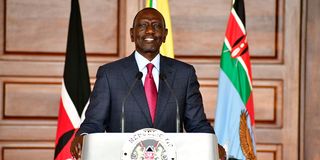
The opposition and civil society were caught unawares and literally struggled to poke holes in the new bill, in vain, allowing it to pass through all the requisite readings of the National Assembly with minimal impediments. The Bill has since been signed into law by President William Ruto, paving the way for its implementation effective July 1, 2026.
The Kenyan situation has global parallels. While the specific terminology “Finance Bill” applies to Westminster parliamentary systems, similar youth-led economic uprisings against state austerity, tax reforms, or steep cost-of-living spikes have recently destabilised or uprooted governments in nations like Bangladesh (2024), Indonesia (2025) and Nepal (2025).
A key lesson that Kenyans should learn from the experiences of these three Asian countries is that the “Finance Bills” were mere smokescreens for wider citizens’ disenchantment with the state of affairs.
The opposition timed their actions against the unpopular governments to coincide with the presentation of Finance Bills, effectively suffocating the states of the cash needed to underwrite governance and other costs. It is, therefore, imperative to understand that the demonstrations against the Finance Bills in Bangladesh, Indonesia and Nepal were not as much about the contents of those documents as they were carefully planned and executed strategies for regime change.
That is all the more reason citizens should not rely on politicians to interpret Finance Bills for them. Relying exclusively on politicians to decode national financial legislation introduces heavy biases and structural vulnerabilities.
In Kenya, for example, the fact that general elections are scheduled for August 2027 does not make matters any better. Political daggers are already drawn, and any opportunity for partisan distortions of government policies, including the fiscal framework, is most welcome as long as it increases the chances of competitors wresting power.
Politicians routinely weaponise tax codes. Ruling party members typically downplay the negative financial impacts to defend the government, while opposition activists may exaggerate tax burdens to stir public outrage. It is, therefore, not surprising that the Kenyan opposition has been distorting certain sensitive clauses of the Finance Bill 2026 in a bid to cause its rejection.
A critical look at the clauses that some senior opposition figures have been harping on reveals a carefully orchestrated scheme to bastardise the Finance Bill 2026 on the basis of either misinterpreted or non-existent clauses. For instance, the purported clause on mandatory taxation of freehold property does not exist at all.
There are many other clauses that have also been misinterpreted. A case in point is the excise duty on mobile phones. A falsehood has been purveyed that the excise duty on new mobile phones has been increased by 25 per cent. The correct position is that all the previous taxes applicable to imported mobile phones (import declaration fees, VAT, excise duty and customs duty), amounting to 55.5 per cent, have now been collapsed into one excise duty charged at 25 per cent of the value, applicable on activation of the phone.
Distortions often arise due to technical incompetence. Many legislators and civil society activists lack advanced training in macroeconomic policy or tax law. They often vote along party lines without fully appreciating the long-term economic ramifications of the Bills they pass.
Moreover, when politicians act as the sole filter for financial information, it erodes trust between citizens and those who govern them. Citizens are left feeling disconnected from how their tax revenue is prioritised, especially when public spending supports the luxurious lifestyles of the ruling elite at the expense of public service delivery. Such situations could potentially erect impediments to the smooth passage of Finance Bills through Parliament, delaying the country’s pivot towards economic sovereignty.
To prevent public backlash and cultivate a sustainable fiscal social contract, Kenya should consider a number of strategies.
First, simplify the technical text by eliminating jargon. Finance Bills should be published in plain language, with multilingual summaries alongside the main draft. Complex tax codes should be translated into clear, actionable bullet points, explaining exactly how the proposed changes are likely to affect consumer prices.
Second, the public should be involved as co-creators of tax policy. Rather than utilising public participation as a brief, token, rubber-stamping exercise, structured co-creation frameworks should be implemented. This approach would entail convening town hall-type engagements with independent economic think tanks, consumer protection groups, and civil society actors, allowing citizens to reshape problematic clauses before the bill reaches the floor of the House.
Third, establish a clear “quid pro quo” mechanism in the Finance Bill. To build public trust, the tabling of new taxes should be bound to auditable public assets or services to be delivered. The Finance Bill should clearly state exactly which public asset or service (e.g., roads, healthcare facilities or debt reduction targets) will be funded by the proposed revenue stream.
Last but not least, there is an urgent need to enforce visible elite austerity. Civic acceptance drops drastically when ordinary citizens are asked to “tighten their belts” while the political class maintains ostentatious lifestyles.
Professor Ongore is a Public Finance and Corporate Governance Scholar based at the Technical University of Kenya. [email protected]