It is a page lifted from one of Kenya’s oldest political playbook – the politics of absence and grand return – in which a leader vanishes just long enough to grow his or her stature in the public imagination, then re-enters the stage bathed in anticipation.
Kenyan politicians have long used exile, long visits abroad and the subsequent return to recalibrate their fortunes.
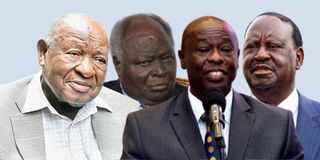
Kenneth Matiba, Mwai Kibaki, Raila Odinga and the second President of the Republic Daniel Moi have applied the script.
Mr Gachagua cut short his two-month US tour after barely four weeks, citing an urgent need to steer the fledgling Democracy for Citizens’ Party (DCP) through by-elections in November.
Former Deputy President Rigathi Gachagua at Jomo Kenyatta International Airport in Nairobi on July 9,2025, when he left the country for a trip to United States of America.
Photo credit: Evans Habil | Nation Media Group
He thanked the Diaspora on social media for its “love, warmth and hospitality,” then pivoted to duty – Kenya needs him now.
Mr Odinga perfected the craft from the 1990s, departing when the local political temperature grew toxic and returning to thunderous rallies that expanded an already immense support base.
He did that in 2014, returning after a humiliating 2013 presidential election when he lost to his deputy Uhuru Kenyatta. Mr Odinga was Prime Minister, and Mr Kenyatta was one of his two deputies, the other being Mr Musalia Mudavadi.
He had been in the US for two months and his return was marked by a trending hashtag on social media, #BabaWhilleYouWereAway. The trip offered him a breather and a chance to chart the next course of action.
“Homecoming like that accorded opposition leader Odinga is usually reserved for a political hero returning from a lengthy incarceration or exile; or at least a triumphant return with good tidings from some critical mission. But his absence hardly fits into any such category. He was in the US on a junket that seemed more about rest and recreation rather than any essential business,” veteran journalist Macharia Gaitho said at the time.
“I bring greetings from the US President Barack Obama,” Mr Odinga said as the crowd erupted in cheers.
Matiba wielded his enforced absence as moral leverage after detention without trial, converting suffering into political capital. President Moi kept him in detention from July 1990 and June 1991. After that, Matiba left for London, returning on May 2, 1992.
Kibaki’s most consequential absence came before the 2002 General Election, after a road accident that required specialised treatment in London. He returned to a rousing welcome and went on to win the presidential contest.
The key ingredient in every case was pre-existing political capital. Mr Odinga could afford to vanish because vast reservoirs of loyalty waited at home; Matiba emerged from incarceration as a symbol of defiance; Kibaki’s return fused sympathy with a broad anti-status quo coalition that was already cohering around his candidacy.
Mr Gachagua, by contrast, somewhat returns with political capital depleted. The decision by the Senate to uphold his impeachment in October last year – the first ever for a deputy president in Kenya – fused allegations of ethnic incitement and corruption to his public image.
Former Prime Minister and ODM leader Raila Odinga during an interview at his home in Kare, Nairobi on July 19, 2025.
Photo credit: Wilfred Nyangaresi | Nation Media Group
He insists the process was political, but the stain is stubborn. While he is working hard to consolidate his Mt Kenya base as he rallies the united opposition against President William Ruto, critics consider him political baggage.
Prof Macharia Munene, a historian who has studied the revolving door of Kenyan politicians travelling abroad and planning grand returns, offers a blunt verdict.
“Absence creates anticipation – that is undeniable,” he said.
“But anticipation is not the same as authority. Raila could amplify what was already there. Gachagua is trying to replace what has been lost.”
The question is why return home now after promising to be back in two months. By-elections matter, but they are skirmishes, not a war.
Polling day is still two years away, and Mr Gachagua’s US tour – marketed as a 60-day engagement with the Diaspora – had barely hit its stride. Analysts point to three pressures.
The first is diminishing returns. Diaspora rallies were reportedly thin, with speeches leaning heavily on Kikuyu grievances, limiting national resonance.
Local headlines drifted elsewhere despite the often elaborate efforts to put together events across the US. The oxygen of coverage was running low.
The second factor is the opposition arithmetic. A leader who hopes to chair a fractious table cannot do so from abroad. The fragile opposition – Wiper, DAP-K, DCP and others – needs an organiser present, not a silhouette.
Third, legal headwinds. From abroad, he aired incendiary claims about the government’s security posture and identity vetting. Top officials have demanded he substantiate the claims.
Remaining overseas while questions mount risked looking evasive, but upon return, he will also be in the spotlight on whether the claims will be repeated.
Even allies quietly question the haste. “Why cut short the tour if it was delivering?” a senior DCP strategist asked, requesting anonymity to speak candidly. “Unless the numbers weren’t good.”
Prof David Kikaya, a diplomacy scholar, finds the timing risky.
“When Mr Odinga stayed away, the country asked where he was. Absence worked because supply could not meet demand,” he said.
“With Gachagua, the demand is not yet proved. The danger is returning before scarcity has had time to sweeten the appetite.”
On arrival, Mr Gachagua must confront an opposition that publicly advertises unity but privately clings to its silos. Kalonzo Musyoka’s Wiper Party wants to consolidate gains around Nairobi and Eastern Kenya. Fred Matiang’i’s allies eye Gusii seats. Eugene Wamalwa’s DAP-K is in disarray as it peppers over cracks caused by supremacy battles. ODM, still Raila Odinga’s vehicle, guards coastal and Nyanza strongholds and is firmly in Dr Ruto’s camp.
The by-elections will test teamwork. Candidate nominations are already sparking turf fights; joint rallies are thin on policy and thick on protocol disputes.
“These parties stand together for photo, not for strategy,” said Regina Ndungu, a civic organiser in Nyeri.
“No common manifesto, no shared funding. Just banners.”
Mr Gachagua’s return could heal or aggravate the fractures. His strength is mobilisation – especially in Mt Kenya – but his weakness is the polarising rhetoric. To craft one slate, smaller parties expect concessions. Will he give them or will the calculus of personal redemption override coalition etiquette?
Even if unity materialises, voters must still forgive or forget. Impeachment is not prologue; it is present tense. Government loyalists never miss a chance to remind the country that Mr Gachagua was removed for “unfitness to hold office”.
In court-of-public-opinion, he has yet to mount a persuasive rebuttal beyond declaring victimhood. Prof Munene says sour-grapes politics rarely inspire undecided voters.
“If your message is ‘they wronged me,’ you excite the choir but bore the congregation,” he said.
“Kenya’s middle opinion bloc wants economic answers, not autobiography.”
So far, Mr Gachagua’s platform resembles a grievance ledger: high taxes, marginalisation of Mt Kenya, and alleged state intimidation. Missing is a costed plan on jobs, inflation, or debt – issues that propelled Dr Ruto’s victory in 2022 – and will dominate 2027.
Historical precedents counsel scepticism. Matiba’s return from a London hospital in 1992 drew sympathy but not enough votes.
Kibaki’s 2002 comeback succeeded because it coincided with a grand coalition and a mood of national transition; his personal story was catalytic, not solitary. Mr Odinga’s post-exile surges translated into ballots only when anchored in durable alliances – the Pentagon in 2007, National Super Alliance in 2017 and Azimio la Umoja One Kenya in 2022.
Mr Gachagua has, at most, the beginnings of an alliance. He possesses zeal, but observers say enthusiasm may not necessarily amount to infrastructure.
Votes are won with ward agents, data, legal teams and relentless ground operations. Diaspora dollars help, as Prof Kikaya notes, but the Kenyan ballot is decided in dusty trading centres, not Boston hotel ballrooms.
The optics of an air-kissed homecoming can curdle. Social media has already mocked the abrupt end of the tour. One meme shows a half-packed suitcase captioned: “Trip cancelled: turbulence back home.” Another notes the quiet during his absence, insinuating that drama travels with Mr Gachagua.
Mr Gachagua insists the US leg was merely “Phase One,” promising return engagements in 2026. That schedule leaves a narrow domestic window: by-elections in November, party primaries in 2026 and a General Election in August 2027. Every month will demand coalition maintenance, fundraising and policy articulation – tasks that reward presence, not mystique.
He will stride past a wall of cameras on the tarmac, deliver a punchy statement and claim the void has done its work. Yet politics is less theatre than arithmetic. If the absentee strategy cannot add votes – across ethnic blocs, across income strata, across Kenya – it is a mere dramatic pause before defeat.
History shows absence can amplify a leader already ascendant; it rarely resurrects one already in free fall. Mr Gachagua is about to discover which rule applies.