Finance Bills are, typically, products of several hours of burning midnight oil, balancing priorities and their implications for the economy and household welfare. Forget the political talk that suggests there are anti-people clauses hidden in the Finance Bill.
A country cannot run without money. The money must come from the activities of economic agents. Therefore, for some politicians to argue that the Finance Bill raids citizens’ pockets is to miss its real objective: to identify revenue sources for underwriting the cost of governance and expanding the Gross Domestic Product (GDP).
A keen look at the Finance Bill 2026 reveals a well-crafted strategy that connects fiscal resilience, transparency and self-reliance in a bid to achieve sustainable economic transformation. Confronted with external shocks, fluctuating commodity prices and tight global financing conditions, Kenya is shifting from passive budget administration to proactive, technology-driven fiscal performance.
The continuing fiscal consolidation efforts are anchored on robust domestic resource mobilisation and adherence to austerity measures. Part of the tax administration reforms targets the implementation of comprehensive compliance frameworks to streamline tax revenue collection and reduce widespread tax evasion.
The infiltration of multinational enterprises into Kenya’s market space has resulted in monumental illicit financial flows and transfer-pricing activities. To ensure that the illicit activities of these enterprises are curbed, the Finance Bill 2026 proposes to build a strict institutional legal framework to stop cross-border profit shifting by multinational corporations.
Since 2014, when Kenya’s economic status shifted to that of a lower-middle-income economy, the country has no longer been able to access cheap concessional loans. Instead, it has been pushed towards more expensive syndicated and commercial loans. This development has driven Kenya deeper into indebtedness.
It has taken fiscal craftsmanship to keep the country afloat at a time of a debilitating debt situation that constantly teeters on the verge of junk status. One of the viable alternatives for maintaining public debt at manageable levels is the advancement of Public-Private Partnerships through green and blue bonds to attract private capital for infrastructure development. Blue and green bonds are fixed-income instruments designed to finance projects with clear environmental and climatic benefits.
The debt situation is already gobbling up almost 70 per cent of ordinary revenue — income tax, excise duty, VAT and customs duty — threatening fiscal consolidation efforts. Unless innovative approaches are deployed quickly, the debt burden will soon spiral out of control.
The explanation put forward by multilateral lenders regarding Kenya’s inability to access cheap loans because of its improved economic status flies in the face of the reality that, in many cases, developed countries, which are far wealthier than Kenya, actually access those same loans at interest rates well below two per cent.
For this reason, Kenya is taking a two-pronged approach to ease its external debt burden. First, the state is drifting towards more domestic borrowing and less offshore debt. Domestic borrowing is targeted at 75 per cent (Sh1.03 trillion) of the total fiscal gap of approximately Sh1.146 trillion in FY 2026/27.
Pundits are concerned that an overemphasis on domestic borrowing could push up general interest rates in the economy, crowding out the private sector and stunting enterprises by undermining their access to credit.
The government’s strategy for maintaining low interest rates while aggressively increasing domestic borrowing centres on lengthening the public debt maturity profile, enforcing monetary policy rate cuts and pursuing strict fiscal consolidation.
Besides, Kenya will pursue aggressive liability management by deploying bond switches and debt buy-backs to exchange near-maturity debt for long-dated bonds. Already, the state has switched from shorter-term, expensive Eurobond debt to longer-term, relatively cheaper debt.
Further, the government will smooth debt redemption. This process levels out the redemption profile, meaning that the state does not experience abrupt and massive borrowing shocks in the domestic market.
On the offshore side, the component of debt denominated in US dollars has been reduced drastically from 64 per cent to approximately 53 per cent, easing pressure on the Kenya shilling arising from exchange-rate fluctuations. This downward trend is set to continue beyond the current financial year.
Meanwhile, offshore loans are being re-denominated in less volatile currencies such as the Chinese yuan and the Japanese yen.
Rather than introduce additional tax-raising measures and increase tax rates, the state is deepening the use of the Integrated Financial Management Information System (IFMIS) across ministries to limit leakages, reduce human interface and ensure real-time reporting.
By transitioning to predictive analytics and advanced visualisation tools, the state aims to make the national budget more interactive and reviewable for stakeholders. Interfacing the Kenya Revenue Authority (KRA) systems with those of taxpayers makes tax administration much more intelligent and certain.
To achieve a more efficient and equitable tax administration, the state must strive to understand taxpayers’ business models and design taxation regimes that are relevant to them.
The mitumba (second-hand clothes) sector is a case in point. This sector remains largely outside the tax net despite raking in millions of shillings in profits annually. Attempts to tax the sector attract a backlash due to the perception that it supports low-income earners.
The cash economy, or informal sector, comprises about 45 per cent of Kenya’s GDP. The implication is that approximately 50 per cent of potential taxpayers go scot-free because of the immense difficulty of tracing their taxable activities.
For as long as Kenyans create hurdles to the state’s attempts to widen the tax base, the burden will continue to fall heavily on the few compliant taxpayers, occasioning high levels of tax evasion.
Finally, the state will also roll out the Treasury Single Account (TSA) to consolidate cash balances, eliminate idle cash and minimise commercial bank borrowing.
There are several other strategies that the state is using to ensure that every individual and legal entity diligently discharges its civic duty of paying an equitable tax liability.
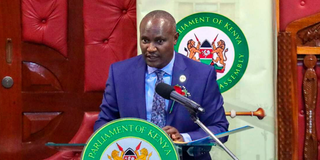
The robustness of John Mbadi’s fiscal consolidation strategies became apparent during the parliamentary debate when attempts to consign them to the dustbin of history failed because of the naysayers’ inability to pinpoint offending clauses in the Bill.
In my view, the country is on the right trajectory, actively pivoting towards economic sovereignty.
Professor Ongore is a Public Finance and Corporate Governance Scholar based at the Technical University of Kenya. [email protected]