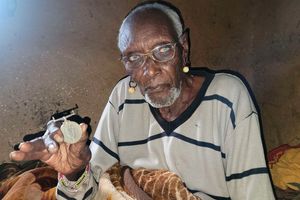
Forty years ago, I went to Riruta Muslim Village in Nairobi’s Kawangware to interview Ahmed Kiarie Njonge, who was Mzee Jomo Kenyatta's most trusted cook for the 15 years Kenya’s first President was in power.
The lengthy conversation, published in the October 1985 edition of True Love magazine, gave an insider’s view of Mzee Kenyatta’s eating habits, obsession with kitchen hygiene and personal interactions.
Kiarie never saw the inside of a classroom or formally trained as a chef but ended up cooking for the first family and other dignitaries. Often, Mzee Kenyatta would personally call him to issue instructions on what needed to be done whenever there was a big event at State House.
“Let me tell you one thing before we go any further. Mzee Kenyatta was not a man to be argued with. Whatever he said he wanted done had to be done. And I repeat, it had to be done!” Kiarie told me during the interview.
He added: “I could not tell Mzee anything was impossible in the kitchen, no matter how difficult it was — especially when he had guests.”
Despite the demands of the job, Kiarie said he had the best moments of his life cooking for Mzee Kenyatta, the first family and important guests.
He told me the founding President’s favourite dishes were goat meat, irio (a dish typically made of mashed potatoes, maize, peas, and leafy green vegetables) that he preferred without the maize, well-cooked bananas, salads and soup “which was a must daily”.
Kiarie had been introduced to Mzee Kenyatta by the feared aide-cum-bodyguard Wanyoike Thungu as someone who could be trusted since “the elders knew my background so well” and he was also once a Mau Mau spy.
On Tuesday June 10, 2025, at around 4.30pm, I returned to the very place in Riruta where I interviewed Kiarie 40 years ago — and 29 years after the cook’s death. The area surrounding the Muslim Village had expectedly changed, with high-rise buildings and tarmac roads. But I was in luck after making a few wrong turns and asking around if the family of the man, who once cooked for Kenya’s most powerful man, still lived in the estate. I found it intriguing that Kiarie’s house and the place where I posed with him for a photograph after the 1985 interview remained relatively unchanged.
“My name is Halima Wairinu Kiarie and I am the granddaughter of the man you are talking about. He died many years ago (in 1996). My grandmother, Fatuma Wanjiku, also died later. This is where we all lived for many years but when my grandparents passed on, most of our family moved to different places," said the young woman I had been directed to moments earlier.
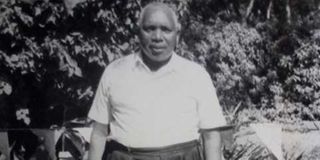
Kenya's founding president, Mzee Jomo Kenyatta.
Photo credit: File | Nation Media Group
Halima would later connect me with her mother Zura Njeri Kiarie, 76, who lives in Mombasa.
“My father had a house within the State House (Nairobi) which he hardly used except when there was a lot of work at night. He preferred living at his Riruta home from where he was picked every morning in a government vehicle with no number plates. Since Mzee Kenyatta never spent the night in Nairobi (he preferred to drive to and from his Gatundu home every day), my father had a chance to be with his family since his work only involved serving the President," says Zura, Kiarie’s daughter.
She recalls how one day Mzee Kenyatta had a function at the Mombasa State House and wanted to give instructions to Kiarie on how a goat that was about to be slaughtered should be cooked. However, some State House operatives had earlier decided to leave Kiarie behind in Nairobi and travel with a different cook. This decision had given Kiarie the much-needed break to travel to his farm in Nyahururu where Zura was at the time.
But as father and daughter were whiling away time in the farm, a furious Mzee Kenyatta was ordering his handlers to make sure Kiarie was brought to Mombasa as soon as possible. Since there were no mobile phones, it took a while for the elite presidential escort officers from Nairobi to locate him.
"Everything was moving pretty fast and within a short time the security team managed to reach our home and told my father to immediately board the car as he was urgently wanted in Mombasa. He was not even allowed time to change the clothes he was wearing. Arrangements were made on arrival in Nairobi for my father to be flown to Mombasa immediately as Mzee Kenyatta had instructed," she says.
So close was the cook to the President that once when powerful individuals attempted to retire him behind Mzee Kenyatta’s back, their decision was vetoed.
During our 1985 interview, Kiarie had talked of “powers” at State House that wanted him out. He was, in fact, referring to State House Comptroller Eliud Mathu and Head of Civil Service Geoffrey Kareithi, who gave him a retirement letter that caused a storm.
"Mzee was very annoyed. He called the person that had written my retirement letter. He was asked to say who had told him I should retire. Out of fear, he told Mzee that he had been told by another bigger power in a bigger office,” Kiarie told me, adding that the President warned them never to interfere with the cook without involving him.
He added: “Some people (at State House) had even started sharing my duties when they learned that my retirement letter had been written. But when they learned what Mzee had said, they stopped.”
However, the matter did not end there. Soon after, Mzee Kenyatta invited his Cabinet, including the two powerful individuals who wanted Kiarie kicked out, for lunch.
“They were all at State House and I was told to prepare lunch, which was mainly a chicken meal,” Kiarie said.
When the food was served, the President asked the two if it was tasty. After they both agreed it was a delicious meal, Mzee Kenyatta chided them: "Ooh! Ooh! and you are the ones who were saying that he should retire? And you now say that the food is so good."
Kiarie said he had the last laugh: "Members of the Cabinet had known what was going on. In my support, one stood up and handed me a Sh100 note in appreciation for my cooking efforts. The others followed and within a short time I was several red notes richer and happier. From that moment nobody ever attempted to bother me, leave alone talk about my retirement.”
Kiarie was philosophical about Mzee Kenyatta’s final days and told me that only death separated the two of them.
“I cooked his last meal and I can remember vividly how jovial he was a few hours before he died (in August 1978). I was there when Kenyans were about to receive the shock of Mzee's death. It was sad to remember what happened. I saw Dr (Eric) Mngola who came to the kitchen where I was,” said Kiarie, adding that the doctor who had been called to attend to Mzee Kenyatta wanted hot water from the kitchen. Kiarie would later spot then Coast Provincial Commissioner Eliud Mahihu and other top officials at State House before news of the death was broken
Kiarie recalled that he could not believe that the President, who had come to the kitchen earlier in the day to ask that food be prepared for a large group of visitors on short notice, was dead.
He told me that during his years at the State House kitchen, the President often made impromptu visits to make sure all was well. Hilariously, Mzee Kenyatta was not a fan of underweight cooks, often wondering aloud why someone who had access to a lot of food would not gain weight.
“He (Mzee Kenyatta) would demand from me to know why such a man looked weak in, of all places, the kitchen!” Kiarie told me during our 1985 conversation.
During his long career at State House, Kiarie cooked for many world leaders, including Emperor Haile Selassie of Ethiopia, President Josip Tito of Yugoslavia, Milton Obote of Uganda, Tanzania’s Julius Nyerere, Indira Gandhi of India, Zambia’s Kenneth Kaunda and Kwame Nkrumah of Ghana among other dignitaries hosted in Kenya.
He said he knew how to make food for different leaders. The Ethiopian Emperor, for example, asked to eat guinea fowl during his visit while Tito preferred European meals. They both commended him for his skills.
Even before independence, Kiarie cooked for Governor Malcolm MacDonald at Government House (later known as State House) where Mzee Kenyatta and the British colonial boss held regular meetings.
“I had an accident while on duty in Sagana and due to some injuries and the fact that I was old, I retired — a happy man,” he told me at the time.
Zura says that before he died, her father had summoned family members, including those in Namanga where he was born. After the death of her father, Mama Ngina and some members of the Kenyatta family visited them at their Riruta home.
Mzee Kenyatta died on August 22, 1978 at the age of 85 years. On August 22, 1996 Kiarie died at almost the age 85 years in his Riruta Muslim Village house. It is a coincidence his daughter Zura says is remarkable for two people who remained close for years.