Colonial-era Nairobi Councillor Muchohi Gikonyo was closing his shop when a crack shattered the quiet of the evening – the unmistakable sound of gunfire tearing through the dusk. That was on March 30, 1950. What unfolded was more than an attempted assassination. It was a shot fired in a battle for the soul of Nairobi.
Resistance to city status took many forms. On May 16, 1950, trade unionists Fred Kubai and Makhan Singh organised a “Workers’ Boycott Parade” to challenge the official celebrations of city status. As the Duke of Gloucester arrived to present the royal charter to the new mayor, F.G.R. Woodley, whose name still graces the once-segregated estate, the East African Trade Union Congress called for a boycott, declaring the civic upgrade “a smokescreen to cover the iniquitous and racial discriminations that constitute the real Nairobi.”
Makhan Singh with Jomo Kenyatta soon after independence. PHOTO/FRED OLUOCH
Decades on, the questions ignited that night remain unresolved: is Nairobi a city for the privileged few or does it belong to all its residents?
At the end of March, Gikonyo had backed the city charter – joining hands with Kenya African Union Vice-President Tom Mbotela. To them, this was not mere ceremony; it was an opportunity to carve out space for African voices within civic power. They believed that participation in the machinery of the city – though colonial and flawed – could open a narrow path towards equality.
For the radical trade unionists, this was betrayal. To embrace the charter was to polish the chains of oppression. They saw in Nairobi’s elevation a reinforcement of racial exclusion, economic domination and White urban supremacy.
Mbotela found himself staring into the barrel of a gun that night. However, fate intervened and the weapon jammed. But the warning was clear – the creation of Nairobi city as a site for the elite would not be acceptable. By dawn, the attackers had returned, shooting at the bodyguards outside Mbotela’s home. Again, they missed the target.
When they came for Gikonyo, the shot did not miss. As he raised his hand, perhaps in instinctive surrender, the bullet tore through his flesh. He survived.
This was no random violence. It was the battle for a new city, poised between two futures – one of colonial continuity, the other of radical rupture. Though Nairobi, in name, was to become a city, it was in spirit a battlefield between the two dominant forces – African nationalists and the colonial bogeymen.
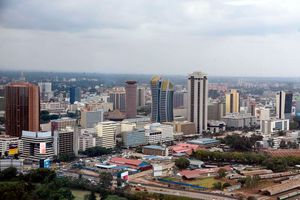
An aerial shot of a section of Nairobi. Many buildings and structures have come up, destroying the city’s original plan of independence Kenya.
Photo credit: File I Nation Media Group
The chief suspect behind the attack was Kubai. He was arrested on May 19 and charged with attempted murder. But his detention – alongside that of Singh – ignited a wave of outrage across the city. Police violently dispersed rallies at Pumwani Park, with the resistance only gaining momentum.
Kubai pleaded not guilty. Though ultimately released, the judge dismissed his credibility, declaring: “The case against him is one of the gravest suspicions. It is difficult to imagine a case which has gone nearer to conviction without the court being able to convict. He is unworthy of belief on any material point.”
Years later, it emerged that the architect of the assassination plot was Chief Koinange wa Mbiyu, who had a secret armoury in Kiambaa.
Charles Koinange, a one-time provincial commissioner.
Photo credit: File | Nation Media Group
Reflecting on the events during Nairobi’s transition to city status, it becomes clear that these were not isolated acts of vengeance or mere political rivalries. Beyond the call to decolonise Nairobi, this was a struggle over belonging, dignity and the right to shape the city’s future on African terms.
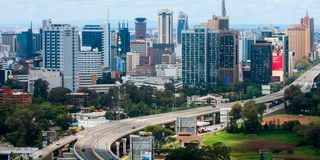
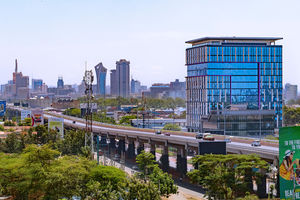
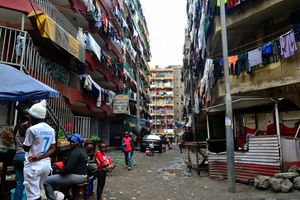
Nairobi still remains a paradox – where gleaming skyscrapers rise next to corrugated iron rooftops, and cutting-edge digital innovation unfolds amid the chaos of matatus. Yet, it is also a city of energy and hope – a place that outruns the boundaries imposed on it.
Had such ambition been sustained since independence, Nairobi might today stand not merely as a capital city, but as a testament to the ideals of Kubai – a metropolis rooted in the dignity and aspirations of its people.
One needs only recall the early promise of Kariobangi flats, the thoughtful layout of Buruburu before it was eroded or the initial coherence of Umoja One – before the descent into planning chaos and ungoverned sprawl – to see the vision that once was and could be reclaimed.
Nairobi was, at its inception, fashioned by settlers in the image of Durban – an apartheid township – in spirit and structure. As the first city in the British Commonwealth to be granted a royal charter, its elevation was marked with fanfare. A silver-gilt mace was commissioned in London – its crown meticulously crafted from Kenyan ivory and ebony. Embellished with enamel crests and a regal colonial coat of arms, the mace stood as a gleaming totem of the empire, radiating authority and dominion.
To the African residents of Nairobi, it gleamed with bitter irony. Beneath its polished surface lay a gilded falsehood. While the city was ceremoniously declared, its African population – those who built its roads and rails, swept the streets, ferried its goods and stocked its markets – were treated as unwelcome squatters. Branded as “hawkers”, “prostitutes”, “beggars”, and “vagrants”, they were subjected to surveillance, eviction and humiliation. To exist in the city, they had helped forge, Africans were made to carry the kipande – an oppressive identification pass that reduced their humanity to bureaucratic consent. Though the city’s skyline soared on the back of their labour, their right to dwell in it was policed, their presence provisional and their belonging always contested.
Kenyatta International Convention Centre, in Nairobi.
Photo credit: File | Nation Media Group
As Nairobi celebrates 75 years as a city, it is time to rewrite the plaque. Not as a jewel of the British Empire as it was envisioned, but as an African city – built line by line, street by street – by the people it once tried to forget.
It is time to remember that Nairobi’s future was imagined not in colonial boardrooms, but in the determined resistance of its residents. In their vision was a decolonised city – equal, just and truly free.
The story of Nairobi is not simply of growth. It is one of struggle, resilience and determination. While The Windsor Daily in Canada marvelled at Nairobi as “the first city to grow from the wild within living memory,” Africans knew better. It had grown from the work, will, and wounds of its people.
Though the city’s skyline rose on their labour, their movement within it was policed and their belonging perpetually questioned.
The colonial extractors forgot that Nairobi was built on African land and through African labour. Forgotten was that long before railway engineers and city planners arrived in 1890, the area was a vital cultural and economic space – a seasonal watering ground for the Maasai and a trading site for the Kikuyu. When it became a colonial outpost, the Africans who had cleared its swamps (colonial works credit Ewart Grogan), laid its roads and constructed its buildings were pushed to the margins.
In his speech, the Duke praised the “enterprise of early pioneers, Europeans and Asians,” offering no recognition to the Africans whose sweat and labour had laid the foundations of Nairobi. He failed to acknowledge that without African hands, there would have been no roads, no markets and no homes.
The Duke’s words erased the presence of the majority, rendering invisible the countless porters, builders, cleaners and railway workers who had carved a modern city out of colonial ambition.
Nairobi skyline on December 31, 2023.
Photo credit: Sila Kiplagat| NMG
But this omission was not merely rhetorical. It reflected a broader blindness. The Duke could not see that Nairobi was a Black metropolis in the making. It was not simply a colonial outpost or playground of imperial dreams. It was a city animated by the aspirations of African life. The boycotts were meant to send a message that Africans were not peripheral to Nairobi; they were its pulse, breath and spirit. What the Duke and the colonial establishment failed to see was that real cityhood was never about maces or charters. It was about belonging, contribution and claim.
Kubai was not merely calling strikes and organising boycotts for their own sake. His actions were rooted in a broader vision: to remake Nairobi into an inclusive city – one in which the African resident was not simply tolerated but affirmed as a rightful citizen with full claim to the streets, institutions and future. His struggle was not only against exclusion, but for recognition, dignity and shared ownership of urban life. That vision remains unfinished, echoing still in the city’s contested spaces, from Mukuru to Muthaiga.
Kamau is a PhD candidate in History, University of Toronto, Canada. Email: [email protected] ; X: @johnkamau1