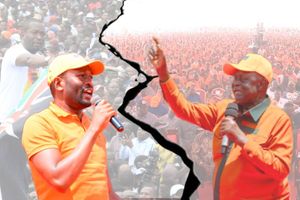
The surface has thinned, yielding to the particular violence of a fruit left too long in the sun, splitting along seams that were always there, hidden beneath the rind of one man’s extraordinary will.
Raila Odinga survived five presidential defeats, three stints in detention, and the sustained hostility of successive heads of state. He did not, however, survive his own legacy.
Within months of his death in October 2025, the party he built from protest marches and borrowed orange scarves has fractured into two hostile camps, each claiming the inheritance, each certain it is the real thing.
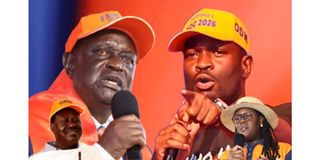
One is led by his brother Oburu Oginga. The other is headed by his most lethal protégé Edwin Sifuna. And somewhere in the middle, aligning herself with family, his daughter Winnie Odinga has made her first move. Between the high-walled sanctuaries of Karen and the serene halls of Parliament, a familiar ghost has begun to pace.
Oburu is ODM's official party leader following ratification by the SDC
It is the spirit of 1992, a year when the long-awaited dawn of a Second Liberation collapsed into the cold, hard math of ego, ethnicity and an unresolved question that has haunted Kenyan politics ever since. Who speaks for the people when the patriarch is gone? The Orange Democratic Movement has, for decades, been less a political machine and more a secular faith.
Raila, the indomitable veteran of detention cells and political exile, five-time presidential candidate and perennial symbol of the opposition, served as both its high priest and its polestar. The party did not run on manifesto or ideology so much as it ran on the man himself. On his defiance, his charisma and his wounds. Supporters wore orange the way pilgrims wear devotion.
But with Raila’s death last year, the cathedral is being partitioned. The pews are being unbolted from the floor. The icons are being appraised. And the faithful, from the lakeside villages of Kisumu to Kibra slums in Nairobi, are being asked to choose between the gravity of a bloodline and the magnetism of an understudy. It is, depending on your temperament, either the most Kenyan thing imaginable or a tragedy so perfectly structured it could have been scripted.
To understand the current fracture between the camps of Dr Oburu Oginga and Nairobi Senator Sifuna, one must travel back to the original sin of Kenyan pluralism and to Agip House, a building on Loita Street in Nairobi that once housed the dreams of an entire generation.
In 1991, when President Daniel arap Moi finally bowed to domestic pressure and international donor conditionality and agreed to restore multiparty democracy, opposition luminaries rushed together under the banner of the Forum for the Restoration of Democracy (Ford).
It was, in theory, an irresistible coalition. It brought together veterans of the independence struggle, trade unionists, lawyers, church leaders and ordinary Kenyans who had spent a decade watching the state behave like a private landlord.
By 1992, Ford had cleaved in two. On one side stood Jaramogi Oginga Odinga, the grand old man of the opposition, Raila’s father, a figure of immense historical gravitas who led Ford-Kenya from the old intellectual salon of Agip House. On the other stood Kenneth Matiba, the millionaire businessman and Kikuyu populist who had emerged from detention with a debilitating stroke and an undiminished fury, rallying his Ford-Asili from the street-fighter’s den at Muthithi House in Westlands.
It was Agip House versus Muthithi House, the elders versus the insurgents. The coalition split, Kanu waltzed through the middle, and President Moi was re-elected with barely 36 per cent of the vote. It is the kind of outcome that, in a functioning democracy, would provoke national soul-searching. In Kenya, it became a recurring template.
Today, history is rhyming with a vengeance and it has clearly not read the room. Dr Oginga, the soft-spoken elder, represents the Agip House of 2026. His faction is rooted in the Nyanza traditional base, in institutional memory and in a broad-based accommodation with President William Ruto’s administration. He is the continuity candidate. Careful, deliberate and the kind of man who uses the word ‘stakeholders’ without irony.
On the other side stands Mr Sifuna, the city senator whose tongue is as sharp as his intellect and whose presence on social media suggests a man who has never accidentally sent a WhatsApp text to the wrong group. Leading what has been christened the Linda Mwananchi wing, Mr Sifuna channels the Matiba energy. Urbane, restless, combustibly witty and fiercely anti-establishment in both style and substance.
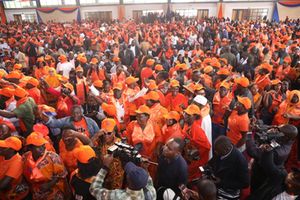
ODM party leaders at Sameta grounds in Kisii County during the 'Linda Ground' event on January 25, 2026.
Photo credit: Ruth Mbula | Nation Media Group
Where Dr Oginga reaches for consensus, Mr Sifuna reaches for a microphone. The symmetry is almost too neat. And as anyone who has studied our politics knows, when history rhymes this cleanly, it is usually about to do something expensive.
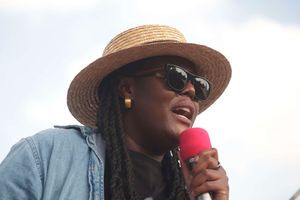
The intrigue deepened, as intrigue in Kenya invariably does, with a single, carefully choreographed move; Winnie Odinga’s decision to align with her uncle, Dr Oginga’s camp. Winnie is not a peripheral figure. She is the inheritor of a name that, in the Luo heartland and in the imaginations of millions of Kenyans who grew up watching her father lead protest marches, means something that cannot simply be quantified in polling data.
The Odinga name is a kind of Kenyan mythology, the secular equivalent of being the child of a founding saint. By moving to Dr Oginga’s side, Winnie has done something strategically elegant. She has made his camp the legacy wing. She has given a factional realignment the aura of dynastic legitimacy. The message is that the Odinga family name is selecting a new vessel. This clarifies what was previously murky.
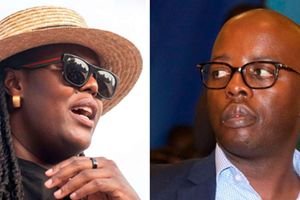
If ODM does formally divide into two parties before the 2027 General Election as most analysts predict, then the real contest will be between the two youngest and most formidable students of the same master. The duel, in other words, will be between Sifuna and Winnie. There is something almost poignant about this.
Both were formed in the caldron of Raila’s political universe. Both watched the same man absorb electoral defeats that would have broken lesser politicians. Both absorbed, by proximity and instruction, the lessons of how to build loyalty, how to speak to a crowd and how to weaponise narrative. But they appear to have read the same teacher’s notes and arrived at entirely opposite conclusions.
Sifuna represents what one might call the populist inheritance. He has mastered the art of the scathing press statement, the perfectly timed parliamentary ambush and the kind of retail politics that goes down especially well in the streets. His Linda Mwananchi framing is a direct rebuke of what he sees as ODM’s coziness with Ruto’s government, a coziness he regards as the political equivalent of a hunger striker ordering room service.
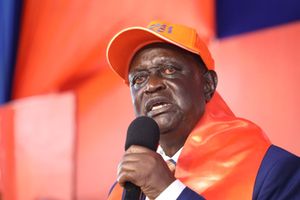
ODM party leader Oburu Oginga during the Orange Democratic Movement (ODM) Special Delegates Convention at the ASK Dome, Jamhuri Expo Centre in Nairobi.
Photo credit: Bonface Bogita | Nation Media Group
Winnie represents the dynastic inheritance. Where Sifuna draws his authority from the crowd, she draws hers from the bloodline. Where his power is performative and immediate, hers is symbolic and cumulative. She does not need to out-argue Sifuna, she needs to out-legitimate him. In Kenyan politics, where family lineage remains a powerful organising principle despite everything, the Odinga name in Winnie’s hands is a manifesto.
If Sifuna represents the opposition’s energy, Winnie represents its soul. Whether a party can run on soul alone, or whether soul without energy is an expensive piece of orange fabric gathering dust, is the question that will likely determine the shape of our politics for the next decade.
The United States, that grand laboratory of democratic dysfunction, is no stranger to such existential tremors within a single party. Its history offers both comfort and warning. The most dramatic precedent is the Democratic Party of 1860, which tore itself into a Northern faction and a Southern faction over expansion of slavery.
The Northern Democrats nominated Stephen Douglas, a man who believed in popular sovereignty, the 19th-century equivalent of saying ‘let’s work together’. The Southern Democrats nominated John C. Breckinridge of Kentucky. The result was that a relatively obscure one-term congressman from Illinois named Abraham Lincoln walked through the rubble and won the presidency with less than 40 per cent of the popular vote.
The party did not recover its cohesion for a generation. The country descended into civil war. One trusts the ODM schism will be less consequential in its downstream effects. But the structural lesson is identical. When a dominant party divides over identity and direction, it cedes the national conversation to whoever was patient enough to wait.
Winnie Odinga: ODM is my home, I stand for young Kenyans’ hope and resilience
More recently, both of America’s great parties have peered into the abyss of permanent schism. The Republican Party’s transformation offers a masterclass in what happens when an insurgent populist wing refuses to remain a wing. The Establishment Republicans spent years telling themselves that the populist base was an appendage they could manage.
They were wrong. The appendage ate the body. By the time the old guard understood what had happened, they were being primaried out of existence and reduced to writing op-eds in newspapers their own base had stopped reading. The party did not split in two. But the original party ceased, in any meaningful sense, to exist. It was a hostile takeover dressed as a movement.
The Democrats, for their part, have managed a more artful evasion. The tension between their Progressive wing and the Centrist establishment has been a fact of Democratic life since at least 2016. What has prevented an outright split is not ideological harmony; it is shared dread. Fear of the common opponent has served as the party’s most reliable binding agent.
The truce is uneasy, perpetually renegotiated, and periodically punctuated by furious exchanges between members of Congress. But it has held. The crucial difference for ODM is that the shared dread is fading. When the opposition’s own luminaries are sitting in the President’s Cabinet, the existential logic of unity loses its force. You cannot campaign on ‘we are better than them’ when several of your ‘we’ have joined ‘them’ and appear, by all available evidence, to be enjoying the experience.
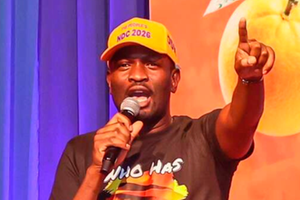
ODM Secretary-General Edwin Sifuna addresses delegates during the People’s Delegate Convention organised by the Linda Mwananchi faction of the ODM at Ufungamano House in Nairobi on March 27, 2026.
Photo credit: Wilfred Nyangaresi | Nation Media Group
As the nation approaches the 2027 polls, the question is no longer whether ODM will split. The question is what the two pieces will be called, who will get to keep the orange in the logo, and who will have to pick a new fruit.
A Sifuna-led ‘People’s Movement’ (lean, combative, urban-coded, and nostalgic for Raila’s insurgent years without the inconvenient accommodation with power) would speak to a real and hungry constituency. An Odinga-led ‘Legacy Party’ (rooted in ethnic pride, in the accumulated political capital of a name that survived detention, exile and five presidential runs) would speak to an equally real constituency.
What neither party can easily manufacture is what Raila himself embodied; the simultaneous ability to be both the insurgent and the institution, the protest and the state visit. That particular synthesis, messy, improbable and irreducibly personal, died with him. What remains is its component parts, divided between two gifted people who each carry a different half of the inheritance.
There is a genuine possibility that the split, rather than weakening the opposition, eventually strengthens it. That a more ideologically differentiated landscape is more durable and more representative than a single tent held together by one man’s gravity. Kenya has managed coalition governments before.
Two distinct orange-ish parties competing for the same base in 2027 might simply be the necessary mess that precedes a more honest politics. Or it might hand President Ruto the easiest re-election in Kenyan history. History, in its maddening ambiguity, leaves both outcomes on the table. There is a line from our political culture that bears repeating in moments like this; politics is about numbers.
The math of a divided ODM, measured against a disciplined Ruto coalition, is not encouraging for anyone who believed in the opposition project. But what is certain is that the two people now poised to shape that math are, by any honest measure, among the most politically talented members of their generation. They were schooled by the same demanding teacher. They know each other’s moves. They are, in the language of opposition politics, each other’s most formidable obstacle.
Raila spent 40 years teaching Kenya how to resist. It may be the final irony of his legacy that his two most gifted students will spend the next decade teaching each other.
The King is dead. Long live the two kings. Or in this case, and it is worth pausing on this, the Senator and the Daughter. Kenya has seen stranger things become history.