The Ethics and Anti-Corruption Commission (EACC) Chief Executive Officer, Abdi Ahmed Mohamud, has raised concerns over what is commonly referred to as petty corruption, warning that it is severely damaging the country.
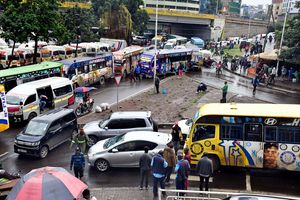
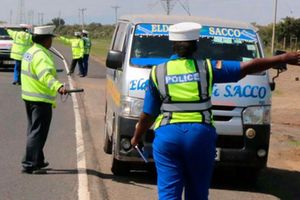
The EACC boss estimates that at least Sh3 billion is collected in bribes from motorists across the country each month, despite only 1,000 traffic police officers being deployed on the roads.
Small bribes demanded by traffic police officers, immigration officials, and county government officers from people seeking services are harming the public, normalising corruption, and, if ignored, could have devastating consequences.
“Looking at the amount of money we recover on average from arrested traffic police officers after just two hours of surveillance, we estimate that in a 10-hour shift, an officer can collect as much as Sh100,000 from motorists. That translates to about Sh3 million per month per traffic police officer if deployed daily. If we assume there are 1,000 traffic police officers across the country, that adds up to at least Sh3 billion per month. But we know there are more than 1,000 traffic police officers on duty nationwide. That is an enormous sum collected through so-called small bribes from Kenyans, but with a huge impact,” Mr Mohamud said.
EACC officials say that if each arrested traffic police officer was found with approximately Sh20,000 after just two hours, they could make about Sh100,000 in a 10-hour shift.
The anti-corruption chief revealed that investigations by the Commission have established that bribes taken by officials at service delivery points—such as police stations, immigration offices, and county government offices—have a significant impact on society.
Ethics and Anti-Corruption Commission CEO Abdi Ahmed Mohamud after he was sworn in at the Supreme Court of Kenya, Nairobi, on January 13, 2025.
Photo credit: Lucy Wanjiru | Nation Media Group
“Kenyans are feeling the effects of corruption at service delivery points because it is money taken directly from their pockets, albeit in small amounts. This is especially true when they encounter it while seeking services at police stations, Huduma centres, or when applying for business licences, passports, and national identity cards, among others. Ignoring these small cases would only help to normalise corruption, which we cannot afford as a country,” Mr Mohamud said.
The EACC chief executive noted that a Sh100 bribe given to a traffic police officer by a matatu crew to overlook worn-out tyres or other defects on a vehicle could result in an accident, causing deaths or injuries far more devastating than the bribe itself.
He added that collectively, the thousands of traffic police officers deployed on the country’s roads collect hundreds of millions of shillings directly from Kenyans’ pockets.
This comes just days after EACC detectives arrested two traffic police officers in Kabete and recovered Sh40,000 from them during a sting operation following complaints from the public.
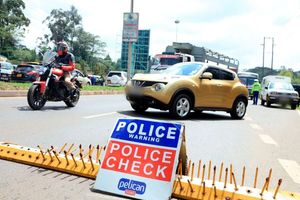
Reports indicate that the two suspects, attached to King’eero Police Station, allegedly mounted a roadblock at Njonjo Farm in Kibichiku, Kabete, and regularly solicited bribes from motorists.
King'eero Police Station in Lower Kabete, Nairobi
Photo credit: File | Nation Media Group
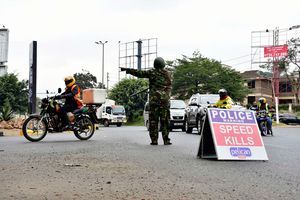
In another incident, following complaints from motorists and boda boda riders about traffic police officers extorting money under the guise of enforcing traffic rules at the Globe Cinema Roundabout, EACC detectives arrested three police officers from Central Police Station. They were found with Sh48,250, which they had allegedly collected in just two hours.
Mr Mohamud dismissed claims that the EACC is focusing more on small bribery cases than on major corruption scandals, insisting that both have disastrous effects on service delivery.
Consequently, the EACC and the National Police Service (NPS) have initiated an audit of the NPS’s operational systems to curb graft.
EACC recently launched an examination into police systems to identify and address systemic weaknesses and loopholes that encourage corruption.
“The objective of the system audit exercise is to identify and address systemic weaknesses and loopholes that encourage corruption in Kenya’s police operations. Upon completion of the process, EACC will submit a comprehensive report of the findings to and reform recommendations to the Inspector General of Police for implementation,” Mr Mohamud said
During the launch attended by EACC Chairman Bishop David Oginde, Inspector-General of Police Douglas Kanja and senior EACC and NPS officials, it was agreed that the five-month exercise would begin on February 11th 2025 and end on 18th July 2025.
Mr Mohamud said that EACC will thereafter closely work with NPS leadership to ensure that the report is successfully implemented and any emerging challenges are addressed.
According to the latest EACC annual report, there are many police officers arrested and charged with corruption but there have been 127 petitions and judicial review applications seeking to stop the suspension of 67 police officers and other public officers.
The EACC boss noted that counties are collecting cess from traders in small amounts but cumulatively it is large sums of money which for a long time remains unaccounted for.
“Counties collect large amounts in cess. Previously, county councils and municipal councils used the cess collections to pay salaries and other obligations effectively. What has happened to what counties collect? Who is accountable?” Mr Mohamud said.
The EACC boss told the Weekly Review that he wished Kenyans would be as vigilant as during the initial days of President Mwai Kibaki's administration in 2003 when citizens arrested and frog marched traffic police officers for soliciting and taking bribes.