Two weeks ago in Addis Ababa, at the African Union’s 39th Ordinary Session, the AU launched its 2026 theme: “Ensuring sustainable water availability and safe sanitation systems to achieve the goals of Agenda 2063.”
This called on African nations to prioritise resilient infrastructure, innovative technologies, and community-driven solutions amid escalating climate pressures and devastating impacts from prolonged droughts to floods.
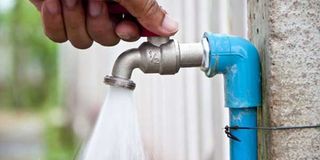
The long rains are upon us in Nairobi right now, transforming parched landscapes into lush greenery and swelling our rivers and reservoirs, making it suddenly seem like we will never lack for water.
Yet this seasonal bounty serves as a timely reminder of our vulnerability; without strategic investments in conservation, equitable distribution, and robust sanitation, today’s abundance could tomorrow turn into scarcity. This underscores AU’s urgent call to action for a water-secure Africa.
At first glance, the theme sounds too technical, almost bureaucratic in the way governments can sometimes be. However, when we look closer to the theme and read between the lines, we find urgent political, social and economic questions which force countries in Africa into a severe reckoning. These questions include: who should have access to water? How much water should they have? And what does safe sanitation look like for our growing cities? The questions are grave considering that Africa has a deep climate vulnerability. However, we must face them.
At its heart, the theme recognises that without water security and safe sanitation, every other goal envisioned in the 2063 agenda will not be achieved. A continent cannot prosper on dry, heat-scorched lands or cities. Climate vulnerability is remaking landscapes and livelihoods with increasing force, and this underscores why the AU has foregrounded water and sanitation this year. Africa is already feeling the intensity of climate disruption. In recent weeks, in Northern Kenya, drought has deepened, and this condition has vastly affected food security, water access and pasture availability.
This has unfortunately not been a unique case because between October 2020 to early 2023, Eastern Africa experienced five consecutive failed rainy seasons, which resulted in harvest failures, livestock losses, water scarcity and left about 4.35 million people in need of humanitarian aid. Statistics show that 400 million people in Africa lack water for their daily livelihood and over 800 million lack access to basic hygiene services.
This year’s theme is urgent. It comes at a time of major global economic shifts. At the recent AU Summit, President Xi Jinping of China unveiled a potentially game-changing pledge: effective May 1, zero-tariff treatment for imports from 53 diplomatically aligned African nations.
This visionary policy is a clear effort to deepen China-Africa partnership and promises to catapult African exports into vast new markets. But I worry that because Africa’s competitive strength is in agriculture-reliant sectors, powered by dependable water resources, we could miss out on optimising this opportunity.
Trade access and tariff reductions can stimulate industrial growth. We all know that factories require water availability. Agricultural exports also depend on predictable rainfall or irrigation. Textile production, mining, food processing and energy generation all rely on stable water systems. Without water resilience, expanded trade opportunities risk colliding with ecological constraints. Economic growth cannot be sustained by depleting our water sources. If our water systems were to fail us, economic systems would follow.
Rapid economic growth that does not centre on safe sanitation would only transform our urban areas into hubs of disease. One famous example is London’s poor sanitation during the Industrial Revolution. In 1858, London had an open sewerage that poured straight into the nearby Thames, and this system was strained by a growing urban population. This made the city smelly, and the government had to step in with modern infrastructure to turn those sewers into a modern and resilient system. In Africa, we must not allow our cities to grow without building the infrastructure to keep pace with that growth.
We must learn from that history. Without deliberate investments into wastewater management, urban growth risks entrenching inequality. Informal settlements in our cities already face the harshest consequences when water sources are contaminated, and we should not allow this to continue. Safe sanitation is important for our economies, but it is also about the dignity of another person.
Last year, bilateral trade between Africa and China was at a record $348 billion, and if the current growth holds, driven by the zero tariff regime, it is expected to reach $400 billion by the end of 2026. Should Africa’s new trade opportunities generate increased revenues, then those new resources must be ploughed back into strengthening climate adaptation, restoring watersheds, modernising irrigation and expanding safe sanitation systems. This will ensure economic opportunity reinforces ecological security rather than undermining it. The benefit is that this will create a virtuous circle that will only lead to more opportunities. It is up to AU member countries to put their money into what they say is important to them this year.
Ultimately, Africa’s development cannot be built on fragile water systems or neglected sanitation infrastructure. It must be anchored in resilience.
Ms Mathai is the MD for Africa & Global Partnerships at the World Resources Institute and Chair of the Wangari Maathai Foundation.