Since the United States and Israel launched airstrikes on Iran on February 28, 2026, shipping traffic through the Strait of Hormuz has collapsed by more than 95 per cent.
What was previously around 130 vessels a day is now at single digits. Oil that powered a quarter of global sea trade is stuck. But here is what the headlines are missing: this crisis is not primarily an energy story.
It is an agriculture story, a food security story, and for our continent that has waited too long at the edge of the green transition, it could be Africa’s defining story.
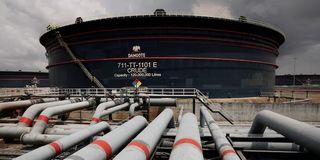
Consider what is happening to Africa’s most ambitious industrial project. The Dangote Refinery in Lagos is capable of processing 650,000 barrels a day and I honestly thought they would have been insulated from a Gulf crisis. Nigeria has oil. But Aliko Dangote’s own CEO has laid bare the brutal logic of fossil dependency in a globalised market: “Freight costs have surged dramatically, with tanker costs rising from about $800,000 to roughly $3.5 million per shipment in the current market environment.” Even Africa’s crude, refined in Africa, cannot escape the price of moving it. The lesson Dangote’s crisis teaches us is the one the fossil economy has always hidden and quite frankly one most of us do not consider. It is not just what energy costs at the source. It is what it costs to move it across a world.
The fertilizer story is similar. About a third of the world’s fertilizer trade also flows through The Strait. Nitrogen fertilizer prices have already climbed 40 to 50 per cent. The Africa Climate Summit declared that Africa’s Green Industrialization is a priority. Africa could skip the fossil-fuel development trap and build clean from the start. That rhetoric has aged poorly, mostly because it remained rhetoric. The industrial ambition didn’t follow. Solar was celebrated, but only for powering lightbulbs and small villages. Not green industry or powering value addition or agricultural commodities.
Because across the Global South, the industrial-scale solar revolution is happening. In Pakistan, a country the world mostly associated with energy poverty and grid dysfunction, 32% of its electricity is now coming from solar.
Solar is no longer only for lighting and charging. It is powering steel mills. EVRAZ North America’s facility in Pueblo, Colorado, one of the world’s first solar-powered steel operations, is drawing on a 300-megawatt solar field covering more than 7 km sq, providing nearly all the plant’s annual electricity from 750,000 panels. Tata Steel in India is running steelmaking facilities off grid-connected solar in Jharkhand and Odisha, saving more than 45,000 tonnes of CO₂ per year in the process.
And further, for years I assumed the argument against solar in heavy industry was solid: you simply cannot run a cement kiln or a glass furnace on intermittent sunlight. Temperatures above 1,000 degrees Celsius, sustained for hours, seemed to require fossil fuels. That assumption is also being shattered. A new generation of thermal battery systems stores solar energy not as electricity but as heat: using ancient chemistry to store and release industrial-grade heat on demand. One Illinois startup is already running trials at a Whirlpool appliance factory in Ohio, where the system is reportedly performing better than expected. The implication is enormous.
For Africa, with its abundance of sun and its urgent need to grow in a climate resilient way it is about a choice of whether we hitch our growth on fossil dependency or sovereignty. If Pakistan is the solar sovereignty story, Ethiopia is the electric mobility story and I believe the most audacious industrial policy bet on the continent. In January 2024, Ethiopia became the first country in the world to ban the import of internal combustion engine vehicles. The reaction from the global community ranged from skeptical to dismissive. The government is aiming for 500,000 EVs by 2032 and even further Volkswagen is evaluating an EV manufacturing facility in the country and BYD has partnered with local firm MOENCO to roll out five car models. The economics make sense: electricity delivered to Ethiopian consumers costs around $0.10 per kilowatt-hour roughly half the US average. The country spends $4.5 billion annually on fossil fuel imports, money that EV adoption can redirect to local industry. Challenges do remain since only 55% of Ethiopians have electricity access, charging infrastructure outside Addis Ababa is thin, and rural electrification is uneven.
The Hormuz crisis should be seen as a gift of clarity. The cost of fossil dependency is now visible, immediate, and measurable. Fertilizer prices up 50%. Industrial inputs strangled. Food security under threat during planting season. The old energy order is losing grip. Africa’s response must not be to wait for the crisis to pass and return to business as usual. It must be to build, urgently and at scale, the alternative. The continent does not lack sunlight. It does not lack ambition. What it has historically lacked is the conviction to act as if the future is now, and the political will to build infrastructure that answers to our needs rather than fossil-fuel geopolitics. The Strait of Hormuz is 21 miles wide. The Sahara is 3.5 million square miles of sunlight, and as Bill Mckibben so aptly put it, sunlight travels 93 million miles to reach the earth. None of them through the Strait of Hormuz.
Ms Mathai is MD for Africa & Global Partnerships at the World Resources Institute and Chair of the Wangari Maathai Foundation.