There is a striking, and deeply sobering, contrast between two moments unfolding this week on opposite sides of the world. In Mumbai, India at the 2026 Earthshot Prize, we witnessed ambition (to act) in full display.
Extraordinary innovators, entrepreneurs, communities and businesses demonstrated that solutions to our planetary challenges are not only possible, but already happening. There was energy, imagination and an unmistakable determination to move faster and further. The future, in so many ways, was on display.
Yet as the climate negotiations unfold in Antalya at COP31, the contrast could hardly be more stark. At a moment when science demands acceleration and the world needs political courage, we seem to be negotiating not how much further we can go, but how little we can afford to concede.
The latest negotiating text stripped out references to the COP30 Roadmaps on transitioning away from fossil fuels, halting & reversing deforestation; and dropped the proposed $120 billion annual adaptation finance target and weakened the ambition around electrification.
Meanwhile, there is uncertainty over the next IPCC assessment report — and we really shouldn't have to argue that having the latest comprehensive scientific evidence is critical for the second Global Stocktake. Even if the IPCC language survives, this move shows the extent of efforts to slow the momentum we need on climate action.
These are worrying signals of a broader retreat from ambition, and once again, the interests of countries with vested fossil fuel interests are threatening to hold back the progress the moment demands.
Once again, and predictably, climate finance remains one of the most contentious issues. Africa, which is the continent that is least responsible for climate change and the one that is most vulnerable to it, received only about $52 billion a year in climate finance in 2022, against needs estimated at $190 billion — barely a quarter of what the continent requires. Much of it arrived as loans, adding to the existing debt burden.
These figures are particularly frustrating when we consider the commitments that developed countries already made more than 10 years ago. Climate finance is not simply an act of charity or generosity from wealthier nations; it remains an obligation based on science as historical facts and practices, recognised under the international climate framework as Common But Differentiated Responsibilities and Respective Capacities (CBDR-RC).
For Africa, this obligation has enormous implications. Our countries are having to contend with increasingly unpredictable rainfall, prolonged droughts, devastating floods and rising temperatures. Governments across the continent must invest in a range of infrastructure measures that can withstand extreme weather, support farmers adapting to changing seasons, strengthen early-warning systems and protect communities from climate-related disasters.
These investments require substantial resources, and yet many African countries are already grappling with high levels of public debt. Money that could be going towards our development priorities that would be adaptive and protective, are instead servicing increasing debt. The lack of progress on adaptation finance is causing real suffering all across the Global South, especially in Africa and beyond.
Climate finance, of course, was always a struggle. Two years ago in Baku at COP29, developing countries left feeling the goal of limiting the planet’s temperature to 1.5°C was in the ICU. Last year at COP30 in Belém the negotiations produced a more promising agreement to triple climate finance to 1.3 trillion for developed countries by 2035.
In the same optimistic vein, in the run up to COP30, the Africa dialogue of the Global Ethical Stocktake underscored the climate crisis as a moral failure. It put integrity at its heart and helped us answer an important question: If we are already aware of the climate crisis, its effects and the solutions we need are here with us, why the inertia?
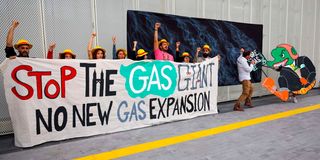
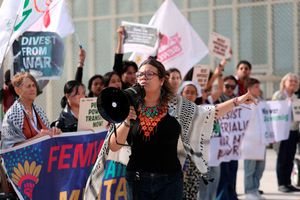
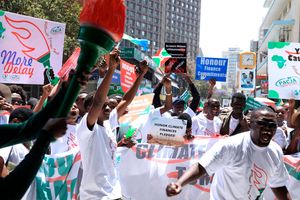
Perhaps this question was the central point of thousands of protesters who took to the streets of downtown Antalya to demand tougher curbs on planet-warming fossil fuels and fresh pledges to help poorer countries to adapt to climate change. Their frustrations speak to a wider concern about the distance between international conferences and the realities of communities experiencing climate impacts.
It is crunch time in Antalya. What we need from this COP is real commitment and increased momentum on "Making It Work." The Road Maps from the COP30 Presidency are crucial here, guiding the way and showing what it takes to get practical. The world will not change overnight, but we must watch for clear signs that parties are Making It Work, particularly in the all-important domains of practical and real transitioning away from fossil fuels, halting and reversing deforestation, and delivering adaptation finance.
It would be a profound missed opportunity if COP31 were to conclude without marked and measurable progress in these areas. We cannot leave Antalya having negotiated our way to a lower level of ambition simply because that is where consensus is easiest to find. And whatever the outcome, Africa must take the lesson from this moment and lean into supporting the COP32 Ethiopian Presidency. The continent has the most to gain from a COP that delivers, and the most to lose from one that does not.
Ms Mathai is the MD for Africa & Global Partnerships at the World Resources Institute and Chair of Wangari Maathai Foundation