Over the past week I have been consumed by Emily Baker-White’s Every Screen on the Planet: The Secret History of TikTok. Where Facebook and X were built around whom you choose to follow, TikTok’s For You page studies every pause, replay and swipe until it knows what holds your attention better than you do, and ByteDance’s purchase of Musical.ly handed it an audience of lip-syncing teenagers who would in time become voters.
The IEBC hopes to add 6.3 million voters, roughly 5.1 million of them Gen Z, and they will not meet their next president through a newspaper editorial or a nine o’clock bulletin. The Reuters Institute’s Digital News Report puts the share of Kenyans taking news from TikTok at 38 per cent, the highest of any country it surveys, while 55 per cent name that same platform as their chief worry about false information.
Our first TikTok-native election will turn on the platform’s power to decide which candidates Kenyans encounter, which scandals dominate the week, and which version of the country reaches their screens.
Social media has been called the Fifth Estate, and the label flatters it. The Fourth Estate earned its standing by scrutinising power and, for all its failures, a newspaper has a nameable editor, a revocable licence, and a political advertisement that announces itself so that campaign spending can, in principle, be traced.
TikTok makes equivalent decisions through invisible moderation, and it bans political advertising outright, which sounds like restraint until you notice that it drives every shilling of campaign money into undeclared influencer arrangements leaving no public record.
Baker-White’s most useful revelation for us is heating, an internal button letting employees push chosen videos into millions of feeds to court creators and protect commercial relationships, unlabelled, so a boosted video looks exactly like a beloved one. Nothing suggests TikTok has ever heated a Kenyan politician. What should trouble us is that virality there can be manufactured from the inside.
Nature published an audit in May by Hazem Ibrahim and colleagues, who ran 323 controlled experiments gathering over 280,000 recommendations during the 2024 campaign and found Republican-seeded accounts received roughly 11.5 per cent more co-partisan content than Democratic ones, a skew that survived every control for engagement.
Romania went further, its Constitutional Court annulling a presidential election in December 2024 after declassified intelligence pointed to a coordinated TikTok campaign behind Călin Georgescu, and the European Commission opened proceedings against the platform’s recommender systems a fortnight later.
Romania could act because it had something to act with. Kenya has no Digital Services Act, no researcher access to platform data, no capacity at the IEBC or the Communications Authority to audit a recommendation engine, and no legal language treating a heated video as campaign expenditure.
Mozilla’s Odanga Madung documented over 130 TikTok videos carrying hate speech and political disinformation before the 2022 poll, watched millions of times, most missed by moderators unfamiliar with Kenyan languages.
Then there is the philosophy ByteDance executives called thinking like Martians, under which staff entering a foreign market shed national loyalties, studied the culture and bent the product far enough to survive.
Commercially it was ingenious, letting TikTok be Chinese in China, American in America and Kenyan in Kenya, which poses the question of what such a company does when survival requires accommodating whoever controls that market.
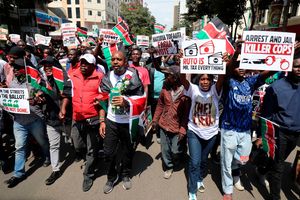
After her reporting exposed internal data practices, ByteDance employees improperly accessed data tied to her account, including IP information, hunting for her sources inside the company, and the firm later admitted surveilling journalists. Transpose that into a country where cybercrime statutes are routinely aimed at critics and protesters posting under #RutoMustGo were traced and abducted, and the exposure reaches whistleblowers, organisers and anonymous citizens.
The danger arrives from two directions. Candidates and their financiers will work the platform from outside with paid creators, coordinated pages and manufactured engagement no regulator here can price.
The government will work it from inside the regulatory relationship, and it has practice — in August 2023, days after Parliament received a petition to ban TikTok, President Ruto held a call with Shou Zi Chew, who agreed to review Kenyan content and open an African office.
Nobody needs to order an algorithm rigged when takedown requests, selective complaints, licensing anxiety and quiet meetings will do, and a Kenyan whose video stops circulating cannot know whether the cause was the algorithm, a state complaint or a meeting he was never told about.
The lasting consequence will be evidentiary. A Kenyan presidential result is contested on paper, in forms 34A and 34B, because that is the only part of the process our law knows how to see, and no petition has ever been filed against a recommendation engine because no advocate in Nairobi can subpoena one.
Whatever is done to our feeds between now and next August will sit beyond challenge, beyond audit and beyond the reach of any judge, and the result will be certified as valid on the narrow ground that the arithmetic held.
Mr Amenya is a whistleblower, strategy consultant and startup mentor. www.nelsonamenya.com