Hello

Your subscription is almost coming to an end. Don’t miss out on the great content on Nation.Africa

Ready to continue your informative journey with us?

Hello

Your premium access has ended, but the best of Nation.Africa is still within reach. Renew now to unlock exclusive stories and in-depth features.

Reclaim your full access. Click below to renew.

Protesters
Caption for the landscape image:

Gen Z protests, two years on: What did our heroes die for?

Scroll down to read the article

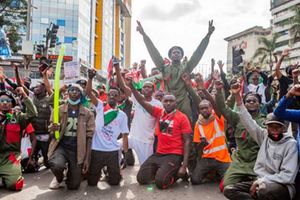
Human rights activist Boniface Mwangi (centre) and other protesters march along Koinange Street towards Central Police Station, Nairobi on June 25, 2026, during demonstrations marking the second anniversary of the Gen Z anti-Finance Bill protests.

Photo credit: Bonface Bogita | Nation Media Group

Two years ago, Kenya buried its innocence in broad daylight. The children of this country walked into the heart of Nairobi and asked their government for something so modest it should have embarrassed no one to refuse. They wanted a state that worked. They wanted taxes that did not strangle the kiosk and the factory in the same breath. They wanted jobs for the degrees they had borrowed to earn, hospitals that were properly equipped, roads that led somewhere other than a politician’s pocket, and a country where public money served the public.

More than 120 Kenyans are now dead from the protests that began with the Finance Bill and never quite stopped. Rex Masai was the first, on Moi Avenue. Ibrahim Kamau was only nineteen. Wilson Sitati was killed on his own birthday. Eric Shieni was killed inside the grounds of Parliament itself. They were young citizens asking their country to become worthy of their hope.
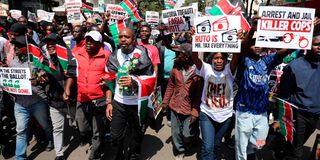
That is why today must be more than a day of mourning. It must be a day of remembrance. These young people did not die because they asked for the impossible. They died because they asked for the very things this government claims to admire when it speaks of development, discipline and transformation.

Deaths of our heroes

Lee Kuan Yew took an island with no water, no hinterland and a per capita income below a thousand dollars and, within one generation, made it richer than its former coloniser. He wrote the story down in From Third World to First, and two of his chapter titles ought to be nailed to the door of every ministry on Harambee Avenue. One is “Keeping the Government Clean.” The other is “A Fair, Not Welfare, Society.”

That second title answers the lie our rulers tell whenever the poor ask for anything: that the only alternative to neglect is a bankrupting culture of handouts. Lee Kuan Yew wrote that his preoccupation was to give every citizen “a stake in the country and its future”. He then built the machinery to make that promise real. Public housing turned tenants into owners. A provident fund became pensions and medical cover. An education system found the brightest child in the poorest estate and sent them to study abroad.

He understood that stability was not manufactured by speeches, slogans or police batons. It was manufactured by competence. He hunted talent the way our governments hunt rivals. The cleverest students were given scholarships to London and Tokyo, later to Beijing and Washington, then bonded back into a civil service that ran the country with the discipline of a well-run company. He brought in Japanese technicians to train Singaporean workers until their workmanship matched Tokyo’s. Behind every decision was the same insistence, repeated until it became a governing creed, that all of it was for the people.

This is what makes the deaths of our heroes so unbearable. They were asking for the developmental state without even using that language. They wanted a country where hard work had a destination. They wanted a government that could collect taxes without looting them, borrow money without mortgaging the future, build roads without turning every kilometre into a feeding trough, and run hospitals without converting sickness into a procurement opportunity. They wanted Kenya to stop behaving like a private estate and start behaving like a republic.

Clean government

Look at what those same two years have bought us instead. We have a justice system so timid before power that the Treasury can be emptied in public and still the files move like snails in a funeral procession. We have an oversight authority sitting on dozens of death files, with only a handful of cases in court and not a single officer convicted for the killings that shocked the country. We have a government accused of leaning on international media to suppress evidence, and grieving mothers being offered hush money so that the question of who pulled the trigger might disappear with their children.

The tragedy is that William Ruto presides over a state with every instrument needed to build the country these young people imagined. He has the power to plan a generation ahead. He has global examples to learn from, including the very Singapore model he and his allies like to quote when it is convenient. But instead of using the state to lift citizens, he has turned it into an extraction machine. Instead of building competence, he has rewarded loyalty. Instead of protecting the young, he has criminalised them.

So when we ask what our heroes died for, the answer must not be softened. They died asking for a government for the people. They died asking for a fair society, not a welfare society. They died asking for clean government, not speeches about clean government. They died asking for work, dignity, justice and a future in the land of their birth.

And because they died for those things, their memory now belongs to the republic.

The writer is a whistleblower, Strategy consultant, and a Startup Mentor, www.nelsonamenya.com