In 1964, a lawyer in Singapore, driving along a main road one morning, swerved to avoid a stray cow, struck the animal anyway and died. That single incident tells you plainly enough what kind of capital Lee Kuan Yew had inherited two years into independence. Cattle still grazed on the Esplanade lawns near his office at City Hall. On the pavements, thousands of hawkers fried fish and stewed offal over open flames. Smoke, rot, pirate taxis and human congestion turned whole quarters of the new capital into something close to a slum, within sight of the harbour that was supposed to make the island rich.
Instead of borrowing his way through decline, as many newly independent states did, he bet everything on foreign investment over foreign aid. It was such an improbable path that Malaysia, the federation that had just expelled Singapore as a bad bet, expected it to fail and come begging for assistance. Lee knew that a country’s competence is not only announced by monuments, expressways and stadiums. It is revealed in maintenance; clean drains, working taps, trimmed hedges, swept streets, repaired pavements and public toilets.
After independence, he searched for a dramatic way to distinguish Singapore from other developing countries. He settled on making it “clean and green”. The idea was simple but profound. If Singapore could offer First World standards in a Third World region, business people and tourists would use it as a base for the region. He had no natural advantages to work with. He had to bring in an Australian plant scientist and a New Zealand soil expert just to coax the lawns past a sickly yellow.
Nairobi already sits beside a national park and has a climate Lee would have envied. It has enough rainfall and natural greenery to make beauty the easiest part of governance. The problem is the State’s inability to maintain what nature already gave us. Lee judged the nearly 50 countries he visited not by the size of their state buildings, but by the condition of their washbasins, taps, gardens and public spaces.
Afcon 2027 will hand Kenya precisely that kind of scrutiny for free. The continent’s cameras will arrive at a stadium the government has renamed Raila Odinga International Stadium, and the road many visitors, journalists and officials will travel to get there runs straight through Ngong Road.
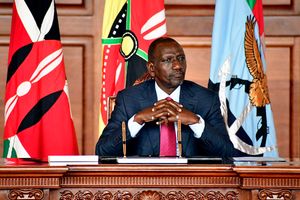
Last month, President William Ruto commissioned the Sh3.8 billion Ngong Road-Naivasha Road flyover at Junction Mall, while also announcing Sh3.9 billion more for access roads around the stadium. Going by the finished structure, what that money bought is a flyover painted in green and yellow so jarring against the surrounding greenery and the sober grey of the road corridor that the whole project looks visually confused.
Lee personally called ministers over unkempt roundabouts. That is the level of attention to detail that turns cleanliness from a slogan into a governing culture. In Kenya, we treat such issues as aesthetic complaints, yet they are really signs of institutional discipline, or the lack of it.
Mombasa Road makes the same point from another direction. Once the Nairobi Expressway opened, the lower road beneath it deteriorated into an embarrassment. President Ruto himself admitted during Jamhuri Day that the road had “experienced challenges”, which was a polite way of saying that the country’s main gateway from Jomo Kenyatta International Airport (JKIA) to the city had been allowed to decay in full public view.
Kenya’s gateway to the world
The Kenya National Highways Authority has since handed China Road and Bridge Corporation a fresh contract to recarpet and beautify the JKIA to Westlands stretch, describing it as Kenya’s gateway to the world. Lee was using that same logic about Singapore 60 years ago. The difference is that, in Singapore, the gateway became a national obsession. In Kenya, it becomes an emergency only when embarrassment becomes unavoidable.
Then came the newly laid sidewalk and cycling lane, which appeared crooked, gapped and laid without any apparent relationship to the kerb it was supposed to follow. It consumed Kenyans on X for days before the contractor was shamed into ripping it up and starting again. That incident should have been caught by an engineer, a supervisor, a clerk of works, a county official or a ministry inspector long before citizens turned it into a public spectacle.
Lee once created an entire department inside the Ministry of National Development because saplings kept dying between his visits. He turned a recurring embarrassment into an institution. Kenya, by contrast, treats each embarrassment as a social media storm that ends when the outrage cycle moves on. Then the same incompetence reappears on the next road, the next pavement, the next public project.
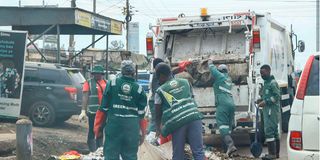
This is why Nairobi must be made clean and green, not as decoration, but as proof of State seriousness. A clean city is not merely flowers, paint and ceremonial landscaping. It is procurement discipline, supervision, maintenance budgets, drainage, waste collection, walkability, road finishing, signage, public toilets, lighting and all the small details that tell citizens, investors and visitors that somebody is paying attention.
The world will judge us by the details we failed to maintain. If Kenya wants to be treated like a First World country, it must first start acting like one.
The writer is a whistleblower, strategy consultant and startup mentor. www.nelsonamenya.com