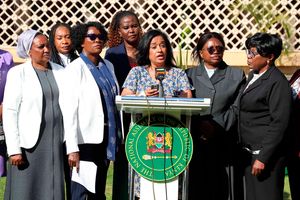
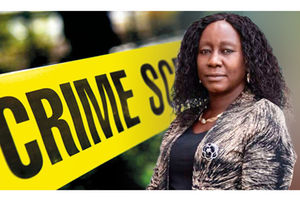
I spent a large part of the past few days in spaces that few doctors ever find themselves in: police stations and courtrooms. As someone who practices both medicine and law, I often reflect on the intersection of these two fields.
It began with the arrest of an octogenarian doctor, a cardiac patient and an obstetrician and gynaecologist who has served this country for over 50 years. He has trained generations of obstetricians and gynaecologists across Kenya.
To many within the profession, he is not merely a colleague; he is an institution. Yet this weekend, he was forcibly taken from his clinic by unknown individuals and placed in police custody.
I will not dwell on the legal dispute before the court. That matter will run its course through the judicial process, as it should. What stayed with me instead was something far more fundamental: the vulnerability of a patient inside the machinery of the justice system.
For more than seven hours, our senior colleague, an elderly man with a known heart condition, remained inside a police vehicle under the afternoon heat. Those of us who had gathered around him could see the toll it was taking. Medicine teaches us to observe subtle signs: fatigue, laboured breathing, the quiet signals of distress that may not immediately register to those unfamiliar with illness.
Courts have an important role in health systems. They decide individual disputes, hold stakeholders accountable, and review regulation and government action. When providers mistreat patients, hospitals deny proper care, and governments fail in their responsibilities, often the courts are the last line of defence.
While courts have long dealt with malpractice claims and cases concerning the inhumane treatment of patients in public institutions, broader questions of health policy now frequently find their way onto judicial dockets.
But standing in that courthouse compound, I found myself thinking less about legal doctrine and more about the people who move through these spaces every day.
Court corridors are full of human stories. Litigants, witnesses, police officers, advocates, clerks, and members of the public pass through them in steady streams. Many arrive seeking justice. Others come compelled by the State’s authority. Among them are individuals carrying invisible burdens: illness, anxiety, physical pain, or chronic conditions that remain unseen to those around them.
How many of those who walk into courtrooms every day are silently managing their health while navigating the justice system?
How many are too scared, too daunted or too tired to even talk about their illness while at court?
Our senior colleague was fortunate. Over 50 doctors were present in the courtroom that day. When he began to feel unwell, help was close at hand. When his condition began to deteriorate, medical assistance was immediately available. Eventually, an ambulance arrived, and he received the care he needed.
But before that ambulance arrived, there was another layer of complexity. I found myself negotiating with police officers who were themselves navigating their own predicament. They were under strict instructions: the accused was not to leave the police vehicle. At the same time, they could see the frailty of the elderly man before them- they were torn between following orders or being human by showing compassion. Eventually, common sense prevailed. But the moment left me wondering about all the others who might not have such advocates around them.
Justice systems are built around procedures — arrests, charges, hearings, custody, appearances. Healthcare systems are built around care, monitoring, and intervention. Law enforcement officers are not clinicians. Courtrooms are not hospitals. Police vehicles are certainly not appropriate spaces for managing vulnerable patients with cardiac conditions.
Yet the justice system inevitably deals with human beings, and human beings carry their bodies, healthy or fragile, into every institutional space they enter.
Emergency preparedness within court precincts should not be an afterthought. Protocols for handling vulnerable detainees should be clear and humane. Officers should have access to guidance on when medical attention is urgently required. Courts themselves must recognise that the people appearing before them are not abstractions within legal files but living individuals whose health may be compromised. The legitimacy of the justice system does not rest solely on its ability to interpret the law. It also rests on its capacity to safeguard human dignity.
As I left the courthouse that evening, I was reminded that the rule of law ultimately serves people, not the other way around. And if the law is to maintain its moral authority, our courts must remain places where justice is pursued without forgetting the humanity of those who stand before them.
In the end, what I witnessed this weekend was not simply a legal process; it was a reminder that justice cannot be divorced from the bodies and lives that pass through its gates. A system that seeks truth and fairness must also recognise fragility, illness, and age. The law must never become so rigid in its procedures that it forgets the people it exists to serve, and that the dignity and health of every person who enters those gates must be treated not as an inconvenience, but as a duty.