I was called to speak to young girls graduating at the Nice Place Foundation in Kajiado, and as I looked at their faces, I wondered what I could possibly say. How do you prepare young girls for a world that feels so unkind and devoid of empathy?
How do you stand before children who have already survived so much and offer words that do not sound like hollow platitudes? I knew I could not simply deliver a rehearsed address. I wanted to speak to their reality while giving them something solid to hold onto as they entered a society that too often refuses to protect them.
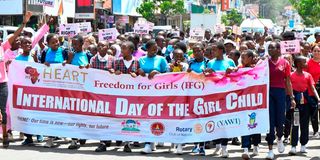
Today, Kenya will celebrate the girl child. Across the country, there will be cakes, colourful balloons, matching T-shirts, speeches, trending hashtags and photographs of high-ranking officials standing beside little girls. We will hear declarations about their rights, potential and dreams, and be reminded that girls are the leaders of tomorrow.
Then Monday will arrive, the banners will come down, the cameras will pack up, and many of these girls will return to places where their safety, dignity and childhood are routinely stolen from them. I struggle with days like this because I live in the gap between what Kenya says on public stages and what happens when the cameras turn off.
I know the frustration of fighting to protect girls in a country that talks about children’s rights while failing to protect children. I handle active court cases involving child sexual abuse and gender-based violence, confronting realities that public figures would rather ignore during their celebrations.
The truth is that our state machinery has failed the Kenyan girl child. The government takes pride in ratifying international conventions and passing progressive laws while starving child protection services of the resources they need. Police stations lack child-friendly reporting desks, forcing traumatised children to recount their ordeals in crowded rooms. The Directorate of Children’s Services remains underfunded and understaffed, leaving social workers overwhelmed and unable to conduct basic follow-ups.
Meanwhile, abuse cases drag on in court through endless adjournments, exhausting poor families until they abandon their pursuit of justice. When state institutions fail, the burden of protecting children falls on exhausted advocates, community workers and civil society shelters.
Across Kenya, grassroots rescue shelters and community safe havens fill the void left by an absent state. They shelter girls fleeing forced early marriages, female genital mutilation and domestic violence, providing safety, medical support and access to education that every child should enjoy by law. When a girl in a rural community or informal settlement is targeted by predators, it is often a local shelter or activist group, rather than a state initiative, that intervenes.
These safe spaces, sustained by determination and community support, help vulnerable girls survive and rebuild their lives. When a girl who has endured severe trauma walks across a graduation stage with her head held high, she embodies the results of relentless work that happens far from government budgets and policy seminars.
Yet the fact that these shelters must serve as a primary shield for children is a damning indictment of the government. Non-governmental shelters should support a functioning state protection system, not substitute for it. A child’s survival should not depend on whether a local sanctuary has an empty bed or enough donations to remain open for another month.
A child should not have to depend on charity to exercise her constitutional right to safety. She should not need an activist or independent shelter to intervene before the law takes her abuse seriously. Protecting children is not an act of goodwill; it is a duty of the national government, county administrations, the judiciary and law enforcement agencies.
We cannot continue treating the girl child as a seasonal project to be revived every October for ceremonial photographs and political posturing. We need fewer speeches promising a bright future and fewer panels discussing awareness while perpetrators walk free because of their wealth, status or local influence.
She needs a government that works: adequately funded rescue shelters, equipped child protection units in police stations, trained investigators who handle abuse cases urgently, and courts that deliver swift, uncompromising justice. Above all, she needs a nation whose institutions protect her when there are no cameras, audiences or applause.