There are scandals, and then there are scandals that tell you everything you need to know about the moral condition of a state. The latest fuel saga belongs firmly in the second category.
Because once you strip away the technical language, the tender notices, the emergency procedures, the carefully staged outrage and the usual official throat-clearing, what remains is a simple yet deeply offensive proposition: a few people somewhere near the top of the system appear to have looked at an entire country and decided it was gullible enough to be conned at industrial scale.
Kenya was told there was danger. Fuel stocks were running low. Panic was near. Exceptional measures were needed. Rules had to bend because the national interest was at stake. And in that atmosphere of urgency, a path was opened for fuel imported outside the established Government-to-Government framework, at vastly inflated prices, with disturbing questions around quality, oversight and intent. That alone would have been bad enough.
But this story kept getting worse, almost as though every layer removed revealed a fresh insult. The figures around the imports point to a premium so outrageous it would have directly punished ordinary Kenyans at the pump. The product itself reportedly failed to meet the standards Kenyans are entitled to expect. Procedures were waived. The fuel had to be diluted. Officials resigned. Arrests followed. Then came the kind of twist that would sound too ridiculous for satire if Kenya had not spent the last few years normalising the absurd: hundreds of millions in cash allegedly recovered during raids, only for reports to emerge that the money then vanished from police custody under unclear circumstances.
We are no longer speaking about mere incompetence. This is not a clerical mix-up. This is not the ordinary sloppiness of government. These are the hallmarks of a predatory order. A state captured so thoroughly by appetite that even a strategic commodity like fuel, the lifeblood of transport, food distribution, manufacturing and daily movement, becomes just another carcass around which connected men gather with knives.
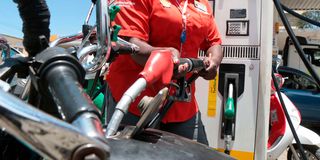
A Petrol Station in Eldoret, Uasin Gishu County, with a 'No fuel' sticker at the pump, after the commodity ran out on April 8, 2026.
Photo credit: Jared Nyataya | Nation Media Group
The mama mboga; the bodaboda rider; the matatu operator, the transporter, the contractor, the small business owner, the farmer, the parent. Every single ‘hustler’ this government vowed to protect. In Kenya, fuel is the hidden tax inside nearly every transaction. Raise its cost and you have effectively reached into millions of pockets without so much as the decency to call it theft.
That is what makes this scandal so infuriating. It sits at the intersection of corruption and direct public pain. It is brazen enough on paper, but in real life it is even uglier. It means more expensive transport, more expensive food, more expensive construction, more expensive medicine, more pressure on already exhausted households. A country that is already being stretched to the limit by bad policy and relentless extraction was apparently expected to absorb yet another engineered wound.
And for what? So a cartel, or a clique, or whatever polite name one wishes to use for organised looting in suits, could cash in on a manufactured crisis?
We are also supposed to pretend this is somehow reassuring because resignations were accepted and stern statements were issued. But Kenyans have seen this theatre before. A scandal erupts. The President promises consequences. A few names are placed before cameras. A great deal of noise is made about cartels. Then, just as public anger begins to harden into real scrutiny, the system starts protecting itself. Files slow down, prosecutions weaken, plea bargains appear, evidence wanders off, the powerful become fog. Before long, the nation is instructed to move on to the next outrage. No serious country can survive on that cycle forever.
Because the true damage here is larger than the immediate theft. It is institutional. It tells every honest investor, every serious supplier, every citizen still trying to believe in procedure, that rules in Kenya are provisional. That frameworks can be bypassed when enough connected interests smell profit. That national security language can be borrowed to sanitise commercial mischief. That standards can be softened. That accountability can be selective. That even when cash is allegedly found in wardrobes and bags, the real magic trick is not the theft itself, but how easily the evidence can disappear into the political ceiling.
Fuel supply is not a small administrative detail. If data around reserves can be manipulated to justify dubious procurement, then we are dealing with a governance problem far deeper than one shipment. We are dealing with a republic where information itself can be weaponised against the public to profit from the gap.
Which is why this moment demands a public refusal. This is one of those moments that should settle something in the national mind. The problem is no longer a few bad actors embarrassing an otherwise functional system. The system itself has become too hospitable to plunder.
That is why change now is simply the sober conclusion. Change in leadership. Change in political culture. Change in the price of impunity. Change in how procurement is overseen. Change in how strategic sectors are insulated from private greed. Change in how quickly we stop being impressed by choreographed crackdowns that never seem to reach the top floor.
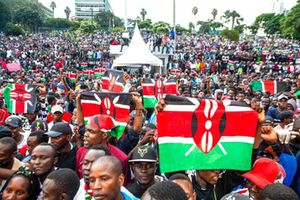
Kenyans should be tired of being treated like a population to be managed through panic, press statements and selective sacrifice. We should be tired of governments that discover morality only after they have been caught. We should be tired of living in a country where every major scandal seems to reveal not one breach, but an entire ecosystem of protection.
This fuel scandal is not just a story about bad petrol. It is a story about a rotten political order trying to run a modern economy like a criminal enterprise. And if that does not convince us that Kenya needs a decisive change now, then perhaps nothing ever will.