The ‘Bandwagon Effect’, where every Kenyan believes they must build a block of apartments, needs to be canned until safety standards are improved. It may be a business concept that works and has profited many in other parts of the world, but the Kenyan model is riddled with problems.
The country has a long way to go to make a success of it. The fact that many high-rise buildings are going up does not necessarily mean that tenants are enjoying better living standards. Most flats are substandard and only add to the concrete jungle that is now taking over the country, especially in Nairobi and Mombasa. They are unsightly, too.
Planning laws have long been torn up and thrown out of the window. Even the upmarket areas of many Kenyan cities have not been spared the spread of the concrete jungle. Every inch of land just seems to be covered with apartments that have been rushed through and lean at dangerous angles, putting the Tower of Pisa to shame. Many corrupt government officials whose responsibility it is to approve new apartments and oversee their safety just drive past unsafe apartments without a care, even as disasters they have contributed to continue happening time and again.
In the hope of maximising profits, apartments in lower-income neighbourhoods defy many building regulations. The ones I have been to are so dark that they remain gloomy even on sunny days. Good windows, ventilation and lifts are a foreign language to greedy landlords. I have seen unfinished apartments being rented out, where children literally walk on wooden planks on the top floors. How does such a landlord get permission to let out unfinished and dangerous apartments if corrupt government officials are not bribed to look the other way?
Currently, most apartments are built in such a haphazard way that good views are not guaranteed. They are here now and gone as soon as another greedy landlord gets his or her hands on a patch of land adjacent to other slim, ugly and vertically endless buildings. The idea of privacy does not exist in many apartments, either, as one’s toilet ends up facing a window in an apartment hurriedly built next door.
Many buildings must adhere to environmental laws. Yet these laws are rarely enforced in apartments built in lower-income areas such as Eastleigh and the wider Eastlands. Diverted sewers and overflowing sewage have blighted these areas long before the current craze for building tall, substandard apartments. If there is any other disaster besides collapsing buildings, such as a fire, it is hardly easy to reach those affected because roads are difficult to navigate due to their narrowing, leaving little room for emergency vehicles. One also wonders whether any feasibility studies are done to ensure that tall apartments can withstand earthquakes. Kenya is not immune to such shocks.
The biggest challenge many Kenyans face is access to water. With perennial water shortages, it is irresponsible to approve as many apartments as are currently being built. If there is one scam that is common, it is promising tenants water if they live on the top floor of a 10-storey building in an area that hardly ever has water. Many apartments in Nairobi, in particular, just put up tanks and the semblance of a pumping system to woo tenants, then leave them with hardly any water despite charging an arm and a leg.
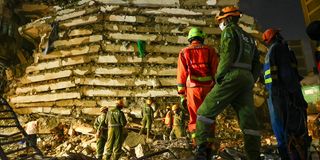
The collapse of yet another apartment in Eastleigh last week has brought the issue of corruption to the fore. The stench of it follows any disaster that has ever befallen the country involving officials responsible for approving or overseeing projects. Corruption is clearly festering in the county offices. Nairobi Governor’s statement informing the public that the Eastleigh building that collapsed “had no approval” is not reassuring at all.
A building cannot just go up without county officials being aware of it. The failure of governors and other officials to know that buildings are springing up without approval is an indictment of their incompetence. It just shows that the right hand at Nairobi County does not know what the left hand is doing.
The buck evidently stops with the Governor when it comes to failures in the regulation and approval of buildings in Nairobi. Regular building inspections and proactive searches for illegally constructed structures would have saved many lives. Officials who choose impunity over building laws clearly have blood on their hands, including the governors themselves.
The blame game usually ends with junior officials being fired, while greedy landlords and contractors are blamed for building collapses. The two groups would not exist in this context without corrupt officials. It is pointless for officials to rush to scenes of death when their own failures helped cause the disasters.
Without ending corruption in county offices responsible for regulating buildings, many more lives will be lost. Crocodile tears need to stop, and officials must be held accountable for deaths caused by the collapse of illegally built apartments.