History does not repeat itself, the saying goes, but it rhymes, and the useful part of that is not its poetry. A rhyme can be heard before the line ends. In the same way, a country that recognises its place in the cycle still has time to change course before events overtake it.
This is a diagnosis rather than prophecy, in the way a doctor who suspects cancer will order a scan instead of asking the patient how they feel, because the stage decides what can still be done.
We argue endlessly about how Kenya feels, angry or tired or briefly hopeful before an election, and almost never about which big socio-economic and political cycle we are in and what can still be done.
I want to take you with me on a journey of discovery through a series of articles testing that thesis. The framework I will borrow belongs to Ray Dalio, whose Principles for Dealing with the Changing World Order traces a recurring socio-economic and political cycle through 500 years of history and finds that the sequence repeats roughly every 40 to 70 years.
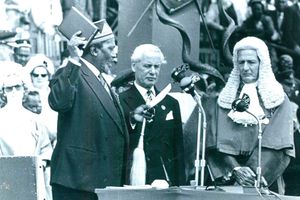
The cycle has six stages. Stage One begins after a civil war or revolution, when a new order emerges and its leaders consolidate power. In Stage Two, they build and refine the institutions and government systems through which resources are allocated. If this is done well, the country enters Stage Three, a period of peace and prosperity.
Prosperity eventually gives way to Stage Four, marked by excessive spending and debt, widening wealth gaps and deepening political divisions. These pressures produce Stage Five, when deteriorating financial conditions are accompanied by intense internal conflict.
If that conflict can no longer be contained, the country enters Stage Six, marked by civil war or revolution. This destroys the old order and returns the country to Stage One, where the cycle begins again.
One might think Kenya is too young for this framework. It is just 62 years old and has never had a civil war or a successful revolution. Being young, however, does not mean being immune; it only means that we have gone round the wheel fewer times than the Chinese, Dutch or French. I have also thought about the fact that we are not a rich country and never have been, so it is not obvious that we ever had the boom whose wreckage I will be describing.
The readings, however, are not ambiguous. Four economic warning signs repeatedly appear before internal conflict across centuries: high inequality; high debt and deficits; inflation; and weak growth. Where most are present, the odds of a civil-war-type conflict rise to roughly one in six. Kenya’s public debt crossed Sh13 trillion in May, up from Sh10 trillion only three years earlier. In 2024-25, we spent Sh1.72 trillion servicing it; roughly 69 shillings out of every 100 collected in ordinary revenue.
Oxfam reported in November that Kenya's 125 richest people hold more wealth than 42.6 million other Kenyans, and that the wealthiest 1 per cent own 78 per cent of national financial wealth, while nearly half of other Kenyans live on under Sh130 a day.
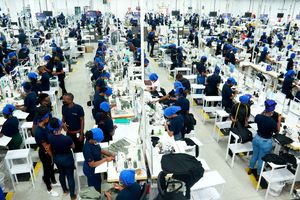
Growth came in at 4.6 per cent last year, our slowest since the pandemic, with nearly 84 per cent of jobs informal and the average wage, adjusted for inflation, buying less today than it did in 2009. Inflation itself, at 4.1 percent, is the only indicator currently low.
Three of the four leading indicators are present, yet the finding that matters most is not even on that list. Across some 50 civil wars and revolutions, one combination predicts trouble better than any other: bankrupt government finances alongside large wealth gaps.
More precisely, raising taxes and cutting spending amid large wealth gaps and poor economic conditions have, as the book puts it, “more than anything else, been the leading indicator of civil wars or revolutions.” This sounds uncomfortably similar to the June 2024 Gen Z protests.
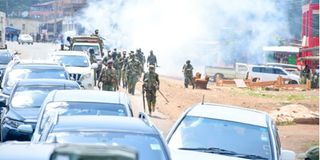
What happened that month did not replace the existing order and belongs with the many uprisings that failed to change the systems they rose against, which is Stage Five behaving as it must. That stage has a recognisable look, and it is one we’ve been living through for two years now: protests that come round more often and end worse; courts and police turned into instruments of politics; goons hired for the day and deployed alongside uniformed officers; and the loss of any shared account of events, so that within an hour of a death, three versions circulate with no way to distinguish the truth. A recent example is what happened in Homa Bay.
Those in power at this stage face a dangerous double bind: allowing protests may enable them to grow strong enough to topple the system, while suppressing them may hasten that very outcome. The exit lies in the conditions that produced the protest rather than simply policing.
The sixth stage is not inevitable, since five becomes six only when what sits underneath is left to compound. But those conditions did not assemble themselves, and a country reaches the fifth stage only by way of the fourth, which is meant to be the good years, the ones spent enjoying what the third stage built. That is what we shall explore next. Do you think Kenya ever experienced Stages Three and Four in this cycle?
The writer is a whistleblower and Founder at uongozifellowship.com, @amenya_nelson on X