President William Ruto’s administration has pursued an aggressive privatisation agenda.
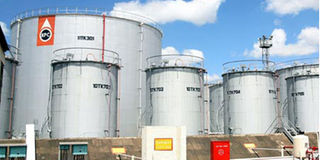
From the Adani-JKIA deal to the decision to privatise Kenya Pipeline Company, and with plans underway to commission construction of power transmission lines, offload Rivatex, Mombasa Port and others, the list of targeted entities is keeps growing. Does privatisation serve the public interest?
Privatisation took off in the 1980s, with governments offloading enterprises to reduce debt and improve efficiency. Developing nations joined the trend, seeking quick cash amid tightening credit and fiscal pressure.
Kenya Airways was among the first firms to be privatised. It still posts losses and has only recently shown a slight recovery.
Privatisation has led to inequality in healthcare access. With the rise of private hospitals and insurance-based care, ordinary Kenyans are being priced out of treatment.
Reports have surfaced of cancer patients being denied treatment once their insurance cover is exhausted.
Last year, the High Court declared the Privatisation Act, 2023 unconstitutional due to lack of public participation. National assets like Kenya Pipeline, KICC, Kenya Literature Bureau and New KCC were to be sold without proper consultation.
Even the Adani deal, which aimed to hand over JKIA to a foreign company with controversial global ties, was stopped after I blew the whistle and Kenyans went to the streets.
However, this rests on the assumption that private ownership is more accountable than public ownership.
In reality, both systems have flaws. Public entities may suffer from overstaffing, inefficiency and political interference but private ones can be as reckless – cutting corners to boost profit, denying service when it becomes unprofitable or inflating prices to extract value.
The question is not if something is owned by the state or by private organisations. It is about who is accountable and under what conditions.
In a system with strong oversight, even private managers can be made to serve the public good.
Privatising strategic infrastructure like ports, oil pipelines and power transmission lines raises concerns, especially when buyers are foreigners whose interests may not align with those of Kenyans.
Privatisation is not a single idea. It takes many forms – from outright sale of public assets, contracting services to private firms, to allowing private actors into markets once monopolised by the state.
In some contexts, it has helped improve efficiency. In others, it has deepened inequality and shut out the poor from essential services.
Many countries rushed to privatise out of financial desperation. The private sector is not immune to poor oversight or misaligned incentives.
What matters most is not who owns the asset, but who is watching the managers, and whether the managers are acting in the public interest.
There is a model worth examining that blends both systems. China has developed a form of capitalism where the state retains strategic control but allows private players to operate with efficiency and innovation.
The government sets national priorities and provides direction and discipline, while the private sector executes with speed and market discipline.
It is not about profit at all costs. This ensures critical infrastructure serves the country first, while leveraging the strengths of private management.
Many deals in Kenya have been shrouded in secrecy. If done wrong, privatisation can turn into economic vandalism. If done right, it can be a tool for national progress.
The writer is a whistleblower, strategy consultant, and a start-up Mentor, www.nelsonamenya.com