In African folklore, the elders warn that the drum that sounds sweetest at night may summon hyenas by dawn. Leadership is much the same. There is the chang’aa style and there is the sindano style. One intoxicates, the other stings. One gives applause today, the other gives prosperity tomorrow.
In the 1970s and early 1980s, Venezuela stood among Latin America’s wealthiest nations. It enjoyed one of the region’s highest Gross Domestic Product (GDP) per capita figures, buoyed by oil exports. A strong middle class thrived. Oil money flowed like milk and honey. But when oil prices surged in the 2000s under President Hugo Chávez, the state expanded subsidies and public spending at a breathtaking pace. Citizens cheered. The government became wildly popular.
Economists call what followed the “Dutch disease,” a Dutch disease where reliance on one booming resource crowds out manufacturing and agriculture. When oil prices collapsed after 2014, the illusion shattered. Inflation spiralled into the millions per cent. Basic goods disappeared from shelves. Millions emigrated. The oil well that once fed the nation became a dry tap. A proverb says: “When the roots of a tree begin to decay, it spreads death to the branches.” Venezuela’s roots were too narrow.
This is chang’aa leadership. Like a man who drinks on Saturday night and dances on tables, it feels glorious in the moment. By Sunday morning, he wakes in a ditch, rained on, pockets empty, wondering how celebration became misery. Temporary sweetness. Permanent headache.
Consider Zimbabwe under Robert Mugabe. At independence in 1980, hope filled the air. But Bob Marley warned in his song Zimbabwe when he sung "soon we shall find out who is the real revolutionary because I do not want my people to deceived by mercenaries."
Zimbabwe inherited a diversified economy with strong commercial agriculture. But when political pressure mounted in the late 1990s, Mugabe turned to fast-track land redistribution. Land reform addressed a real colonial injustice. Yet the chaotic manner of implementation displaced experienced farmers without preparing new ones with capital and skills. Agricultural output plunged. Hyperinflation peaked at an estimated 79.6 billion per cent month-on-month in 2008. The breadbasket became a basket case.
Land is an economic resource like any other. You cannot take a lawyer from Nairobi on Friday and expect him to harvest maize efficiently on Monday. Even in a family, if you remove the mother from the kitchen and ask the watchman to cook without training, do not blame the children when the food burns. Reform requires justice, yes. But also planning and competence.
Uganda offers another lesson. In 1972, Idi Amin expelled tens of thousands of Asians and redistributed their businesses to political allies. The move drew applause from sections of the public. It promised economic liberation. Instead, shops emptied, industries collapsed, and GDP shrank sharply. It took decades for Uganda to rebuild commercial confidence. The pearl of Africa lost its shine through populist intoxication.
Chang’aa leadership excites historical emotions. It promises quick justice and instant wealth. It treats the economy like a campaign rally. But an economy is not a rally. It is a farm. You plant in one season and harvest in another. Even the Bible reminds us in Galatians 6:7: “A man reaps what he sows.” No nation reaps wheat from planting thorns.
The opposite is sindano leadership. Anyone who has taken a child for an injection knows the scene. The child screams as if the world has ended. Yet the parent holds firm. The pain lasts seconds. The cure lasts years. Proverbs 13:24 tells us, “Whoever spares the rod hates their child.” Discipline is love in disguise.
Look at Chile. Under Augusto Pinochet, the regime committed grave human rights abuses that history rightly condemns. Yet alongside that dark chapter, Chile implemented sweeping market reforms, fiscal discipline, and pension restructuring. The transition to democracy preserved many macroeconomic pillars. Over time, Chile achieved one of the highest GDP per capita levels in Latin America and joined the Organisation for Economic Co-operation and Development. The injection was painful. The recovery was long-term.
In the 1980s, UK Prime Minister Margaret Thatcher pursued privatisation and made labour flexible. Unemployment rose sharply at first. Protests filled the streets. Yet inflation fell and productivity improved in subsequent years. Love her or loathe her, she chose the needle over the bottle.
Even Brazil experienced rapid growth averaging near 10 per cent annually during the late 1960s and early 1970s under Emílio Garrastazu Médici, driven by industrial expansion and state-led investment. Growth alone did not solve inequality, but it showed what disciplined economic focus can achieve.
What then of Kenya? We stand at a crossroads. Our public debt has risen sharply over the past decade. Our wage bill strains revenue. We love new projects more than we love maintaining old ones. We debate distribution more than production. Yet you cannot distribute what you have not produced. Even in a home, if the father spends all his salary on a party and borrows for school fees, the family will soon auction its sofa.
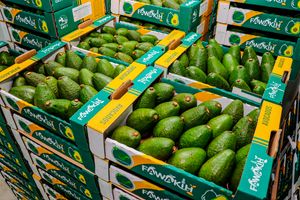
Kenya needs a sindano moment. We must widen our economic base beyond consumption and imports. We must invest in value addition for tea, coffee, and horticulture instead of exporting raw produce. We must nurture manufacturing and digital services. We must reward productivity, not proximity to power. Fiscal discipline is not cruelty. It is stewardship. Joseph in Genesis advised Egypt to save during seven years of plenty to survive seven years of famine. That was not austerity. It was wisdom.
Bold reforms will anger some. Parastatal rationalisation will inconvenience boards. Tax reform will pinch entrenched interests. Labour flexibility will discomfort cartels. But a nation is not built on comfort alone. It is built on character.
The African saying is clear: “Smooth seas do not make skillful sailors.” Kenya must choose whether to drink for applause or endure the needle for advancement. Chang’aa leadership fills stadiums. Sindano leadership fills granaries. One leaves us in a ditch. The other lifts us to destiny.