The profound honour and responsibility of being part of the process that shapes any Constitution is an experience few are privileged to live through. It is a once-in-a-lifetime opportunity to lay the foundation for a nation’s future.
I vividly recall my mother, Wangari Maathai, diligently embracing the Constitutional review process between 2003 and 2004 at Bomas of Kenya.
She attended every single sitting, even when she would find just a few people in the hall, and the sessions ended early due to lack of quorum. She maintained that this document is the ultimate gift to the country, and would define justice, freedom, and hope for generations to come.
Reflecting this shared passion, lawyer PLO Lumumba, who served as Secretary of the Constitution of Kenya Review Commission, has spoken with pride on their collective role in crafting one of Africa’s most progressive constitutions.
PLO emphasised that this Constitution is a sacred embodiment of the people’s sovereignty. He highlighted that democracy is more than elections and separation of powers; it thrives when people are empowered with knowledge, engage in robust debate, and hold leaders accountable with firmness but not arrogance.
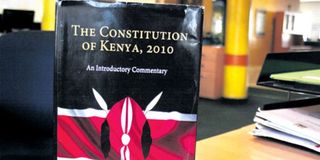
This week, as we mark the 15th anniversary of the promulgation of Kenya’s Constitution, we celebrate a testament to law and the enduring spirit of a people determined to shape their destiny with justice, dignity, and hope.
I remember the day the Constitution was inaugurated. On August 27, 2010, President Mwai Kibaki stood in Uhuru Park before a sea of jubilant Kenyans, their voices rising in celebration as we welcomed a new Constitutional era.
President Mwai Kibaki (centre), Prime Minister Raila Odinga and Vice President Kalonzo Musyoka hold the published draft constitution on May 6, 2010 at the KICC. Photo/FREDRICK ONYANGO
It was the culmination of years of inclusive consultations. Most Kenyans (nearly 70 per cent) cast their votes for it in a referendum, sealing our resolve to shed colonial legacies, affirm participatory democracy, and protect against horrors of the 2007–08 post-election violence.
Now, that historic day has been enshrined as Katiba Day, a national moment to recommit to constitutionalism. But as the Kenya Human Rights Commission reminds us, this day “belongs to the people, not to those who betray it.”
They warn that official declarations can ring hollow when not grounded in genuine fidelity to both the letter and the spirit of the Constitution. Indeed, this year’s theme “Inuka Uilinde,” or “arise and defend the Constitution” is a clarion call to rescue our constitutional compact from the whims of political expediency and to reclaim it through steadfast citizen action.
In this column and across all the topics that we’ve covered, we have consistently recognised that without upholding the rule of law, none of our dreams will be accomplished. We wouldn’t be able to speak about achieving climate justice, about investing in green industrialisation or how clean energy can bring about transformations in our society.
The 2010 Constitution therefore is our legal charter, but it is also a promise. Inspired by a vision of unity, peace, inclusiveness, human rights, participatory democracy, equity, justice and integrity, the it carries the dreams of many.
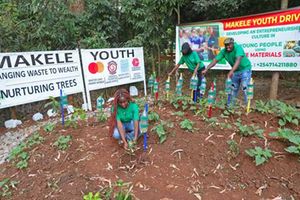
It has reshaped governance. Through devolution, we moved from centralised control to democratised agency across our counties. This was supposed to allow counties to manage resources effectively and flourish. Has it? Gender representation has improved, and people with disabilities are gaining voice. Also, Article 69’s mandate to maintain a minimum of 10 per cent tree cover stands as a constitutional commitment to environmental rights.
But progress is rarely steady. Corruption has infiltrated devolved structures, ghost workers siphon resources, marginalised communities are sidelined, and environmental commitments suffer as money meant for restoration disappears.
True, women’s representation in Parliament has risen, but we remain short of the two‑thirds gender rule, and the failure to uphold it emboldens those who would bend constitutional norms. Courts continue to be a refuge for environmental defenders fighting illegal forest encroachment. Our commitment must be steadfast because constitutions, no matter how visionary, do not enforce themselves.
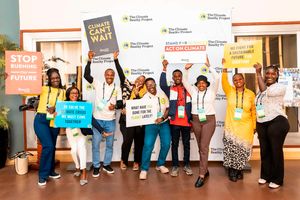
Still, the Constitution lives. In the youth-led protests against the Finance Bill in 2024, I heard young people reciting with passion and incredible belief, these words from Article 1: “All sovereign power belongs to the people of Kenya.” It reminds us that sovereignty lies not with those who govern, but with each of us.
More Kenyans are showing up for public participation in every way: in person, online, leading by example by developing inclusive tools to increase the quality and quantity of participation, reclaiming their right to speak, to shape policy, to belong.
As we mark 15 years since August 27, 2010, let us reawaken that spirit of hope and belonging. We owe it to ourselves, our children, and the generations to come to uphold this Constitution. To deepen its realisation, we must demand accountability, guard its principles, and nurture its promise—today and always.
Ms Mathai is the MD for Africa & Global Partnerships at the World Resources Institute and Chair of the Wangari Maathai Foundation