Global multilateralism is gasping for breath.
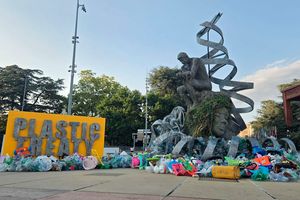
The recent collapse of negotiations in Geneva, meant to deliver the world’s first legally binding treaty to combat plastic pollution has exposed a sobering truth: even in the face of planetary crisis, consensus among nations remains elusive.
After ten days of talks, 184 countries failed to agree on a single draft, leaving diplomats “disappointed and even enraged,” and the world no closer to curbing the plastic tide.
This breakdown, following years of deliberation and previous failures like in Busan, South Korea last year, is not just a setback, it’s a symptom of a deeper malaise.
If multilateralism, whether in addressing climate change, desertification, biodiversity loss, or plastics pollution, cannot rise to meet these moments, then it may no longer be fit for the ones to come.
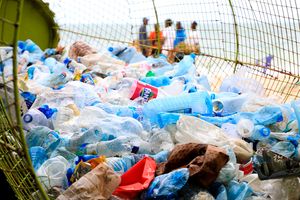
The world is awash in plastic, with over 450 million tonnes produced every year, up from just two million tonnes 70 years ago. Only nine per cent is ever recycled.
Plastic clogs rivers, chokes seas, and infiltrates our food chains in the form of microplastics now detected in human bloodstreams and in wombs carrying our children.
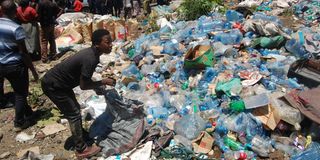
Here in Kenya, where the Dandora dumpsite grows by the day, we see the consequences firsthand—mountains of discarded fast fashion and packaging shipped from elsewhere.
The urgency is undeniable. Pacific countries which contribute less than one percent of the world ocean’s plastic pollution have ocean currents which carry huge amounts of debris to their shores posing a serious threat to ecosystems and affecting food chains. And yet, the world could not agree on a way forward.
This failure comes with a staggering economic warning: unchecked plastic pollution could cost the world a cumulative $281 trillion by 2060 based on some projections—making prevention not just an environmental imperative, but a pressing financial one.
The Intergovernmental Negotiating Committee (INC-5.2) meeting—which brought together over 2,600 participants from 183 countries across ten days of negotiations—aimed to finalise the treaty.
But it could not reconcile deep disagreements over whether to cap plastic production or focus exclusively on waste management and design improvements.
This failure raises a deeper question: why has multilateralism, also known as global cooperation, struggled to deliver on humanity’s most urgent challenges?
At its best, multilateralism allows countries to set common rules, whether for air travel, global trade, or pandemic response.
It is how we ensure that what happens in one country does not imperil another. Climate change is the clearest example of why we need it. Carbon emitted in one country warms the whole atmosphere.
Melting glaciers in Greenland raise sea levels in Mombasa. Likewise, plastic waste from one corner of the world washes up on shores thousands of miles away. No nation can solve these crises alone.
And yet, as Geneva showed, multilateralism is under strain. Negotiations often stall when national and corporate interests collide.
Activists have long pointed out the outsised presence of fossil fuel interests in climate negotiations, sometimes with delegations larger than entire countries.
The plastics process has faced similar pressures, with powerful lobbying interests slowing or weakening ambition.
The consensus model, which requires every country’s agreement, ensures inclusivity but also makes progress fragile. Powerful actors can dilute outcomes or walk away, leaving smaller nations disheartened.
Yet, it remains the only process where every country, big or small, has a voice. What often begins as a global aspiration can too easily become a missed opportunity.
Still, we must persist, because multilateralism, despite its flaws, remains our best chance.
As we prepare for COP30 in Belém, Brazil, we must reflect on what thirty years of climate negotiations have taught us. The international community has set roadmaps and targets, but implementation has too often lagged.
The same risks now confront us on plastics. Delay is costly, because pollution and emissions accumulate while negotiations falter. Each failure leaves us further behind.
And yet, the lesson from Geneva is not that multilateralism is broken. It is that we must work harder to make it work.
Like the fable of the old man and his sons, who could not break a bundle of sticks when bound together but easily snapped them apart when separated, we are stronger together.
The task before us is not to give up on global cooperation, but to renew it with greater transparency, inclusivity, and accountability. Multilateralism remains our best hope for tackling problems that cross all borders.
If we persist, it can still deliver solutions equal to the crises we face, on plastics, on climate, and beyond.
Ms Mathai is the MD for Africa & Global Partnerships at the World Resources Institute and Chair of the Wangari Maathai Foundation