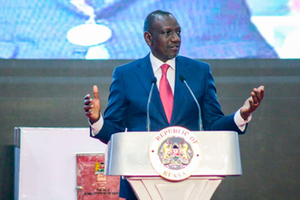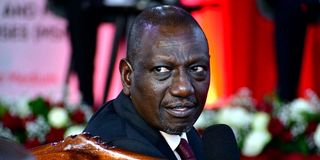
President William Ruto during the World Micro, Small Medium Enterprises Day celebrations at Kenyatta International Convention Centre, Nairobi, on June 27, 2025.

A snapshot of the Promises Tracker on the Mzalendo Trust website shows that slightly over 5 per cent of the 270 pre-election commitments made in the Kenya Kwanza manifesto have been delivered.
Some 22 election promises have been broken outright, 107 have not started and work on seven has stalled. Only 14 promises have been completed while 120 are in process.
Additional to the original campaign promises, 34 new pledges have been made. Of these new promises, one has been delivered, two have been broken, work on 17 has not started but 14 are ongoing.
Of the 22 broken promises, 15 were meant to be delivered in the administration’s first 100 days. They include establishing a quasi-judicial inquiry into State capture, auditing all judgments and court orders, setting up a special tribunal for gross human rights violations, and having women in half of the Cabinet positions.
In the short term goals category, the pledge to pass legislation to implement the two-thirds gender rule has not been met. The promises kept, such as establishing the Hustler Fund, have not had the transformative impact on lives it was hoped they would bring.
Promises are like pie crust, made to be broken. Kenya’s political history is replete with broken promises, with little consequence accruing to those practised in the art of delivering heartbreak. Daniel Moi promised to increase teacher salaries by 50 per cent; Mwai Kibaki came into the presidency with a promise to deliver a new constitution in 100 days and share power. Uhuru Kenyatta promised laptops to all school children. They all shrugged off these promises like water off a duck’s back.
Wrong direction
Did the president lose his way, or perhaps he never meant to keep any of his promises? With just over 800 days to the next election, 62 per cent of Kenyans polled by research firm Tifa said the country was headed in the wrong direction. In January this year, an Afrobarometer survey found that 59 per cent of Kenyans felt the country was heading in the wrong direction. Absorbing the opposition in government has not delivered the relief it was meant to bring, and public support for the rapprochement is miniscule. It has left the government with a huge legitimacy deficit, only worsened by the newfound sycophancy of its erstwhile critics.
The political threat to make William Ruto a one-term president, coming in the wake of youth revolt and compounded by the impeachment of his erstwhile deputy, has discombobulated his administration. The threat of the vote is palpable, unless it is defanged.
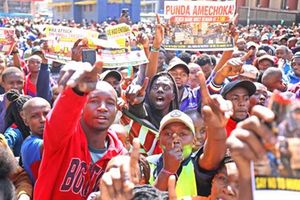
It is against this performance record, three years after the 2022 election, that a flurry of “empowerment” rallies are spreading like bushfire and a stream of delegations head to State House every day to flash the two-finger salute—code for “two terms for Ruto”.
A deafening silence on what happened to these promises—whether they were deferred or went to seed—would have provided an opportunity for an honest accountability conversation. The fact that the administration is electing to tie a bandage on an economic fracture suggests that its vaunted investment in agricultural production and housing is not creating the opportunities that would palliate the general suffering of the population.
Any pretence of following The Plan, as the Kenya Kwanza manifesto was titled, has been abandoned. He has walked back on his promise in the manifesto when he wrote: “I will want neither the power to persecute my political opponents nor the means to shield my allies and friends.”
Expand economic opportunities
The once lofty plans to expand economic opportunities for youth and those on the margins have been stripped down to issuing off-book cash handouts that can be as low as Sh500. Delegations to State House are also responding to basic survival instincts because the rosy economic numbers are far from lived realities.
It is instructive that the president’s focus, at the midpoint of his administration, is not so much on completing what he started, but securing a second term. The political morality of empowerment rallies and State House delegations aside, they do little to tackle the economic misery that currently textures many Kenyan lives. It beggars the question, how long can the administration sustain these empowerment rallies and State House delegations before the next election. The answer is in the corruption scandals that continue to make headlines every day.
Those who have some experience of living on a farm know the three stages of catching a free-range chicken: cajole, bribe and ultimately resort to violence. President Ruto has started hinting very darkly that he will not be beaten at the next election, not because of his stellar performance or popularity, but more because he has a superior education and a wiliness to match. These threats have the effect of changing the election from being an expression of the popular will to the country being shaped by the will of one man.
Candidate Ruto campaigned to make Kenya a constitutional democracy with institutionalised politics and opening the doors of opportunity to the many. He should get a second term only if the people say so, even in spite of his broken promises, and not because he has outwitted them through trickery.
The writer is a board member of KHRC and writes in his individual capacity. @kwamchetsi; [email protected].