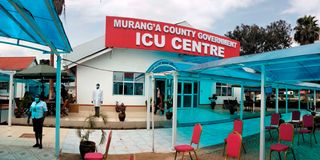
The new ICU Centre at Murang'a Level Five Hospital.
Growing up in Mt Kenya in the 1980s, one wonders how Kikuyu vernacular music managed to diffuse through society without the aid of vernacular radio stations, TVs, YouTube, or social media.
The media landscape was dominated by the state-owned Kenya Broadcasting Corporation (KBC), which broadcast in Kiswahili and English, with a weekly one-hour Kikuyu bulletin that rarely played local songs. Yet, everyone in the village sang along to Musaimo or Queen Jane music. The popularity of Joseph Kamaru, a musical legend of that era, was remarkable. He produced hit after hit, tackling topics like politics and social issues. His songs, such as JM Kariuki and Muhiki wa Mikosi, remain iconic.
Fast-forward to the present, and the region’s musical landscape has changed dramatically. Today, people sing along to Samidoh’s tunes, and societal norms have shifted significantly. The phrase “he who jumps must dive”, aptly describes the evolving nature of life.
Underutilisation of maternity facilities
This brings us to another significant shift in Mt Kenya’s society — the shrinking family unit. On average, a woman in Mt Kenya now has two or fewer children and is delaying childbirth. This trend is attributed to several factors, including education and family planning, which universally correlate with declining fertility rates. Urbanisation is another key factor, with many youths moving from rural areas to urban centres like Nyeri, Murang’a, Nairobi and Nakuru.
As people live longer, with more individuals reaching 80 years and above, healthcare systems in Mt Kenya need to adapt. Data from Murang’a County’s digitised health information system reveals a high demand for maternity services in urban areas and declining birth rates in rural regions. However, the public in rural areas still prioritises maternity services probably because of past trauma of lack of maternity services by the older generation that had high fertility rates, despite the low current volume of deliveries by the young.
A few years ago, a maternity opened in a certain village delivered an average of three babies per month only for the staff to notice that a primary school next door was shutting down for lack of students.
Given the underutilisation of physical maternity facilities in rural areas, it would be prudent to repurpose them for elderly care. Many rural facilities have only three or four deliveries per month, making it challenging to justify the deployment of eight nurses as per the Ministry of Health protocol.
Emerging healthcare challenges
Converting these facilities into nursing care centres for the elderly could provide much-needed support and help address the silent phenomenon of deaths at home due to inadequate care.
Often, when the elderly reach a critical stage, the family assigns a family member (often a woman) to take care of them at home. This reduces women’s labour participation and induces foregone household income. The elderly miss professional care of a medical facility.
Pooling them into a medical facility near families would reduce expenses incurred at respective households. Families would still visit their elderly since the medical facility is nearby.
By recognising the changing demographics and healthcare needs, Mt Kenya can ensure more effective and efficient healthcare delivery. The region’s healthcare systems should be aligned more to the needs of the elderly, particularly in rural areas, with maternity services being more embedded in urban regions. This shift would reflect the reality on the ground and help address the emerging healthcare challenges in the region.
Dr Kang’ata is governor of Murang’a County. [email protected]