A few weeks ago, I met Kivutha Kibwana over a cup of tea. The former Makueni governor, scholar, and elder in Kenya’s intellectual village leaned back and said casually, “Irungu, you should write about your political journey.” I hesitated.
For years, I have preferred writing about policy and ideas — cold, objective analyses of Kenya’s socio-economic evolution. Personal stories often feel like self-promotion. Yet, Prof Kibwana is a man whose advice carries weight. As Proverbs 20:18 reminds us, “Plans fail for lack of counsel, but with many advisers they succeed.”
So here I am, reluctantly stepping into memory. This is the first of a four-part series tracing a journey that began in the chaotic theatre of student politics and somehow wound its way to the governor’s office. And like most Kenyan stories worth telling, it began at midnight.
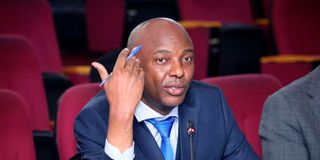
The year was 2000. Inside a crowded hall at the University of Nairobi main campus, tension hung so thick you could slice it with a butter knife. The returning officer for the Student Organisation of Nairobi University (SONU) was reading the election results. Outside, rival groups shouted slogans. Inside, students argued, sang, heckled and prayed. Kenyan politics, even in miniature, rarely lacks drama. Then the voice came through the microphone: “The winner of vice-chair is… Irungu…”
Then something unexpected happened. My opponent — Abunya, a third-year education student from Kikuyu campus — walked calmly to the microphone.
“I hereby concede to Irungu, the young fresher from Parklands campus.”
And just like that, a first-year student had been elected to represent nearly 30,000 students. If politics were football, I had scored in my debut match before even warming up.
The only person beside me was my loyal sidekick Muriuki—a short but fearless classmate whose love for politics bordered on addiction. When the celebrations ended, I slipped away to a club nicknamed “Holy Mbao.” There, revolutionary music played loudly while thinking meaning of life — all before morning lectures. University life had begun.
But the seed of political ambition had been planted long before campus. Two years earlier, back in my hometown, our teenage youth group spent evenings sitting on estate benches. Wee gossiped but also discussed politics.
Unlike most groups of idle teenagers, ours had an unusual culture of debate. Perhaps it was because many of us loved education. One friend had scored a straight A and led at Njiiri School. His brother was already at Kenyatta University. Others had joined the University of Nairobi. Those who returned during the holidays entertained us with tales from campus.
They told us about a fiery student leader nicknamed Karl Marx, who fought tirelessly for the reinstatement of the banned SONU. They told us about the legendary protest to save Karura Forest led by environmental icon Wangari Maathai. Students had stormed the forest and uprooted land beacons meant to facilitate land grabbing.
Police responded brutally. Students escaped by climbing over the gates of UNEP headquarters. But even there, security dogs were unleashed. Campus closed. Leaders were dragged before the university senate. Yet the Senate refused to punish them, declaring the protest a moral cause.
Those stories sounded like legends to us teenagers. Little did we know we would soon walk onto the same battlefield. When we joined campus, Kenya was under the long shadow of Daniel arap Moi’s deeply unpopular Kanu regime. And where did pro-reforms politicians come to mobilise the youth? Campus. At UoN, politics revolved around the main campus, only a short distance from the Nairobi CBD. Other campuses included Parklands, Chiromo, Kikuyu, Upper Kabete, Lower Kabete and KNH. Within weeks of joining, we witnessed our first political campaign.
Into our class walked a charismatic fourth-year law student: Opondo Kaluma — today an MP. He welcomed us warmly. Only later did we realise he had been campaigning in a very polite, roundabout manner.
Soon, elections for the Kenya Law Students Society arrived. With the confidence only youth can produce, I declared my candidacy for vice-chair. Our team was quietly organised by Njenga—later a senior legal executive at Equity Bank. Late at night, we plotted strategy like generals preparing for war. And we won. Looking back, the class was filled with future public figures.
And years later, a young student named Edwin Sifuna would arrive—already energetic, outspoken, and destined for politics. It was like watching seedlings in a political nursery that would later grow into a forest. But student politics was about causes, not speeches. The assassination of missionary priest John Kaiser shocked the nation. A memorial mass was planned at the Holy Family Basilica in Nairobi. Students decided they must attend by “borrowing” the university bus.
Together with a classmate (whose name I still withhold because he now works for the National Intelligence Service), we drove across campuses collecting comrades like a political convoy. The real storm came later. The university introduced the parallel degree programme — a self-sponsored scheme meant to raise revenue.
The idea made economic sense, but students saw discrimination. Parallel students joined immediately after high school. Regular students — despite higher grades — often waited two years. The resentment was explosive.
When SONU elections arrived, that grievance became my campaign message. Instead of street protests, I proposed something radical: We would go to court.
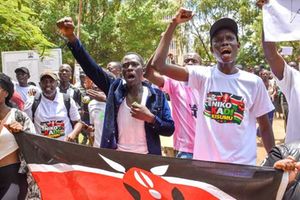
The university was represented by renowned lawyer Mutula Kilonzo. Students packed the courtroom like spectators at a boxing match. But when the case was adjourned, frustration boiled over and students marched to Parliament. Streets erupted in chaos, the university was closed, and 58 students were suspended. We sued again.
And again. Years passed in legal limbo until the fall of the KANU regime in 2003 allowed suspended students to return. By then, life had already taken another turn. At just 22 years old, I became a councillor.
That is a story for next week. Looking back today, three lessons emerge. First, we were both right and wrong about the parallel programme. We were right to oppose discrimination, but were wrong to ignore economic reality. Countries such as South Korea and Singapore invested heavily in higher education and later built powerful knowledge economies.
Education expands human capital—the engine of growth. Second, however, degrees alone cannot create prosperity. Germany thrives partly because it balances university education with strong vocational training. The lesson is simple: education must match the economy.
Third—and perhaps most personal—many brilliant science students later struggled to find suitable jobs. In a healthy economy, STEM graduates drive innovation. In Kenya, too many drift into unrelated careers. A practical solution would be allowing qualified science graduates to perform regulated services—such as vehicle inspection or product certification—currently monopolised by state agencies like the Kenya Bureau of Standards.
Competition would improve efficiency, create jobs, and expand the technical services sector. As the African proverb wisely says: “Wisdom is like a baobab tree; no one individual can embrace it.” Student politics taught us courage. Life later taught us humility. Next week, I will share how the campus battles unexpectedly opened the door to my first electoral victory in real Kenyan politics.