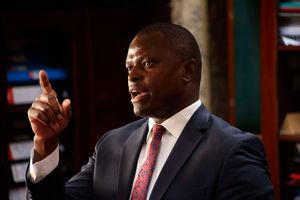
In October 2017, Ndindi Nyoro posted something on Facebook that keeps me awake at night. He called on President Uhuru Kenyatta to declare a state of emergency, suspend the Constitution, rule by the fist, and reduce the Judiciary to a department of the Executive. The Supreme Court had nullified Uhuru’s election, and the people pushing back through courts and petitions were dark forces to be crushed. The masses were a problem, and democracy itself was the enemy.
National consciousness is the moment a people stop identifying with their tribe and start identifying with their class, understanding not where they come from but what is being done to them, and by whom. It is the most dangerous thing a postcolonial state can produce. And it is the only thing that will ever make Kenya a developed society.
Nyoro was not simply being reckless. He was articulating a philosophy shared across Kenya’s political class: that the people must be controlled, not consulted; that they are too primitive to understand, too volatile to be trusted, too inconvenient to be respected. Power flows downward, and the duty of the governed is silence.
One may ask whether Frantz Fanon was describing Ndindi Nyoro when he wrote The Wretched of the Earth in 1961. He identified a recurring pathology: the emergent bourgeoisie, inheritors of the colonial state, who never stopped insisting that strong authority was a necessity. Simple souls, who used the complexity of governance as justification for dictatorship, because an informed public was an obstacle to organised, protected robbery. Wealth was not a fruit of labour but the result of pillage, and mystification was its instrument. Mystification is the fog machine that keeps the victim from seeing the thief clearly. When people begin to understand what is being done to them, the rich are no longer respectable. They become what they always were: flesh-eating animals, jackals, vultures.
Shoot protesters in the leg
This is why our politicians treat the Constitution’s public participation requirement as a nuisance. Cabinet Secretaries sign agreements binding generations of Kenyans, then present the public with a finished reality and dare anyone to object. The Constitution mandates participation, but they experience it as a bug in the system rather than the system’s main engine. That contempt for the governed is an old habit. In June 2024, it became an expensive one.
When young Kenyans took to the streets against the Finance Bill, senior officials called the dissent online ‘wanking’ and described protesters as children who did not understand policy. But the young people were reading the Bill. They translated it into Swahili, Dholuo and Kikuyu, used AI to break it down clause by clause, and spread it across WhatsApp, TikTok and X. By the time the protests peaked, a student in Marsabit understood the proposed VAT on bread as well as any Treasury technocrat. The government, instead of engaging them in dialogue, sent police and opened fire. Over 100 people died between June and August 2024, shot by a state that had decided the problem was not the Bill but the people. The Bill was withdrawn anyway.
A year later, when Kenyans returned to mark the anniversary of murdered comrades, the mask came off entirely. Interior CS Kipchumba Murkomen ordered police to shoot anyone approaching government installations. William Ruto directed police to shoot protesters in the leg, as though the restraint were a concession worth praising. Nelson Koech, the National Assembly’s Defence Committee chairman, went on camera to correct his president: the President said shoot but not kill. I say shoot and kill.
The Adani Group’s proposal to take over Jomo Kenyatta International Airport on a thirty-year lease was negotiated in secrecy, bypassing competitive bidding. When I exposed the contract’s terms, the response was that the public did not understand the complexity of infrastructure financing.
Finance Bill and Adani deal
Kenyans from every county read the contract and reached the same conclusion: this deal was a con. The thirty-year lease, the concession fees, the equity stake carved out for a foreign private company in a strategic asset worth over Sh300 billion — none of it required a finance degree, only the dignity of being told the truth. The deal was cancelled.
Kenya’s rulers would rather manage a conquered population than govern a conscious one. A conscious population asks where the money went, reads contracts uninvited, and does not beg from those elected to serve it. It was the population Nyoro wanted the Constitution suspended to contain, the one Ruto called terrorists when it stormed Parliament, presumed too young, too uneducated, too distracted to understand what was being done to it.
The warning was also a prediction, and 2024 made good on it. Two episodes dismantled 60 years of mythology about Kenyan capacity. People written off as too simple, too distracted, too tribal to grasp complex policy read the documents and reached correct conclusions.
The architects of both the Finance Bill and the Adani deal did not face an uninformed mob. They faced a citizenry that had done its homework and found them wanting. No system, however powerful, survives a people who have stopped believing the story they were told about themselves.
Mr Amenya is a whistleblower, strategy consultant and startup mentor. www.nelsonamenya.com