There was a time when Kenya’s name carried weight beyond our borders. While not perfect, we were predictable. We were a nation where diplomacy mattered and institutions, however strained, still signalled stability and professionalism to the outside world — a place the region could look to when things elsewhere collapsed.
Kenya was the room adults walked into.
From South Sudan peace talks to mediation in the Horn, from refugee protection to regional trade corridors, we occupied a quiet but powerful role: the stabiliser. The place where conversations happened. The place where reputations were repaired. The place the world trusted to host complexity without becoming consumed by it. The regional big brother who could be relied upon to offer a sober, neutral perspective.
That moral authority was never accidental. It was built slowly, through restraint, through credibility, through an understanding that sovereignty is not just about borders, but about standards.
Until…well, until Dr William…
What we are witnessing now is not a series of isolated decisions. It is a pattern. A posture. A willingness to turn Kenya into something far smaller than it has historically been. A safe haven, not for the vulnerable, which has always been our pride, but for the politically radioactive.
Across the continent, there exists a category of actors who have exhausted the tolerance of their own nations. Individuals whose conduct has dragged entire state reputations through the mud. Figures red-listed, sanctioned, or quietly shut out of serious diplomatic spaces. People who cannot move freely, not because the world is unfair, but because accountability eventually accumulates.
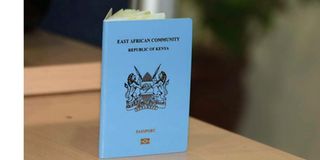
In functioning systems, even powerful states draw lines around diplomatic privilege. Diplomatic passports are not souvenirs. They are signals of trust. Extensions of state credibility. A country lends its reputation every time it confers that status. Which is why responsible governments guard that instrument carefully. But Kenya today appears increasingly willing to dilute that currency.
The result is subtle, but dangerous. A perception shift. The slow repositioning of Nairobi from neutral ground to convenient refuge. From mediator to workaround. From stabiliser to facilitator. And reputations erode through tolerance faster than they collapse from external attack. The logic behind such decisions is often transactional. Influence.
Short-term alliances. Financial flows. Strategic ambiguity dressed up as pragmatism. The belief that proximity to controversial actors can be managed without consequence. History is unkind to that assumption. Because credibility is cumulative, but so is suspicion.
When countries that have struggled to maintain international trust watch Kenya extend legitimacy to figures they themselves cannot defend, questions emerge. Quietly at first. Then structurally. What does Kenya stand for? What thresholds exist? What is the price of access?
These are not abstract concerns. They shape investment confidence. Intelligence cooperation. Diplomatic leverage. The invisible architecture that allows a country to punch above its economic weight. Kenya has long relied on that invisible architecture. We don’t have precious metals, or gold, or any specific industrial output of great significance. We are a reputation economy, mostly. We cannot afford to treat it casually.
There is also a deeper domestic tension. Citizens sense when national identity is being negotiated without them. They know when the symbolism of state power appears detached from public interest. When the country’s reputation becomes an instrument of elite manoeuvre rather than collective protection.
That dissonance produces something more corrosive than anger. It produces distrust. And distrust, once normalised, lowers expectations. It makes decline feel inevitable. This is the real danger. Not any single controversial guest, appointment, or diplomatic gesture. But the narrative accumulation: that Kenya is willing to be used. We should resist that narrative precisely because it contradicts our history.
Kenya’s strength has always been its ability to balance openness with boundaries. To host without surrendering standards. To engage complexity without absorbing its worst elements. That balance is difficult. It requires discipline. It requires leadership that understands that reputation is infrastructure. You cannot see it, but everything depends on it.
What makes the present moment unsettling is the sense that this infrastructure is being treated as expendable. That the long game — the quiet prestige that allowed Kenya to convene, influence, and stabilise — is being traded for short-term positioning. Nations rarely announce when they are shrinking. They simply start behaving smaller.
The constitutional dimension matters here because Kenya is not a country without recourse. We have institutions, public scrutiny, and electoral cycles. Frustration does not require abandonment of process. If anything, it demands a deeper commitment to it. We should be very concerned, not because Kenya is doomed, but because Kenya matters.
Regional stability has never been guaranteed. It has depended on a handful of countries willing to act as anchors. Kenya has been one of them. That role has been earned continuously. Even Nigeria, often the continental poster child for societal collapse, has the sense to allow its citizens to devalue the strength of their passports themselves.
They do not harbour foreign criminals, men and women of global disrepute, under, of all things, diplomatic passports. We have been treated to a spectacle even the not so lucky in our continent shake their heads over. Here in Kenya, we’re doing the opposite: importing the worst and exporting our dignity.