State-sponsored sexual violence is intended to produce shame and silence in those on whom it is visited, especially when it is deployed in political contests.
It seeks to forcibly move discourses on public questions to the realm of the personal and private, where violations are circumscribed by stigma and taboo. When those who suffer these violations bravely elect to speak up about what has happened to them, they shatter the magical spell of this myth.
Ugandan journalist Agather Atuhaire, who was seized by Tanzanian security officials, is demanding justice for rape and torture she suffered when she went to observe the political trial of Tundu Lissu. Before her seizure and torture, Atuhaire had been barred from the courtroom on account of her skirt, deemed inappropriate by revolutionary standards, and was forced to cover up with a shawl.
When she was seized later, one of the Tanzanian security officials—Faustin Mafwele—audibly threatened her with rape and a forced pregnancy that would produce a daughter. Kenyan photojournalist and activist Boniface Mwangi, who was held only a wall away from Ms Atuhaire after night-long harassment by security officials barging at his hotel door, is recovering from torture in detention and will speak about his experience in due time.
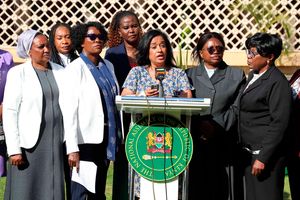
You would imagine that these two dastardly incidents would bury the leadership of a country in ignominy, especially when served as the topping on the undiplomatic treatment of eight Kenyans who also went to Dar es Salaam to observe the Lissu trial. Yet, a ruling party apparatchik in Tanzania has publicly voiced threats of repeated, gang-type sexual assaults on Kenya’s former Justice minister and presidential running mate Martha Karua . A female legislator expressed her regret on the floor of the Tanzanian parliament that Ms Karua was allowed to leave the country unharmed.
Karua, a decorated lawyer and senior political leader, was denied entry into Tanzania and deported back to Kenya alongside advocates Lynn Ngugi and Gloria Kimani. Similarly, former Chief Justice Willy Mutunga—a University of Dar es Salaam alumnus—was denied entry into Tanzania alongside Haki Africa Executive Director Hussein Khalid and activist Hanifa Adan, and deported.
These incidents have exposed the vulnerability of travelling in East Africa on a Kenyan passport. If individuals of the seniority of a former CJ and a Cabinet minister, who presumably retain diplomatic passports, can receive such shabby treatment, and lawyers and journalists of the renown of Kimani, Khalid, Ngugi, Atuhaire and Mwangi can be tortured, it cannot be excused as just desserts of bad manners. Something fundamental is broken in the stature of the Kenyan passport, and the Ministry of Foreign Affairs is complicit in its degradation and denigration. Kenya’s reaction is that you are on your own; and your passport means nothing.
Ms Karua has suffered a chain of humiliations in Uganda in her quest to represent Dr Kizza Besigye against intimidating and trumped up treason charges—delivered through bureaucratic foot dragging and the violent beating of her co-counsel, Erin Kizza, as well as being strip-searched when she went to visit her client in prison. Dr Besigye, the doyen of Ugandan opposition, was illegally seized in Kenya when he visited to attend the launch of Ms Karua’s biography late last year, and renditioned to Kampala with Kenya’s complicity.
The abduction of Tanzania journalist and political activist Maria Sarungi Tsehai in Nairobi was foiled, and she has been living in fear, unable to return home for her father’s funeral early this year.
Ms Tsehai’s political troubles stem from her political activism and her support for Lissu, who survived after being shot 16 times in 2017. He is facing treason charges for calling for the boycott of the October elections if no meaningful electoral reforms are carried out. In the aftermath of the putative 2020 elections, in which the ruling Chama cha Mapinduzi claimed an 87 per cent win, opposition leader Freeman Mbowe fled into Kenya with Tanzanian security agents in hot pursuit.
As Tanzania heads to another election in October, rape, sodomy, stripping and other forms of sexualised abuse are reportedly inflicted not for criminal gain [sic] but as a calculated form of State-sponsored punishment, according to Ujasusi blog. Sexual assault is being increasingly employed by dictatorships to communicate the willingness to cross the moral Rubicon. Sexual violence is horrendous because it is a very intimate violation of bodily integrity, and represents the seizure and use of one’s body outside their control.
It is a leaf out of the Kenyan script of repression from the Moi years. This modus operandi has been reported in Kenya as part of the repression employed to put down popular protests.
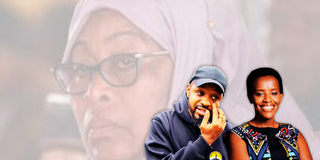
Behind the demure buibui worn by President Samia Suluhu Hassan is the patriarchal politics of the ruling party. She will be declared winner in the elections by 90 per cent, with CCM occupying all the seats in Parliament except three. Then the Ugandan election will follow next year, and Kenya’s after that.
The writer is a board member of KHRC and writes in his individual capacity. @kwamchetsi; [email protected] .