Imagine tomorrow morning Tesla, the trillion-dollar giant from Texas, decides to uproot itself and replant itself in Kenya. Not a small assembly shed, but the whole company, its headquarters, its patents, its tax residency. And imagine the world continues to buy its cars at $40,000 a piece without discounting it as a Kenyan curiosity. What would happen?
The answer would be felt before lunch.
In a single year, Tesla sells nearly two million cars. At $40,000, that is $80 billion in export earnings, more than Kenya's entire Gross Domestic Product. That river of dollars would flood the Central Bank.
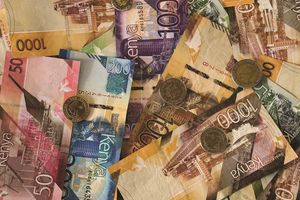
The shilling, long battered, would suddenly become strong. Today it trades at Sh130 to the dollar because Kenya begs for dollars to buy oil, but with the new investment it would trade at Sh80. When the shilling is strong, oil becomes cheap. When oil becomes cheap, the matatu from Murang'a to Nairobi that charges Sh500 will cut fare to Sh200.
The mama mboga who has never seen a Tesla would feel it in her fare, in her kerosene, in her fertiliser. Such is the quiet miracle of a large, valuable company; it does not just enrich its owner, it lightens the load for the entire village.
There is a more painful illustration. Kenya imports 80 per cent of its medicine. Everything from painkillers to insulin for a diabetic child is bought in dollars from India or Europe. When the shilling is weak because we earn too few dollars, that medicine becomes expensive.
The Kenya Medical Supplies Authority (KEMSA) cannot stock it, mothers are sent to expensive private chemists, and many die not because the disease is incurable but because the dollar is scarce.
Now imagine $80 billion flowing into Kenya. Dollars become abundant. The same imported medicine becomes cheap, not because the manufacturer lowered its price, but because our shilling became strong. Money in the Central Bank becomes medicine in the vein. A strong economy built on valuable exports saves lives in the most literal sense.
This is the economics of development we have refused to understand. We think an economy grows by having a million small businesses each earning a little. In truth, as history shows, an economy grows by having a few great businesses that earn a lot and drag everyone else up with them.
The Bible puts it plainly that where there is no ox, the manger is clean, but much increase comes by the strength of the ox. A homestead without an ox may be tidy, but it will never plough a large field.
Consider Taiwan, a small island that at independence was poorer than Kenya. It had no oil, no gold, no vast land. What it built was one mighty ox, the Taiwan Semiconductor Manufacturing Company. TSMC makes the chips that run every phone, car and computer in the world. If the company were based in Kenya, we would be rich today without discovering a single new mineral. Its annual revenue is over $70 billion, more than all our tea, coffee, flowers and tourism combined. Its taxes alone would double our national budget.
Its engineers would earn global salaries and build houses, buy milk, hire tutors, and thereby lift the mason, the farmer and the teacher who have never touched a chip. When God wants to bless a village, as the African proverb says, He does not give every man a chicken; He gives one man a hatchery, and the village never lacks eggs.
This is why the fate of Sub-Saharan Africa is tied to how it treats its large businesses. When a state envies, overtaxes, or strangles its big companies, it commits economic suicide. The big company is the only entity capable of fetching enough dollars to make the local currency strong. Without a strong currency, the country suffers a reverse Dutch Disease. The classic Dutch Disease is what happened to the Netherlands when it discovered gas; it exported so much gas that its currency became too strong, and its factories could not compete. In Africa, we suffer the opposite. Because we export only raw, low-value things, we earn too few dollars, our currency remains permanently weak, and everything we import, from oil to machinery to medicine, becomes prohibitively expensive. In punishing the giant, we starve the whole homestead.
Kenya has had a glimpse of this truth through one company, Safaricom. This is our only true ox. In its last half year alone, it paid over $28 billion in taxes, more than many ministries remit in a full year, and sustains an ecosystem of agents, suppliers and app developers who feed off it. If Kenya had one Safaricom, imagine what 10 would do. One that turns Murang'a tea into branded specialty tea fetching 10 times the price of raw leaves. One that turns avocado into cold-pressed oil on the shelves of London. One that turns geothermal steam into green hydrogen for Europe. Ten such oxen, and Kenya would be middle-income within a decade. As one cow gives milk to many children, so one strong company gives prosperity to many homes.
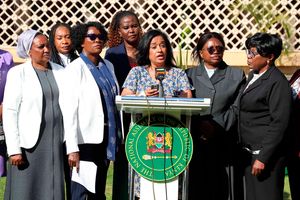
It is against this philosophy that one must interpret the Investor Roundtable Murang'a County hosted at Ole Sereni last week. It was not a dinner for photographs. It was an attempt to acquire oxen for a very specific kraal. Murang'a dreams of building a manufacturing hub at Makenji, on the old Del Monte land. That land is 1,400 acres, well planned, titled and flat, sitting on the Nairobi-Nyeri highway.
To put it in perspective, the entire Nairobi CBD, the Nairobi CBD that birthed the city of Nairobi, is only 350 acres and ill-planned at that. Makenji is four times larger than Nairobi CBD. If well executed, Murang'a City will be far larger than Nairobi itself, with Kenol town becoming the Ngara equivalent, Kabati the Githurai of tomorrow, and Makuyu the Huruma of tomorrow, all feeding into a planned industrial city that actually works because it was drawn on paper before people built on it.
So Murang'a went to Ole Sereni to say, come and be our ox. Come and own the first plots in a city four times bigger than Nairobi CBD and build factories that will export high value. When one factory in Makenji exports avocado oil, the farmer gets a better price, the transporter gets business, the fundi who makes its crates gets work, and the county gets revenue to buy those imported drugs that today kill our people by their absence.
Africa will remain poor not because it lacks hustlers, but because it lacks giants. For too long national policy has been obsessed with licensing a hundred small export processing sheds while chasing away one true giant. Murang'a has chosen the opposite wisdom. It has understood that you do not chase the ox from the shamba because it eats a lot; you keep it because without it, there is no harvest.