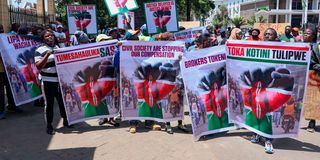
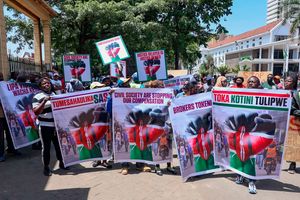
Kenya is approaching the commemoration of June 25 this week amid two contradictions. On one hand, there are renewed discussions about compensation for victims of protest-related violence.
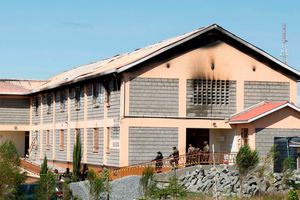
Families who lost loved ones, survivors nursing permanent injuries and citizens whose rights were violated are being promised recognition, restitution and support. On the other hand, the president and the minister for security have warned Kenyans planning to participate in the commemorations to beware of “goons” .
The payment of compensation is a subtle acknowledgement by the State that June 25 cannot simply be erased from public memory. It is no longer a date on the calendar. It has entered Kenya’s political imagination.
For older generations, Saba Saba symbolises the struggle for multiparty democracy. For many young Kenyans, June 25 represents the moment they discovered both the power and the vulnerability of citizenship. It is a monument to courage, patriotism and heroism.
The struggle today is over who gets to define what happened; who gets to assign blame; and who gets to claim victory. Ultimately, it is a struggle over who gets to shape the lessons future generations will draw from this memory.
Memory is political. Every State seeks to curate its history. Some events are elevated into national myths. Others are buried beneath commissions, reports, compensation schemes and official silence. The battle is never simply over facts but over the meanings drawn from those facts.
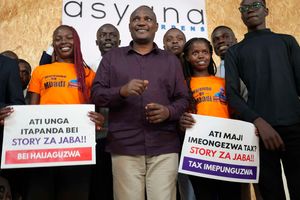
June 25 is particularly difficult because it disrupted Kenya's established political script. The young people who filled the streets were not mobilised through ethnicity. They were not organised around a charismatic leader or assembled by political parties. They carried Kenyan flags, mobile phones and bottles of water rather than party colours and campaign slogans. They forced one of the most dramatic policy reversals in recent Kenyan history.
That achievement unsettled the political class. Kenya’s politics has long relied on identifiable leaders, ethnic arithmetic and negotiated elite settlements. June 25 introduced a different possibility: citizens acting directly, outside the familiar structures through which power is usually organised and managed. This is partly why the movement has proved so difficult to contain.
Yet every democratic movement eventually encounters attempts at co-option, manipulation and discrediting. Some actors seek to hijack movements for political advantage. Others seek to infiltrate them in order to neutralise their potency. Still others benefit when legitimate dissent becomes associated with disorder.
Every movement eventually attracts competing claims of ownership. Politicians want to inherit its legitimacy. Governments seek to domesticate its memory. Activists want to preserve its original spirit. The struggle over June 25 is therefore not only about remembering the past, but about determining who may speak in its name.
This brings us back to the warnings about goons. The benign interpretation is that security agencies possess intelligence indicating that criminal elements intend to infiltrate demonstrations. Recent experience makes such warnings difficult to receive uncritically. Over the past two years, a troubling pattern has emerged where groups of armed civilians have repeatedly appeared at demonstrations while enjoying apparent protection or tolerance from the security apparatus. Videos have circulated showing club-wielding individuals operating in the vicinity of police formations.
If the State knows who the goons are, why have they not been arrested? If intelligence agencies are aware of their activities, why are warnings directed at protesters rather than at the perpetrators? The obligation to facilitate the right “to assemble, demonstrate, picket and petition peacefully and unarmed” rests squarely on the State, not on citizens.
Once senior officials publicly acknowledge the possible presence of goons, they simultaneously acknowledge responsibility for neutralising them. A warning without protection sounds less like reassurance and more like a disclaimer. Indeed, many hear something more troubling: a suggestion that if violence occurs, responsibility will somehow be shared between perpetrators and victims.
The real significance of June 25 is that a generation discovered it could act politically without waiting for permission from politicians. That is what makes June 25 difficult to forget – and perhaps difficult for some to forgive. The coincidence of compensation discussions and security warnings is revealing. One gesture looks backwards while the other looks forwards. Warnings about goons suggest the State is priming the country for a repetition of what produced harm.
Like Saba Saba before it, June 25 is acquiring a stubborn life beyond official narratives. It survives because beneath the heroism lies unfinished business: accountability for the dead, justice for the injured and answers for a generation that refuses to forget.
History is rarely written by those who seek to manage memory. It is written by those who refuse to surrender it.
The writer is a board member of the KHRC and writes in his individual capacity. @kwamchetsi; [email protected] .