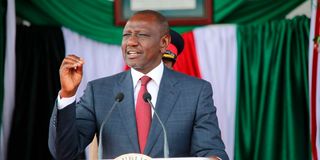
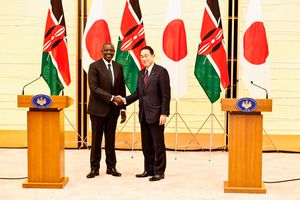
Reports suggest that Kenya's National Treasury is setting aside Sh10 billion for a customised Gulfstream G700/G800 jet for President William Ruto.
The same man flaunting luxury sunglasses, million-shilling watches, crocodile belts and red-bottom shoes is allegedly preparing to burn billions on aerial opulence while ordinary citizens endure their worst economic crisis in decades.
History is littered with African leaders who confused public treasuries with personal bank accounts. Mobutu Sese Seko of Zaire perfected this art form. While his people survived on less than a dollar a day, Mobutu chartered Concorde jets for shopping trips to Paris, built a palace dubbed “the Versailles of the jungle”, and amassed a personal fortune estimated between $50 million and $5 billion. His government spending tells the whole story: between 1972 and 1992, expenditure on social services dropped from 17 per cent to zero, while spending on the presidency ballooned from 28 per cent to 95 per cent.
The same pattern is playing out in Kenya today. The presidency and State House budget keeps increasing while all other budgets that directly impact citizen welfare keep decreasing. In the 2024/2025 financial year, State House was allocated Sh9.4 billion while the school feeding programme for over four million learners was slashed by Sh4.9 billion due to “financial constraints”.
Even more shocking, the Controller of Budget revealed that President Ruto’s office spent Sh2.2 million per day just on printing, totalling Sh817 million annually. It’s the Mobutu playbook, updated for the 21st Century.
The hustler’s wardrobe reads like a luxury catalogue: an 8.7 million shilling Bulgari watch, Sh178,000 Christian Louboutin shoes, a Sh425,000 Stefano Ricci crocodile belt. His allies aren’t far behind. MPs are flaunting Sh17 million watches and Sh165,000 designer shoes while preaching austerity to struggling Kenyans.
Meanwhile, the lived reality for ordinary citizens grows harsher by the day. Healthcare remains a luxury many can’t afford, even with the new system that’s already mired in corruption scandals. “Ghost” schools siphon education funds while “ghost” workers drain county payrolls.
What’s particularly insidious is how these leaders weaponise poverty against itself. When criticism mounts, an army of government bloggers and online defenders emerges, spinning elaborate justifications. “The president must look presidential,” they argue. “He represents Kenya on the world stage.”
This defense mechanism reveals a twisted psychology where citizens are manipulated into defending their own exploitation. The same people struggling to pay school fees for their children will passionately argue that their president deserves a Sh10 billion jet.
This phenomenon isn’t unique to Kenya. Harvard researchers studying political inequality have documented how “government really responds much more to the privileged than to even middle-income people” across democracies. Academic research on “conspicuous consumption” shows that when leaders display material excess, it often evokes public outcry, yet these displays serve to maintain social hierarchies and political power.
Studies reveal that exposure to wealth-signalling consumption shapes political attitudes, often making lower-income citizens less supportive of redistributive policies, essentially turning the poor against their own economic interests.
In Kenya, the display of opulence during economic hardship has sparked widespread anger. Young Kenyans, who comprise 76 per cent of the population and remain largely unemployed despite their education, watch their leaders flaunt wealth while preaching sacrifice. It’s a recipe for the kind of social unrest we witnessed during the Gen Z protests.
The pattern is clear: African leaders who prioritise personal enrichment over public service create systems that perpetuate poverty and inequality. They build patronage networks funded by public resources, weaken institutions that could hold them accountable, and manipulate democratic processes to maintain power.
Million-shilling accessories
However, Kenyans are no longer buying the excuses. Social media has democratised criticism, making it harder for leaders to control the narrative. Young people especially are refusing to accept that their suffering subsidises presidential luxury.
The question isn’t whether President Ruto has the right to nice things. It’s whether spending Sh10 billion on a presidential jet while education budgets shrink represents the kind of leadership Kenya needs. It’s whether flaunting million-shilling accessories while preaching austerity demonstrates the sacrifice and solidarity Kenyans deserve from their leaders.
Every generation of Africans faces this choice: accept the normalisation of leadership excess or demand something better. The metrics of success shouldn’t be how luxuriously our leaders can live, but how well our children can learn, how effectively our hospitals can heal, and how fairly our economy can provide opportunities for all.
Kenya stands at this crossroads now. The Sh10 billion jet isn’t just about transportation, it’s a symbol of priorities. It forces us to ask: What kind of country do we want to be? One where leaders feast while citizens fast, or one where sacrifice starts at the top? The choice, as always, is ours to make.
The writer is a whistleblower, strategy consultant and a startup mentor. www.nelsonamenya.com