Nothing frightens insecure power like the sight of ordinary citizens occupying public streets unbidden by the State.
The street is not merely a place but a rival source of authority — a theatre where citizens briefly withdraw consent from government and give it back to themselves.
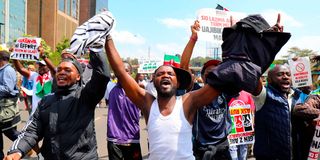
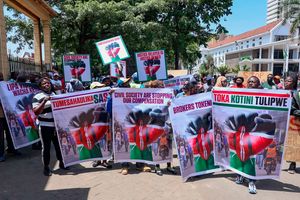
The whiff of a street demonstration triggers the State to roll out water cannons, mounted police, dog handlers, armoured personnel carriers, truncheon-wielding anti-riot units and, now, barricades and barbed wire. The disinformation, misinformation and use of force that Kenyans were subjected to during the second anniversary of the June 25 protests was only rehearsal for July 7, Saba Saba, next week.
The intensity of official warnings, the heavy deployment of security forces and the recurrent framing of protests as existential threats suggest a government that regards the street with profound suspicion. Police arrested 355 people in connection with last week’s demonstrations.
The street evokes visceral fear in governments because of the peculiar political meaning of citizen-occupied public space. The prospect of protests triggers the State to typically behave like a caged animal, summoning the language of security, law and order. Protesters are denounced as enemies of peace and development.
This is because a street demonstration is not merely a gathering of angry people. It is a symbolic act representing the moment when citizens transition from being isolated individuals to a political community. Private pain and grievance become public questions in the street. The street is, therefore, the megaphone that announces that people have stopped suffering individually and have begun to think collectively.
That transformation unsettles governments whose stability depends on isolated and fearful populations.
Authoritarian power flourishes when citizens retreat into private concerns. It prefers a society in which each person struggles alone with unemployment, inflation, debt or injustice. Individuals can be managed but communities can become dangerous. Streets create communities.
Because unpopular governments fear communities, they overreact when they face public protest. The use of excessive force is not a demonstration of strength but an expression of anxiety.
The history of the past two decades offers some illustrations. In Tunisia, a wave of public anger that began with the self-immolation of a street vendor and spilt into public spaces across the country brought down President Ben Ali’s long-entrenched regime. The Tunisian street became the stage upon which citizens discovered their collective power.
In Algeria, millions of people poured into the streets in 2019 to oppose President Abdelaziz Bouteflika's bid for a fifth term. Week after week, citizens occupied public spaces until a seemingly immovable political order was forced to concede. In Sudan, the demonstrations over bread prices evolved into a broader movement that ended the 30-year rule of Omar al-Bashir. The images that endure are of crowds outside army headquarters, refusing to disperse.
Most recently, in Bangladesh, student-led protests over government policies rapidly evolved into a larger challenge to authority. The government responded with internet shutdowns, curfews and lethal force. In the end, the protests helped turn a policy dispute into a wider crisis of authority and the government fell.
Many brutal dictatorships survive protests and refuse to be toppled in the streets. None of the previous movements have unfolded in precisely the same way. Some achieved democratic transitions; others produced instability or even new forms of authoritarianism. Yet they all demonstrated an enduring truth: when citizens reclaim public space, governments are forced to confront the possibility that power rests on consent, which can erode.
The street is where the myth of invincibility begins to crack. Governments can manipulate institutions. They can buy legislators, lean on courts and shape public narratives. Elections can be stolen, suppressed or even hollowed out. But a crowd of citizens voluntarily occupying public space presents a different challenge altogether. It poses an unanswerable question: if so many people are willing to brave arrest, violence and uncertainty, in whose name is the government ruling?
This is why governments instinctively seek to empty the streets as quickly as possible. They understand that a street filled with citizens is also filled with meanings. It signals solidarity and courage. And it can mean that fear has moved residence from private homes into government offices.
The Gen Z protests showed that people could gather around ideas rather than personalities. Government anxiety is, therefore, not necessarily about broken windows or disrupted traffic. The street reminds governments that power is not merely a matter of constitutional authority or electoral arithmetic. It also rests upon consent and public confidence.
Rather than fear the street, democratic governments view protest as one of the most important safety valves available to a constitutional order. It allows societies to express grievances peacefully and publicly.
The street is not merely a road. It is the public sphere that is democracy’s oldest parliament -- the place where citizens remind governments that authority is borrowed and can one day be reclaimed.
The writer is a board member of the Kenya Human Rights Commission and writes in his individual capacity. @kwamchetsi; [email protected]