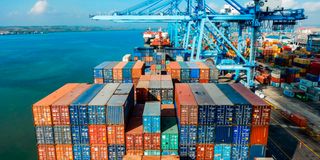
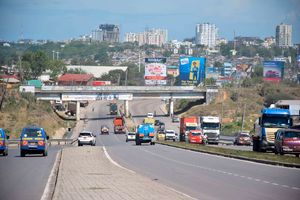
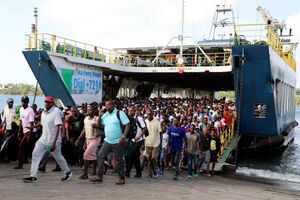
The Kenya Port Authority (KPA) has suspended the direct loading of empty cargo containers onto ships at Mombasa Port as part of desperate measures to help deal with rising congestion at the key gateway.
The port manager said that all empty containers will be held in intermediate storage depots for a mandatory 72 hours before being allowed into the port for loading onto ships to help deal with worsening congestion at the Mombasa port.
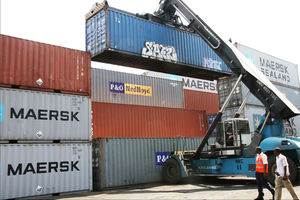
Traditionally, logistics teams are allowed directly load empty cargo containers onto ships from storage depots to the terminal crane area for immediate loading, sidestepping the lengthy process of intermediate storage at the port.
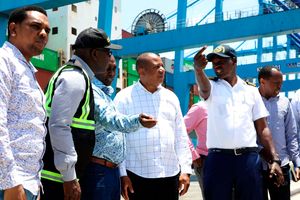
“Following several engagements with key stakeholders, including Kenya Ships Agents Association (KSAA) and its members, the KPA has issued measures with effect from January 26, 2026, where all shipping lines representatives and their appointed agents are expected to strictly comply to reduce current congestion,” KPA Managing Director, William Ruto, said.
“Among the measures include suspension of handling of any empty container without advance clearance and submission at least seven days prior to the arrival of the vessel,” he added.
The official said that empty containers will not be allowed into the port 24 hours before vessels berthed for collection.
“Vessel agents/line representatives shall submit projected empty container loading requirements at least seven days prior to vessel arrival. The authority shall allocate empty container space per berth, capped at 2,000-2,500 containers except Berth No. 20. Any request to exceed this allocation must receive written approval from the Head of Container Terminal at least 72 hours before vessel arrival or planned berthing,” Mr Ruto said.
For exporters, the agents have been ordered to ferry the consignment into the Port 36 hours before berthing of the carrier vessel, and no vessel shall be planned for berthing unless the discharge list, export full loading list, and empty container loading list have been submitted and approved.
The management and allocation of empty container space shall exclusively be left to the respective shipping lines, and the lead agent shall assume full responsibility for planning, allocation, and coordination of empty container slots among consortium partners.
KPA has also allowed empty containers delivered ex-Inland Container Depot for loading to stay up to a maximum dwell time of 24 hours at the Port Reitz offloading zone, and those exceeding the allocated dwell time shall be relocated at the full cost of the respective shipping line.
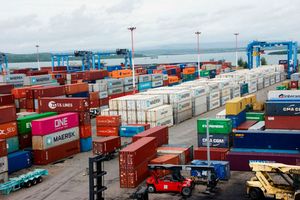
Currently, the business community is grappling with full empty container depots, leading to rejected returns, limited booking slots, and restricted return windows. These challenges continue to disrupt normal port operations and slow down cargo movement. The constraints reflect gaps in depot capacity, evacuation planning, and coordination among stakeholders.
As a result, manufacturers and traders face higher landed costs, increased working capital pressure due to delayed container returns, and growing risks to business competitiveness, particularly for imports and exports.
Shipper Council of Eastern Africa CEO Ogayo Ogambi said that the biggest challenge is that clearing agents and transporters are incurring substantial detention charges running into millions because the empty containers are full, and the shipping lines are not granting waivers or extending the container free period.
Mr Ogambi said trucks take up to five days in the queue to deliver the empties at a cost of about Sh12,700 per day, while clearing agents, too, have to contend with detention charges for the same reasons.