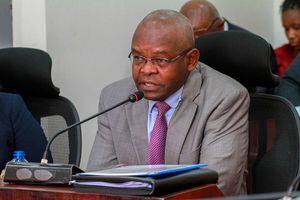
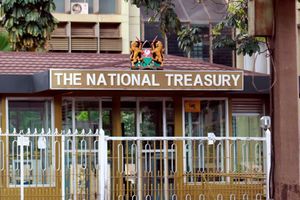
Controller of Budget Margaret Nyakang’o has flagged the National Treasury for violating the law by failing to clear an overdraft tapped from the Central Bank of Kenya (CBK) by the end of the last financial year.
The overdraft facility is usually tapped when government revenue streams such as tax receipts do not flow into the State’s accounts at a pace that matches expenditure needs. It is restricted to a maximum of 5 per cent of the most recently audited government revenues and payable within 12 months. Interest on the overdraft is usually charged at a rate equivalent to the Central Bank Rate, and its use is limited to development expenditure financing in line with the Public Finance Management (PFM) Act.
Dr Nyakang’o revealed that as of June 30, 2025, the government had an outstanding overdraft balance of Sh91 billion, warning that the continued existence of such a big balance at the end of the financial year “raises concerns regarding compliance with regulatory requirements and the effectiveness of short-term cash-flow planning”.
“The National Treasury should strengthen cash and liquidity management and ensure compliance with the law on the retirement of the overdraft at the close of the financial year,” she said.
Regulation 83 (3) of the PFM (National Government) Regulations 2015 provides for sound cash management practices, including the use of short-term borrowing only where necessary while ensuring retirement of the overdraft facility by the end of the financial year.
The Central Bank of Kenya.
Photo credit: File
Section 15 (3) of the PFM Act explicitly restricts short-term borrowing and bank overdraft facilities to managing short-term cash flows.
During the fiscal year 2025/26, the government’s overdraft limit stood at Sh114.70 billion and was charged an average interest rate of 9.08 per cent per annum on the amount outstanding at the end of each month.
In the last financial year, the interest payable was Sh3.15 billion compared to Sh7.44 billion paid in 2024/25.
The high daily interest charge is designed to reflect the facility’s intended temporary use to manage liquidity in the economy as well as discourage its prolonged use.
This is predicated on inflationary concerns that excessive government borrowing from the CBK is often linked to “money printing,” which can lead to macroeconomic instability and fuel inflation, making the cost of living higher.
According to Dr Nyakang’o, the decline in overdraft interest payments during the reporting period, compared with the 2024/25 period, was attributable to a drop in the CBK’s interest rates, which stood at 8.75 per cent in June 2026, down from 9.75 per cent in June 2025.
The overdraft decline was also attributed to the implementation of the Treasury Single Account system that started in July 2025. This is a unified structure of government bank accounts that enables the consolidation and optimum utilisation of cash.