The Kenya Pipeline Company (KPC) initial public offer (IPO) crossed the success threshold of Sh53 billion after Uganda bought a third of the shares available in the initial public offering, saving the sale from collapse.
The lead transaction advisor, Faida Investment Bank, told this publication that the IPO had met the minimum subscription needed to declare the offer a success, without giving the exact sale data.
Multiple sources close to the transaction reckon that Uganda snapped up shares equivalent to 20.15 per cent of KPC issued shares, worth Sh32 billion.
This suggests that Uganda National Oil Company (UNOC), the State-owned oil company that imports fuel to the landlocked country, bought 31 per cent of the 11.8 billion shares offered through the IPO to guarantee it a fifth of the Kenya Pipeline Company.
Other major buyers of the KPC shares are the National Social Security Fund (NSSF) and the Public Service Superannuation Fund (PSSF), amid talk that the State pressured the fund and the civil servants’ pension scheme to put billions in the IPO for its success.
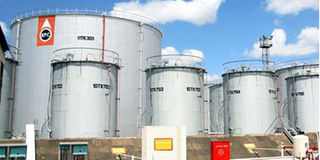
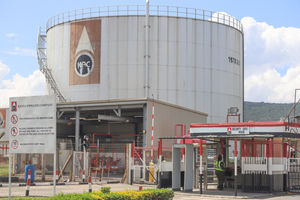
The Kenya Pipeline Company's head office in Nairobi.
Photo credit: File | Nation Media Group
Uganda required the 20 per cent ownership of KPC to be guaranteed two board seats in the firm and the right to veto future hiring and firing of the pipeline’s chief executive officer.
Without Uganda and the big participation of oil marketers and high-net-worth investors like NSSF, the IPO looked under threat in the wake of reduced interest from local retail investors.
The State was selling a 65 percent stake in KPC via the Nairobi Securities Exchange (NSE) for Sh106 billion.
“The subscriptions were way above the 50 per cent threshold and closer to 100 per cent. We saw an influx of applications on the last day,” said Rina Hicks, the Operations Director at Faida Investment Bank—the lead advisor for the IPO.
Image Registrars is reviewing and reconciling the applications ahead of Wednesday’s release of the results.
“Usually with IPOs, an investor will sometimes apply for 100,000 shares but only pay for 10,000 shares. The registrar is expected to undertake reconciliation on Monday next week. If all goes well, the offer will be fully subscribed,” Ms Hicks added.
Burdened by high national debt, limited room to raise taxes and annual loan repayments that consume 40 per cent of government revenues, the State has sought new funding models, including divestiture from state companies.
Of the total KPC stake on offer, 15 per cent was reserved for oil marketing companies, five percent for employees and the remainder will be allocated to local retail, local institutional, East African and foreign investors, with each category receiving 20 percent.
“In cases of under subscription, valid applications in the affected category will be allocated in full, with remaining shares reallocated in the order of local retail, local institutional, East African investors, international investors and oil marketing companies (OMCs),” the KPC investor memorandum says.
“In cases of oversubscription, Kenyan investors will be given priority.”
Uganda is said to have exceeded the East African allocation, a sign that the rest of the segments were undersubscribed.
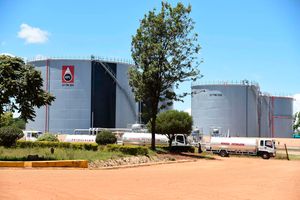
Kenya Pipeline Company (KPC) deport in Nakuru on November 22, 2024.
Photo credit: File | Nation Media Group
The offer had been due to close on Thursday last week but remained open until Tuesday amid apathy from local retail investors. The fresh shares will start trading at the NSE from March 9.
The government priced the Kenya Pipeline IPO at Sh9 per share for the offer that opened on January 19 amid a split in views over its valuation.
KPC’s expected reduction in its dividend payout ratio and future capital expenditure commitments (Capex), including laying a new pipeline between Mombasa and Nairobi, led to investor scrutiny of the offer.
KPC share sale offer documents show the firm will reduce its average dividend payout from 94.5 per cent of profits to 50 per cent.
Wesley Manambo, a senior research associate at Standard Investment Bank (SIB), has issued a buy recommendation to investors with a long horizon on KPC, arguing that there is less attraction for short-term-oriented investors.
The Ugandan threat would have denied the IPO nearly Sh30 billion from Kampala and sparked the collapse of KPC’s stake sale, which struggled to meet its targets.
This sounded the alarm bells in Nairobi, which yielded to Uganda’s demands and forced the revision of KPC’s articles of association to guarantee the 20 per cent ownership.
Sources close to the transaction reckon a meeting between Kenya and Ugandan top officials broke the ice, setting off a series of actions, including the release of the amended articles of association and the extension of the IPO sale period.
Uganda says its participation in the IPO is a deliberate strategic decision aimed at strengthening regional energy cooperation and safeguarding national interests.
“The investment will enhance security of access to petroleum products, improve affordability and reinforce long-term supply stability for Uganda and the wider region,” Irene Bateebe, the permanent secretary of the Ministry of Energy, was quoted in Monitor—a sister publication of Saturday Nation.
Over half of the fuel cargo that goes through KPC’s network is for exports, of which Uganda takes up an estimated two thirds.
Eastern DRC takes 19 per cent, South Sudan (15 per cent) and Rwanda (15 per cent).
On service fees, UNOC is the sixth-largest customer of KPC, paying charges totalling Sh1.2 billion in the year to June, with Vivo Energy the leader at Sh4.94 billion.